
Entry Procedures
Visa and entry requirements depend on the country that issued your passport. The information here is general guidance. Always confirm the requirements for your own nationality with the official source.
This information is for general guidance only. Please verify with the embassy or official government sources before traveling.
Visa Requirements
Types of visas required and their conditions
Most visitors need a visa to enter Ghana. Depending on your nationality you may obtain it in advance from a Ghanaian mission, apply for an eVisa, or in some cases get a visa on arrival, and requirements differ by passport. Requirements can change, so check the official Ghanaian sources and your nearest embassy before you travel.
- Visa
- Required for most
- Options
- Advance / eVisa / on arrival
- Check
- Official sources
- Visa type and process depend on your nationality
- A yellow fever certificate is required for entry
Passport Conditions
Required validity period and blank pages
Your passport should be valid for at least 6 months beyond your date of entry into Ghana and have blank pages for stamps. Make sure the passport is in good condition, as damaged travel documents can cause problems at the border. Check your specific requirements before you travel.
- Validity
- 6 months recommended
- Pages
- Blank pages needed
- Condition
- Undamaged
- Passport should have blank pages for entry stamps
- Damaged passports may be refused at the border
Required Documents & Pre-registration
Arrival cards, health declarations, and other preparations
At the border you may be asked to show supporting documents in addition to your passport and visa. These can include a return or onward ticket, proof of accommodation (hotel booking or invitation), evidence of sufficient funds, and your yellow fever vaccination certificate. Have these ready to speed up entry.
- Ticket
- Return/onward
- Stay
- Accommodation proof
- Health
- Yellow fever certificate
- Carry proof of accommodation and onward travel
- A yellow fever certificate is checked on arrival
Pre-arrival procedure — Ghana ETA / e-Visa: since 25 May 2026 Ghana replaced visa-on-arrival with a digital pre-travel system. Apply online on the official Ghana Immigration Service portal evisa.immigration.gov.gh, upload documents and pay any fee; a decision is expected within about 48 hours and the approval is emailed. African passport holders who need a visa apply via the ETA and are exempt from fees. Beware paid look-alike sites.
Official Ghana e-Visa (evisa.immigration.gov.gh)- Surname
- SMITH
- Given name
- MICHAEL
- Nationality
- Your nationality (e.g. a representative country)
- Passport number
- A1234567
- Arrival date
- 2026-04-10
- Entry city
- Accra
Steps
- 1 On evisa.immigration.gov.gh check whether your nationality needs ETA/e-Visa or is visa-free/exempt
- 2 Complete the application and upload the passport page/photo as required
- 3 Pay the official fee and save the approved ETA/e-Visa (print or keep on your phone)
- 4 Present it at check-in and immigration together with your passport
Eligibility, fees, processing time and validity can change; for accurate details we recommend checking with the official government portal before you travel.
Last updated: 2026-08-30
Cash Import Limits
Declaration-free limits and procedures for excess amounts
If you enter or leave Ghana carrying cash above the declaration threshold set by the authorities, you must declare it to customs. Keep a record of large sums you bring in so you can take them out again. Failure to declare can lead to fines or seizure, so complete a cash declaration when required.
- Threshold
- Declare large sums
- When
- Entering/leaving
- Action
- Declare to customs
- Keep a record of large amounts you bring in
- Non-declaration may result in fines or seizure
Duty-Free Allowances & Restricted Items
Limits on tobacco, alcohol, food, and other goods
Arriving in Ghana, you have duty-free allowances for personal-use goods such as a limited quantity of alcohol and tobacco, within set limits. Personal effects and reasonable amounts of items for your own use are usually admitted freely. Larger quantities may be treated as commercial and attract duty. Check current allowances with Ghana Customs before you travel.
- Personal use
- Duty-free limits
- Alcohol/tobacco
- Limited quantity
- Commercial
- Duty may apply
- Duty-free allowances apply to alcohol and tobacco
- Larger quantities may be treated as commercial goods
Prohibited Items
Items that are strictly forbidden from import
Illegal drugs are strictly prohibited and penalties are severe. There are restrictions on firearms and ammunition, on certain animal and plant products, and on products from protected species under CITES (such as ivory or certain skins). Import of some goods requires a permit. Check Ghana Customs rules and obtain any required permits before you travel.
- Drugs
- Prohibited
- Firearms
- Restricted
- CITES
- Protected species
- Certain animal and plant products are restricted
- Protected species products need CITES permits
Medication Import Rules
Rules for bringing prescription and over-the-counter drugs
Bring enough prescription medicine for your trip, ideally in the original packaging with the prescription or a copy. Some controlled medicines may need a doctor’s note explaining the need. Consider malaria prevention advice from your doctor before travel. Check the rules with the Ghanaian authorities before you travel.
- Prescription
- Carry a copy
- Controlled
- Doctor’s note
- Malaria
- Ask your doctor
- Keep medicines in original packaging with documentation
- Consult your doctor about malaria prevention before travel
Vaccinations & Health Requirements
Required and recommended vaccines for entry
A yellow fever vaccination certificate is required for entry to Ghana and is checked on arrival. Keep your routine vaccines up to date and discuss malaria prevention and other travel health measures with a travel clinic. Consult a doctor well before departure for personalised recommendations.
- Required
- Yellow fever
- Routine
- Keep up to date
- Advice
- See your doctor
- A yellow fever certificate is mandatory for entry
- Consult a travel clinic for personalised recommendations
Immigration Process
Step-by-step guide from arrival to clearing immigration
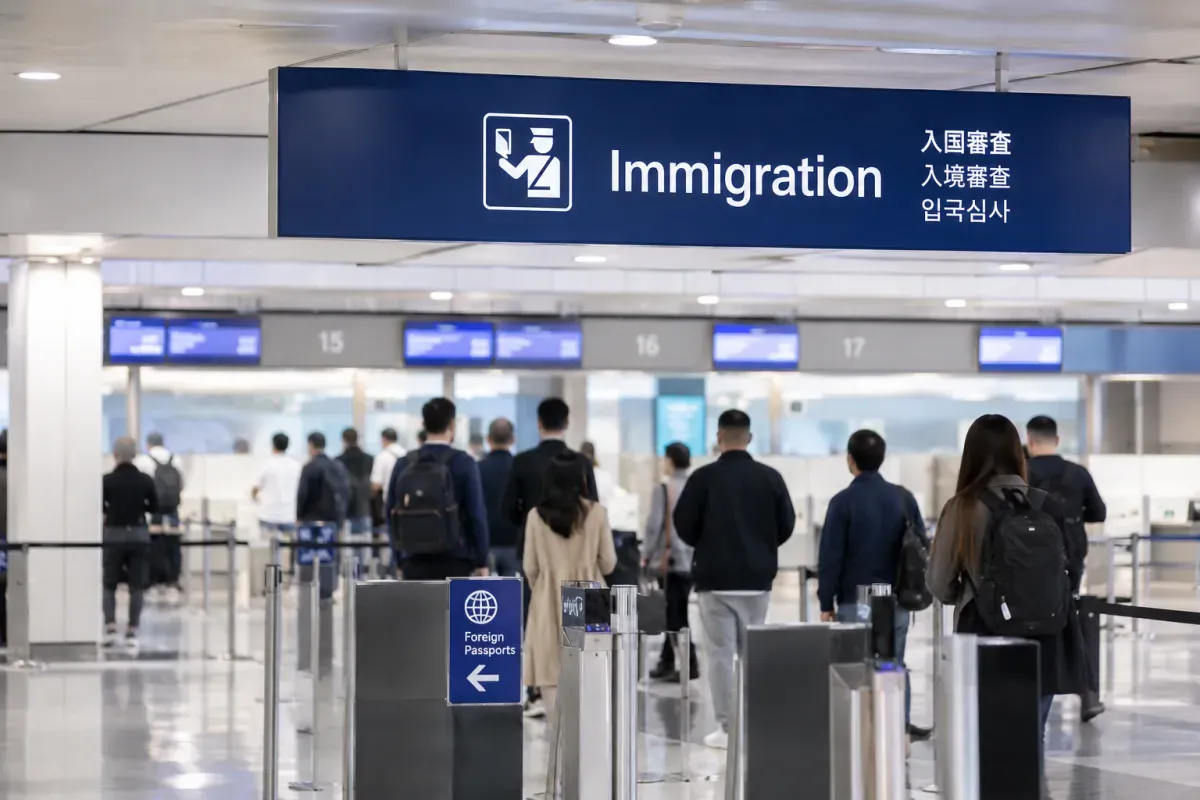
Most travellers arrive at Kotoka International Airport (ACC) in Accra. On arrival you go through immigration, where officers check your passport, visa and yellow fever certificate, then collect your baggage and clear customs. Have your travel documents ready and follow the signage to speed things up.
- Airport
- Kotoka (ACC)
- Checks
- Passport / visa / health
- Then
- Baggage & customs
- Officers check passport, visa and yellow fever certificate
- Have your documents ready to speed up entry
Tips for Smooth Entry
Practical advice for a hassle-free arrival
English is the official language, so communication is easy for many travellers. The climate is warm and tropical, so pack light clothing plus rain protection, and carry mosquito repellent for malaria areas. Cash is still widely used, so keep some Ghanaian cedis on hand, and agree taxi fares before you set off.
- Language
- English official
- Climate
- Warm/tropical
- Cash
- Carry cedis
- Bring mosquito repellent for malaria areas
- Agree taxi fares before you set off