Entry Procedures
Visa and entry requirements depend on the country that issued your passport. The information here is general guidance. Always confirm the requirements for your own nationality with the official source.
This information is for general guidance only. Please verify with the embassy or official government sources before traveling.
Visa Requirements
Types of visas required and their conditions
Many nationalities can enter Tunisia visa-free for short tourist stays of around 90 days, while others need a visa in advance. The exact rules depend on your nationality, and conditions can change. Check the official Tunisian sources and your nearest embassy or consulate for the current requirements before you travel.
- Visa-free
- Many nationalities, ~90 days
- Depends on
- Your nationality
- Check
- Official sources
- Visa-free entry depends on your nationality
- Confirm current rules with official sources before travel
Passport Conditions
Required validity period and blank pages
Your passport should generally be valid for the duration of your stay in Tunisia, and many travellers are advised to hold at least several months of remaining validity beyond their departure date. Check the exact validity your passport needs for your nationality before you travel, and make sure it is not damaged.
- Validity
- Cover your whole stay
- Advice
- Extra months recommended
- Check
- Before travel
- Confirm the required validity for your nationality
- Ensure your passport is undamaged
Required Documents & Pre-registration
Arrival cards, health declarations, and other preparations
At the border you may be asked to show supporting documents in addition to your passport. These can include a return or onward ticket, proof of accommodation such as a hotel booking, evidence of sufficient funds for your stay, and travel insurance. Having these ready can help your entry go smoothly.
- Ticket
- Return/onward
- Stay
- Accommodation proof
- Funds
- Sufficient means
- Carry proof of accommodation and onward travel
- Travel insurance and evidence of funds may be requested
Cash Import Limits
Declaration-free limits and procedures for excess amounts
The Tunisian dinar is a closed currency and may not be brought in or taken out of the country. Foreign currency above a set threshold should be declared on arrival, and keeping that declaration can be important if you want to reconvert or export foreign cash on departure. Check the current thresholds and rules before you travel.
- Dinar
- Cannot be imported/exported
- Foreign cash
- Declare above threshold
- Keep
- Declaration record
- Declare foreign currency above the set amount on arrival
- A declaration may be needed to export foreign cash on exit
Duty-Free Allowances & Restricted Items
Limits on tobacco, alcohol, food, and other goods
Travellers arriving in Tunisia have duty-free allowances for goods for personal use, such as a limited quantity of alcohol and tobacco, within set limits. Larger quantities, commercial goods and high-value items may need to be declared and could be subject to duty. Check current allowances with Tunisian Customs before you travel.
- Personal use
- Duty-free within limits
- Alcohol/tobacco
- Limited quantity
- Declare
- Large/commercial goods
- Duty-free allowances apply to goods for personal use
- Commercial or high-value goods may be subject to duty
Prohibited Items
Items that are strictly forbidden from import
Illegal drugs are strictly forbidden and penalties are severe. Other restricted or prohibited items can include weapons, certain protected wildlife products and counterfeit goods, and the Tunisian dinar itself may not be imported or exported. If you carry prescription medicines, keep them in original packaging with documentation. Check the current prohibited list with Tunisian Customs before you travel.
- Drugs
- Strictly forbidden
- Restricted
- Weapons, wildlife, fakes
- Dinar
- No import/export
- Penalties for illegal drugs are severe
- Keep prescription medicines in original packaging
Medication Import Rules
Rules for bringing prescription and over-the-counter drugs
Bring prescription medicines in their original packaging and carry a copy of the prescription or a doctor's letter, ideally in English or French. Some medicines that are freely available at home may be controlled in Tunisia, so bring only reasonable personal quantities. If you rely on specific or controlled medication, check the rules with a Tunisian embassy or consulate before you travel.
- Packaging
- Keep original
- Document
- Prescription/letter
- Quantity
- Personal use only
- Carry a prescription or doctor's letter
- Some medicines may be controlled; check in advance
Vaccinations & Health Requirements
Required and recommended vaccines for entry
No specific vaccinations are usually required to enter Tunisia for most travellers, though a yellow fever certificate may be required if you arrive from a country where yellow fever is present. Routine vaccinations should be up to date, and some travellers consider hepatitis and typhoid protection. Check official health guidance for your situation well before you travel.
- Required
- Usually none
- Yellow fever
- If from risk country
- Routine
- Keep up to date
- A yellow fever certificate may be needed from risk countries
- Check official health guidance before travel
Immigration Process
Step-by-step guide from arrival to clearing immigration
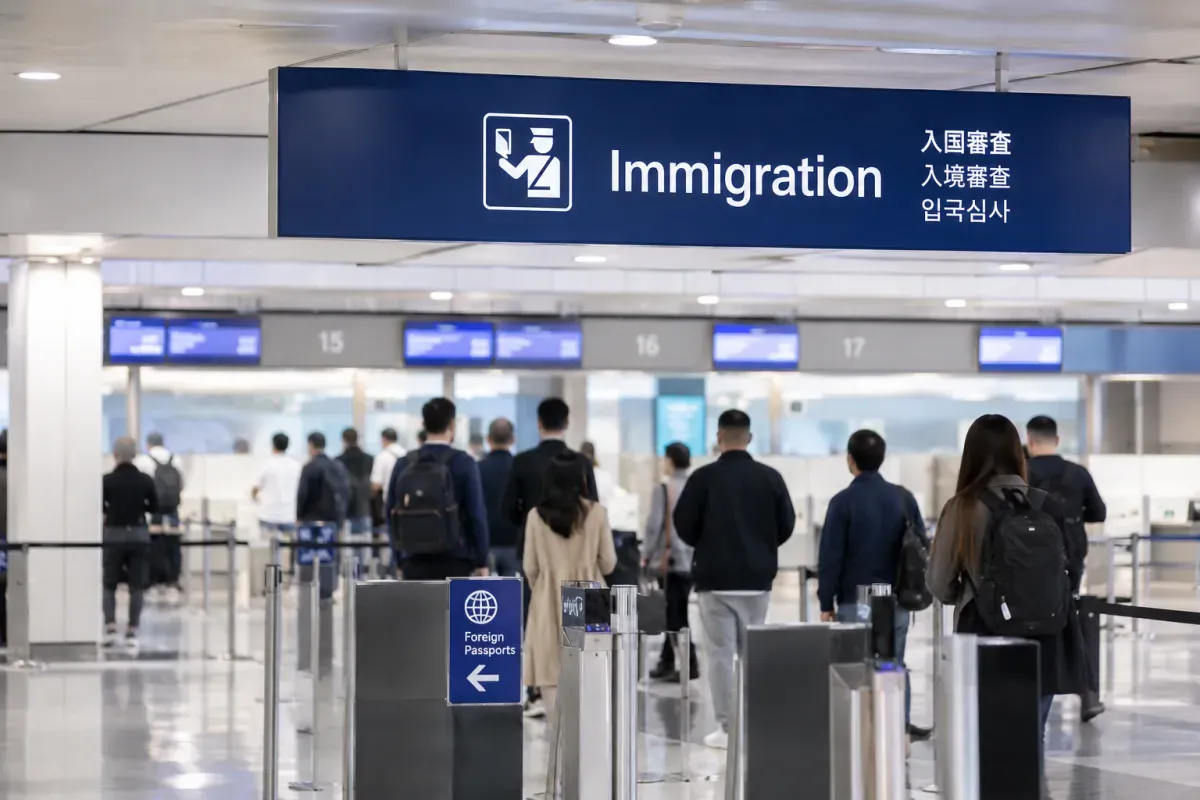
Most visitors arrive at Tunis-Carthage (TUN) or Djerba (DJE) airport. At immigration you present your passport and may be asked about the purpose and length of your stay and where you are staying. Officers may ask to see a return ticket or accommodation details. Keep your travel documents handy and follow signs for arrivals and baggage.
- Main airports
- Tunis (TUN), Djerba (DJE)
- At the desk
- Passport + questions
- May ask
- Return ticket, hotel
- Have your return ticket and accommodation details ready
- Follow signs for arrivals and baggage reclaim
Tips for Smooth Entry
Practical advice for a hassle-free arrival
Tunisia drives on the right and uses 230V power with Type C and E plugs, so bring a suitable adapter. The dialling code is +216. Since the dinar cannot leave the country, exchange only what you need and keep small cash for markets and tips. Dress modestly at religious sites and confirm entry rules with official sources before you travel.
- Driving
- Right-hand side
- Power
- 230V, Type C/E
- Dialling
- +216
- Bring a Type C/E adapter for 230V
- Exchange only the dinars you need and keep small cash