
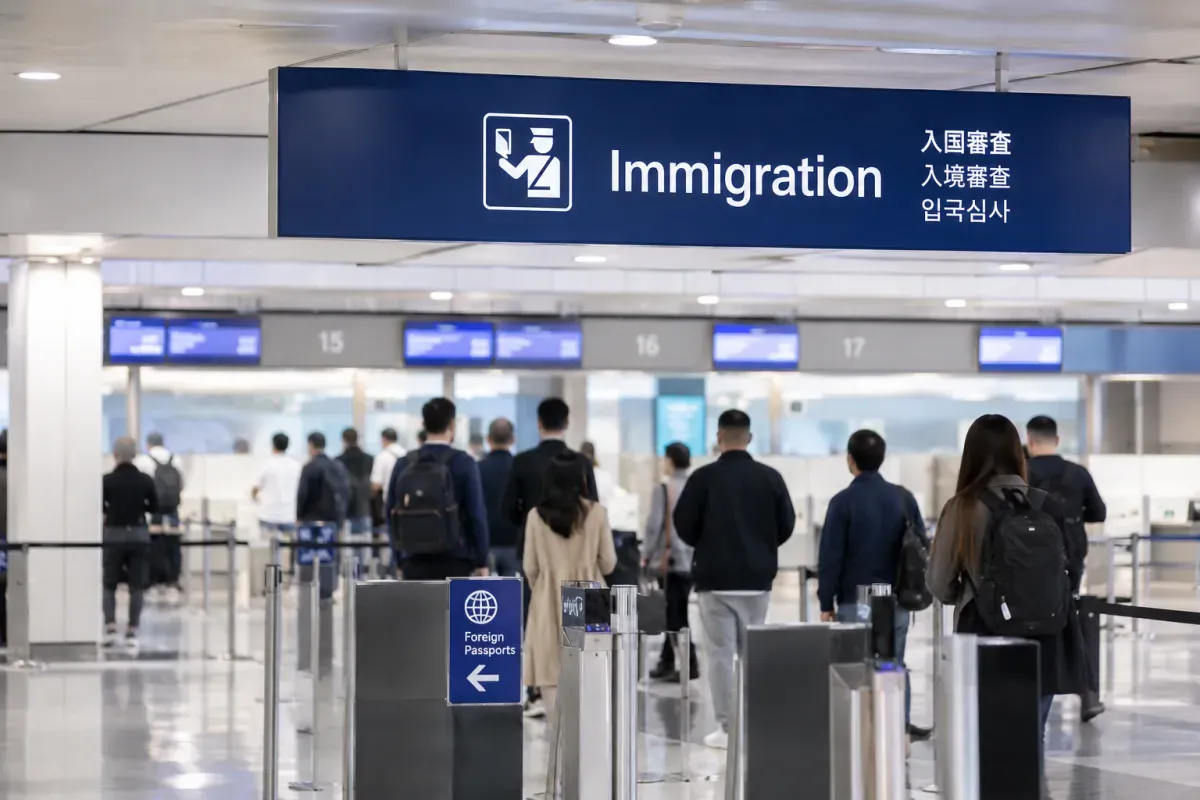
Entry Procedures
Visa and entry requirements depend on the country that issued your passport. The information here is general guidance. Always confirm the requirements for your own nationality with the official source.
This information is for general guidance only. Please verify with the embassy or official government sources before traveling.
Visa Requirements
Types of visas required and their conditions
Uruguay is a popular South American destination and many nationalities, including citizens of Japan, the EU and the United States, can enter visa-free for tourist stays of up to 90 days. Other nationalities may need a consular visa. Requirements depend on your nationality and can change, so check the official Uruguayan sources and your nearest embassy or consulate before you travel.
- Region
- South America
- Short stay
- Up to 90 days
- Check
- Official sources
- Visa-free entry depends on your nationality
- Stays can often be extended once at the immigration office
Passport Conditions
Required validity period and blank pages
Your passport should be valid for the duration of your stay in Uruguay. Some travellers are asked at the border to show an onward or return ticket and evidence of sufficient funds for the trip. It is wise to keep several months of validity beyond your planned departure and to carry a copy of your passport separately.
- Validity
- Cover your stay
- Ticket
- Onward/return may be asked
- Funds
- Proof may be requested
- Keep a few months of validity beyond departure to be safe
- Carry a separate copy of your passport photo page
Required Documents & Pre-registration
Arrival cards, health declarations, and other preparations
Besides your passport, immigration officers may ask to see supporting documents. These can include a return or onward ticket, proof of accommodation such as a hotel booking or an invitation, evidence of sufficient funds for your stay, and travel insurance. Having these ready helps your entry go smoothly.
- Ticket
- Return/onward
- Stay
- Accommodation proof
- Funds
- Sufficient means
- Carry proof of accommodation and onward travel
- Travel insurance and evidence of funds may be requested
Cash Import Limits
Declaration-free limits and procedures for excess amounts
If you enter or leave Uruguay carrying cash or negotiable instruments equal to or above the equivalent of US$10,000, you must declare it to customs. Failing to declare can lead to fines or seizure. Keep receipts that show the origin of large amounts, and complete the declaration honestly on arrival and departure.
- Threshold
- US$10,000 equivalent
- Action
- Declare to customs
- Applies
- Entry and exit
- Non-declaration may result in fines or seizure
- The limit covers cash and negotiable instruments combined
Duty-Free Allowances & Restricted Items
Limits on tobacco, alcohol, food, and other goods
Travellers may bring personal effects and a limited allowance of goods for personal use duty-free; higher-value items may be taxed. Uruguay applies strict agricultural controls through MGAP, so fresh food, meat, dairy, plants, seeds and animal products are restricted and often prohibited. Declare any such items and use the red channel if in doubt.
- Personal use
- Limited duty-free allowance
- Food/plants
- Restricted (MGAP)
- If unsure
- Declare / red channel
- Fresh meat, dairy, fruit, seeds and plants are often not allowed
- High-value goods above the allowance may be taxed
Prohibited Items
Items that are strictly forbidden from import
Narcotics and unauthorised weapons are strictly prohibited and carry severe penalties. Although Uruguay legally regulates cannabis for registered residents for personal use, buying it as a tourist and bringing it into or out of the country are not permitted. Counterfeit goods and protected wildlife products are also banned. When in doubt, do not carry the item.
- Banned
- Drugs, weapons
- Cannabis
- No tourist purchase / import
- Penalties
- Severe
- Cannabis is regulated only for registered residents, not tourists
- Counterfeit goods and protected species products are prohibited
Medication Import Rules
Rules for bringing prescription and over-the-counter drugs
You can generally bring prescription medicines for personal use, but carry them in their original packaging along with a copy of the prescription or a doctor’s letter, ideally in Spanish or English. This is especially important for controlled substances. Bring enough for your trip, as your specific brand may not be available locally.
- Carry
- Prescription / letter
- Packaging
- Keep original
- Amount
- Enough for the trip
- Controlled medicines especially need documentation
- Your usual brand may not be sold in Uruguay
Vaccinations & Health Requirements
Required and recommended vaccines for entry
Uruguay generally requires no special vaccinations for entry. However, if you arrive from a country with a risk of yellow fever, proof of yellow fever vaccination may be required. Make sure your routine vaccinations are up to date and consider travel-health advice before you go. Requirements can change, so check official health sources.
- Mandatory
- None in general
- Yellow fever
- If from risk country
- Routine
- Keep up to date
- A yellow fever certificate may be asked if arriving from a risk area
- Consult a travel-health clinic before departure
Immigration Process
Step-by-step guide from arrival to clearing immigration
The main gateway is Carrasco International Airport (MVD) near Montevideo. Many travellers also arrive by ferry from Buenos Aires with operators such as Buquebus to Colonia or Montevideo. At immigration, present your passport and any requested documents; officers may ask about the purpose and length of your stay. Keep your entry stamp or record, as you will need it on departure.
- Main airport
- Carrasco (MVD)
- By ferry
- From Buenos Aires
- Keep
- Entry stamp/record
- Ferries from Buenos Aires (e.g. Buquebus) are a common entry route
- Be ready to explain the purpose and length of your stay
Tips for Smooth Entry
Practical advice for a hassle-free arrival
Uruguay is one of the safest and most relaxed countries in South America, but keep normal precautions in Montevideo and busy areas. Spanish is the main language, so a few phrases help. Carry some cash for small towns and buses, and a card for cities. Distances are short, and the coast around Punta del Este gets busy in the summer high season (December to February).
- Language
- Spanish
- High season
- Dec–Feb (summer)
- Cash
- Useful in small towns
- Keep normal precautions against petty theft in busy areas
- Coastal resorts like Punta del Este are busiest in summer