
Giappone - Patrimonio e Attrazioni
Patrimonio Culturale (43)

Mozu-Furuichi Kofun Group: Mounded Tombs of Ancient Japan
A cluster of 49 kofun burial mounds of various sizes and shapes, including the largest keyhole-shaped tomb in the world.
Sacred Island of Okinoshima and Associated Sites in the Munakata Region
A sacred island where rituals were performed from the 4th to 9th centuries, preserving a vast trove of votive offerings.
The Architectural Work of Le Corbusier: National Museum of Western Art
The National Museum of Western Art in Tokyo, designed by Le Corbusier, representing his contribution to the Modern Movement.
Sites of Japan's Meiji Industrial Revolution: Iron and Steel, Shipbuilding and Coal Mining
A series of industrial heritage sites across Japan that testify to the rapid industrialization of the country from the 1850s to 1910.
Tomioka Silk Mill and Related Sites
A historic silk mill established in 1872 as a model factory for Japan's modernization, pioneering industrial sericulture technology.
Hiraizumi – Temples, Gardens and Archaeological Sites
A group of temples, gardens, and sites representing the Buddhist Pure Land philosophy of the 11th and 12th centuries.
Iwami Ginzan Silver Mine and its Cultural Landscape
A historic silver mine complex active from the 16th to 20th centuries, once producing a third of the world's silver output.
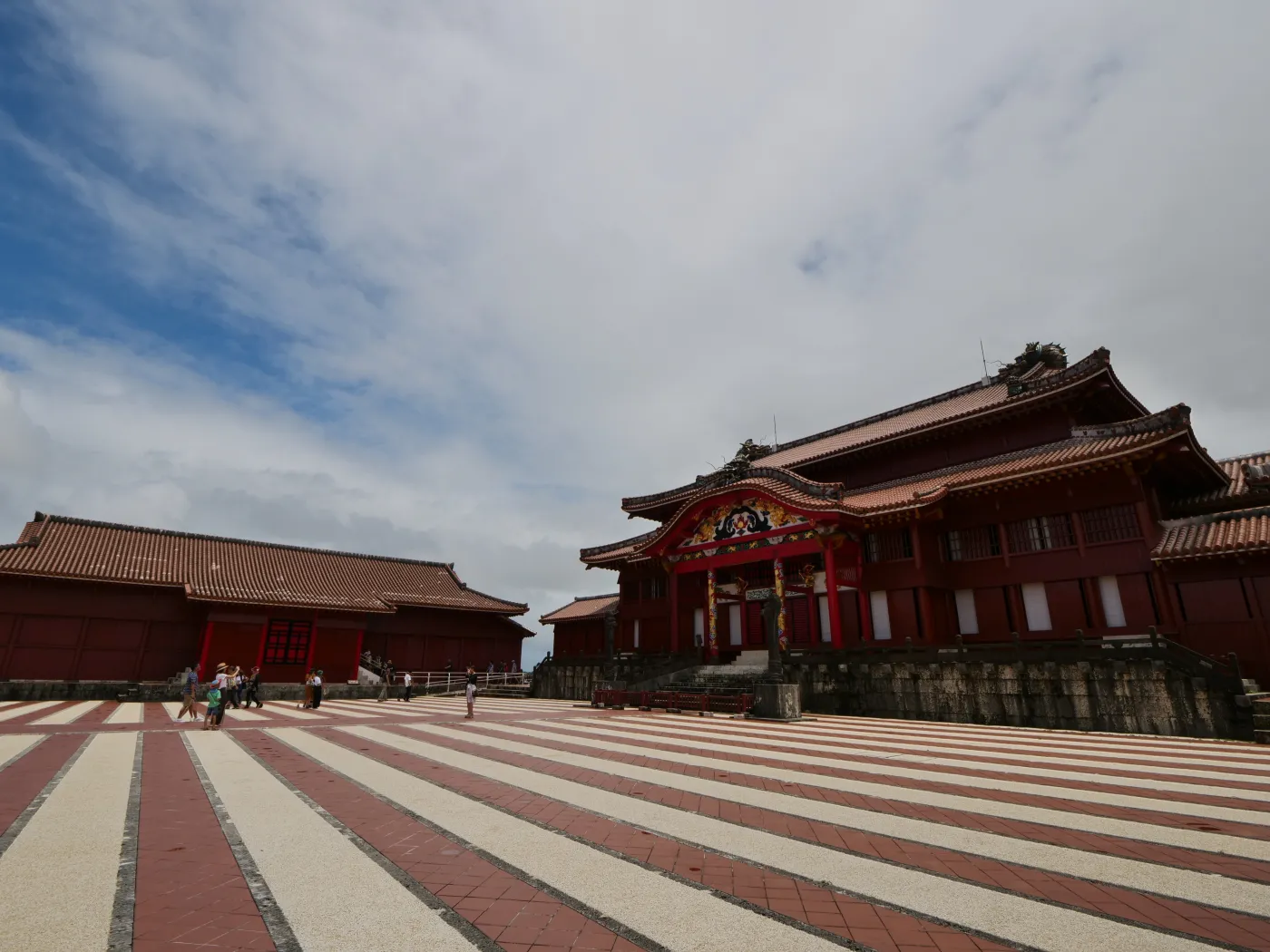
Shuri Castle
The former royal palace of the Ryukyu Kingdom, blending Chinese and Japanese architecture.
Zakimi-jo Site
Zakimi Castle Site is a hilltop gusuku in central Okinawa, renowned for its graceful curved stone walls and finely constructed stone archways. Believed to have been built in the 15th century, it is one of the finest surviving examples of Ryukyuan castle architecture. Its elevated location also offers broad views of the surrounding landscape.
Katsuren-jo Site
Katsuren Castle Site is a spectacular gusuku built on a hill overlooking the Pacific Ocean on the Katsuren Peninsula. It is closely associated with Amawari, a powerful 15th-century lord who prospered through overseas trade. The castle's elegant stone walls and panoramic ocean views make it one of Okinawa's most impressive historic sites.
Nakagusuku-jo Site
Nakagusuku Castle Site is a large gusuku fortress located on a hill in central Okinawa. Its extensive stone walls and multiple defensive enclosures remain remarkably well preserved, providing an excellent example of traditional Ryukyuan castle architecture. From its elevated position, visitors can enjoy sweeping views toward both the Pacific Ocean and the East China Sea.
Sefa-utaki
Sêfa-utaki is one of the most sacred sites of the Ryukyuan religious tradition and was closely associated with royal rituals during the Ryukyu Kingdom. Unlike conventional religious buildings, its sacred spaces are formed by natural rocks, forests, and the surrounding landscape. The site offers a unique insight into the indigenous spiritual traditions and nature worship of the Ryukyuan people.
Tamaudun
Tamaudun is a royal mausoleum built in 1501 for the kings and members of the Second Shō Dynasty of the Ryukyu Kingdom. The impressive stone tomb is divided into eastern, central, and western chambers and reflects the distinctive funerary traditions of the Ryukyuan royal family. Located near Shuri Castle, it is an important monument to the history and culture of the Ryukyu Kingdom.
Sonohyan-utaki Ishimon
Sonohyan-utaki Ishimon is a traditional limestone gate located near Shuri Castle. It was an important sacred site where prayers were offered for the safety of the king before journeys throughout the kingdom. The gate represents the close relationship between royal authority, architecture, and traditional Ryukyuan spiritual beliefs.
Shikinaen
Shikinaen is a royal garden built in the late 18th century and was also used to entertain diplomatic envoys from China. Centered around a pond, its strolling-garden design combines Okinawan scenery with influences from Chinese and Japanese garden traditions. It provides an important glimpse into the diplomacy and cultural exchanges of the Ryukyu Kingdom.
Nakijin-jo Site
Nakijin Castle Site is one of the major gusuku fortresses built on a hill in northern Okinawa before the establishment of the unified Ryukyuan Kingdom. Its impressive stone walls overlook the surrounding mountains and beautiful coastline. The site provides important insight into the history and culture of the Hokuzan region and is a remarkable example of the way Ryukyuan fortifications blend with the natural landscape.
Hiroshima Peace Memorial (Genbaku Dome)
A building that survived the atomic bombing of 1945, a stark symbol of peace.
Historic Villages of Shirakawa-go and Gokayama
Mountain villages famous for their traditional gassho-style houses with steep thatched roofs.
Sado Island Gold Mine
Historic gold and silver mines active for over 400 years on Sado Island.
Mozu-Furuichi Kofun Group
49 kofun burial mounds including the world's largest keyhole-shaped tomb.
Hidden Christian Sites in the Nagasaki Region
Sites of the Hidden Christians who secretly practiced faith during the ban era.
Sacred Island of Okinoshima
A sacred island where rituals were performed from the 4th to 9th centuries.
National Museum of Western Art
Designed by Le Corbusier, representing his contribution to the Modern Movement.
Tomioka Silk Mill
A historic silk mill established in 1872 as a model factory for Japan's modernization.
Mount Fuji
Japan's highest peak and iconic symbol, revered as a sacred mountain for centuries.
Miho no Matsubara
A scenic pine grove on a peninsula with iconic views of Mt. Fuji across Suruga Bay.
Hiraizumi
Temples, gardens and archaeological sites representing the Buddhist Pure Land of the 11th-12th centuries.
Iwami Ginzan Silver Mine
A historic silver mine complex once producing a third of the world's silver.
Sacred Sites and Pilgrimage Routes in the Kii Mountain Range
Sacred sites and pilgrimage routes reflecting 1,200 years of religious tradition.
Gusuku Sites and Related Properties of the Kingdom of Ryukyu
Castle ruins and sacred sites reflecting Ryukyu Kingdom cultural exchanges.
Shrines and Temples of Nikko
A lavishly decorated shrine and temple complex set among ancient cedar forests.
Itsukushima Shrine
A shrine with a vermilion torii gate standing in the sea, changing with the tides.
Historic Villages of Shirakawa-go
Traditional gassho-zukuri farmhouses with steep thatched roofs in a mountain valley.
Historic Monuments of Ancient Kyoto
17 temples, shrines, and castles including Kinkaku-ji, Kiyomizu-dera, and Nijo Castle.
Himeji Castle
Japan's finest surviving feudal-era castle, known as White Heron Castle for its elegant appearance.
Buddhist Monuments in the Horyu-ji Area
Among the oldest surviving wooden structures in the world, dating from the 7th century.
Jomon Prehistoric Sites in Northern Japan
17 archaeological sites illustrating the Jomon culture over 10,000 years.
Sites of Japan's Meiji Industrial Revolution
Industrial heritage sites testifying to Japan's rapid industrialization from the 1850s.
Kumano Kodo Iseji Route
An ancient pilgrimage route connecting Ise Shrine to the Kumano shrines.
Historic Monuments of Ancient Nara
Buddhist temples, Shinto shrines, and an excavated imperial palace in the ancient capital.
Atomic Bomb Dome
The skeletal ruins of a building near the hypocenter of the atomic bombing, a peace memorial.
Gokayama Historic Villages
Traditional gassho-zukuri farmhouses with steep thatched roofs in a mountain setting.
Enryakuji Temple
A vast temple complex on Mount Hiei, headquarters of the Tendai Buddhist school since 788.
Patrimonio Naturale (6)
Amami-Oshima, Tokunoshima, Northern Part of Okinawa Island, and Iriomote Island
Subtropical rainforests on islands in southern Japan, home to many endemic and endangered species including the Iriomote cat.
Shiretoko
A remote peninsula with pristine ecosystem linking marine and terrestrial environments.
Yakushima
A subtropical island with ancient cedar forests, including trees over 1,000 years old.
Shirakami-Sanchi
A vast virgin beech forest spanning mountains between Akita and Aomori, home to diverse wildlife.
Amami-Oshima Island
Subtropical rainforests home to endemic species including the Amami rabbit.
Ogasawara Islands
A remote volcanic island chain with unique evolutionary processes and endemic species.
Attrazione (123)
Hikone Castle
One of only twelve original-construction castles remaining in Japan, overlooking Lake Biwa.
Matsumoto Castle
One of Japan's premier castles with a striking black six-story keep and mountain backdrop.
Kenroku-en Garden
One of Japan's three most celebrated landscape gardens with ponds and seasonal beauty.
Matsushima Bay
One of Japan's Three Most Scenic Views, featuring over 260 pine-clad islands in a calm bay.
Kakunodate Samurai District
A preserved samurai district with cherry tree-lined streets and traditional black-walled residences.
Yamadera Temple
A mountain temple with 1,015 stone steps leading to breathtaking cliff-top views, immortalized in Basho's haiku.
Tsuruga Castle
A castle known for its unique red-tile roof, symbol of the samurai spirit of Aizu.
Kairakuen Garden
One of Japan's Three Great Gardens, famous for over 3,000 plum trees blooming in early spring.
Kawagoe Little Edo
A historic district with Edo-period warehouse-style buildings and a famous bell tower.
Naritasan Shinshoji Temple
A major Buddhist temple founded in 940 AD, attracting over 10 million visitors annually.
Great Buddha of Kamakura
A monumental outdoor bronze statue of Amida Buddha dating from 1252.
Kurobe Gorge
Japan's deepest V-shaped gorge accessed by a scenic trolley train through mountains.
Tojinbo Cliffs
Dramatic columnar basalt cliffs rising 25 meters above the Sea of Japan.
Nagoya Castle
A castle famous for its golden shachihoko (dolphin-fish) roof ornaments and Honmaru Palace.
Ise Grand Shrine
Japan's most sacred Shinto shrine, rebuilt every 20 years to maintain its original purity.
Tottori Sand Dunes
The largest sand dunes in Japan, stretching 16km along the Sea of Japan coast.
Korakuen Garden
One of Japan's Three Great Gardens, featuring vast lawns, ponds, and plum groves.
Kintaikyo Bridge
A distinctive five-arch wooden bridge built in 1673 without nails.
Iya Valley Vine Bridges
Primitive suspension bridges made of mountain vines spanning the Iya River gorge.
Ritsurin Garden
A landscaped garden considered one of Japan's finest, with six ponds and thirteen hills.
Matsuyama Castle
An original castle perched atop a hill in the center of Matsuyama city.
Kochi Castle
One of only twelve castles with an original keep, built by feudal lord Yamauchi Katsutoyo.
Yoshinogari Historical Park
Japan's largest Yayoi-period archaeological site with reconstructed ancient settlement.
Kumamoto Castle
One of Japan's three premier castles, known for its impressive stone walls and keep.
Beppu Hot Springs
Japan's most prolific hot spring city with eight distinct hot spring areas and hells.
Takachiho Gorge
A dramatic gorge with 80-100m high cliffs and a famous waterfall, linked to Japanese mythology.
Osaka Castle
A landmark castle built by Toyotomi Hideyoshi in 1583, now a museum with park.
Sapporo Clock Tower
A historic wooden building from 1878, one of the few surviving Western-style structures from early Hokkaido development.
Chusonji Temple
A Buddhist temple complex famous for its Konjikido (Golden Hall) covered entirely in gold leaf.
Zuiganji Temple
A Zen temple dating from 828 AD, rebuilt by Date Masamune with elaborately decorated rooms.
Lake Tazawa
Japan's deepest lake with crystal-clear cobalt blue water, surrounded by mountains.
Ginzan Onsen
A fairy-tale hot spring town with gaslit wooden ryokan lining a mountain stream.
Ouchi-juku
A preserved post town from the Edo period with thatched-roof buildings along a mountain road.
Hitachi Seaside Park
A vast park famous for its seasonal flower displays, especially the blue nemophila carpet in spring.
Kegon Falls
A 97-meter waterfall plunging from Lake Chuzenji, one of Japan's most famous waterfalls.
Kusatsu Onsen
One of Japan's most famous hot spring resorts, known for its Yubatake (hot water field) and acidic waters.
Chichibu Shrine
An ancient shrine with colorful carvings, central to the famous Chichibu Night Festival.
Nokogiriyama
A mountain with a cliff-edge viewpoint and giant stone Buddha carved into the mountainside.
Tsurugaoka Hachimangu
Kamakura's most important shrine, founded in 1063 by the Minamoto clan.
Echigo-Tsumari Art Field
An open-air art festival region with permanent installations across rural landscapes.
Kanazawa Castle
A castle park featuring beautifully restored gates and turrets in the heart of Kanazawa.
Eiheiji Temple
One of two head temples of the Soto Zen school, deep in a cedar forest.
Fuji Five Lakes
Five scenic lakes at the northern base of Mt. Fuji offering stunning reflections.
Takayama Old Town
A beautifully preserved Edo-period merchant district with sake breweries and morning markets.
Nihondaira
A hilltop with one of the finest views of Mt. Fuji and Suruga Bay.
Zenkoji Temple
A non-denominational Buddhist temple founded in the 7th century, one of the most visited in Japan.
Atsuta Shrine
One of Japan's most important Shinto shrines, housing the sacred sword Kusanagi.
Lake Biwa
Japan's largest freshwater lake, over 4 million years old with unique endemic species.
Kiyomizu-dera Temple
A hilltop temple famous for its wooden stage offering panoramic views of Kyoto.
Arima Onsen
One of Japan's oldest hot spring resorts, famous for its iron-rich golden waters.
Kumano Nachi Taisha
A grand shrine at the foot of Nachi Falls, the tallest single-drop waterfall in Japan.
Daisen
A volcanic peak known as the Mt. Fuji of Western Japan with ancient beech forests.
Izumo Taisha
One of Japan's most ancient and important Shinto shrines, dedicated to the god of relationships.
Kurashiki Bikan Historical Quarter
A preserved canal district with white-walled warehouses turned into museums and shops.
Akiyoshidai Plateau and Akiyoshido Cave
Japan's largest karst plateau with a spectacular limestone cave system below.
Naruto Whirlpools
Powerful tidal whirlpools formed in the Naruto Strait between Tokushima and Awaji Island.
Kotohiragu Shrine
A shrine at the top of 1,368 stone steps on Mt. Zozu, patron of seafarers.
Dogo Onsen
One of Japan's oldest hot springs, with the iconic Honkan bathhouse from 1894.
Shimanto River
Known as Japan's last clear stream, famous for its traditional fishing methods and scenery.
Arita Porcelain Town
The birthplace of Japanese porcelain with a 400-year pottery tradition.
Aso Caldera
One of the world's largest calderas with an active volcano and vast grasslands.
Yufuin Onsen
A picturesque hot spring town at the foot of Mt. Yufu with art galleries and cafes.
Aoshima Shrine
A colorful shrine on a small tropical island connected by a causeway, surrounded by unique rock formations.
Dazaifu Tenmangu
A shrine dedicated to the god of learning, attracting students from across Japan.
Senso-ji Temple
Tokyo's oldest temple founded in 645 AD, famous for its Kaminarimon gate.
Fushimi Inari Taisha
The head shrine of Inari with thousands of vermilion torii gates up Mount Inari.
Todai-ji Temple
Home to the world's largest bronze Buddha in one of the world's largest wooden buildings.
Dotonbori
Osaka's famous entertainment district with neon signs, street food, and the Glico Man.
Otaru Canal
A picturesque canal lined with historic stone warehouses from the early 20th century, now housing shops and restaurants.
Nebuta Museum
A museum showcasing the spectacular Nebuta festival floats, Aomori's most famous cultural event.
Geibikei Gorge
A scenic gorge where visitors enjoy traditional boat rides along crystal-clear waters between towering cliffs.
Sendai Castle Ruins
The ruins of Date Masamune's castle offering panoramic views of Sendai city.
Nyuto Onsen
A secluded hot spring village in the mountains known for its milky white waters and rustic ryokan.
Zao Juhyo (Snow Monsters)
Natural ice formations on trees creating otherworldly snow monster landscapes in winter.
Goshikinuma Five-Colored Lakes
A chain of volcanic lakes each displaying different vivid colors due to mineral content.
Ashikaga Flower Park
A flower park famous for its spectacular Great Wisteria displays in spring.
Hakone Open-Air Museum
Japan's first open-air museum featuring sculptures set against mountain scenery.
Higashi Chaya District
A beautifully preserved geisha district with traditional wooden teahouses from the Edo period.
Fukui Prefectural Dinosaur Museum
One of the world's top dinosaur museums built near major fossil discovery sites.
Shosenkyo Gorge
A scenic gorge with granite cliffs, waterfalls, and autumn foliage along a crystal stream.
Gifu Castle
A mountaintop castle offering panoramic views, once the base of Oda Nobunaga.
Atami
A historic hot spring resort town on the coast with ocean views and fireworks.
Jigokudani Monkey Park
A park where wild Japanese macaques bathe in natural hot springs during winter.
Toyota Commemorative Museum
A museum showcasing the evolution from textile machinery to automobile manufacturing.
Toba Aquarium
One of Japan's largest aquariums with over 1,200 species including rare dugongs.
Kobe Harborland
A waterfront shopping and entertainment district with views of Kobe Port Tower.
Koyasan (Mount Koya)
A mountain temple complex and center of Shingon Buddhism with over 100 temples.
Adachi Museum of Art
A museum renowned for its Japanese garden, consistently ranked the best in Japan.
Okayama Castle
A castle with distinctive black exterior, nicknamed Crow Castle.
Hiroshima Peace Memorial Park
A park dedicated to the victims of the atomic bombing with museums and monuments.
Rurikoji Temple Five-Story Pagoda
One of Japan's three finest pagodas, standing beside a reflecting pond.
Naoshima Art Island
An island dedicated to contemporary art with museums by Tadao Ando and outdoor sculptures.
Shimanami Kaido
A 70km cycling route across six islands connecting Honshu and Shikoku via bridges.
Cape Ashizuri
The southernmost point of Shikoku with dramatic cliffs and a historic lighthouse.
Nagasaki Peace Park
A park commemorating the atomic bombing with the Peace Statue and memorial monuments.
Suizenji Garden
A landscaped garden recreating the 53 stations of the Tokaido road in miniature.
Usuki Stone Buddhas
Over 60 cliff-carved Buddha statues from the 12th century, designated as national treasures.
Udo Shrine
A shrine built inside a cave on a cliff overlooking the Pacific Ocean.
Sakurajima Volcano
An active volcano visible from Kagoshima city, one of Japan's most active volcanoes.
Fukuoka Tower
Japan's tallest seaside tower at 234m with panoramic views of the city and Hakata Bay.
Tokyo Tower
A 333-metre communications tower, an iconic symbol of postwar Tokyo.
Kinkaku-ji (Golden Pavilion)
A Zen temple whose top floors are covered in gold leaf, reflected in a mirror pond.
Asahiyama Zoo
An innovative zoo famous for its behavioral exhibits allowing visitors to observe animals in natural-like environments.
Hirosaki Castle
A castle known for its stunning cherry blossom season with over 2,600 cherry trees in the surrounding park.
Enoshima Island
A small island connected by bridge offering shrines, caves, and views of Mt. Fuji.
Kamikochi
A highland valley in the Northern Alps with pristine rivers and mountain scenery.
Sumiyoshi Taisha
One of Japan's oldest shrines with a unique architectural style predating Chinese influence.
Kasuga Taisha
A Shinto shrine famous for its thousands of stone and bronze lanterns in a primeval forest.
Onomichi Temple Walk
A hillside trail passing through 25 temples with views of Seto Inland Sea islands.
Glover Garden
A park featuring Western-style residences from the late Edo period with harbor views.
Sengan-en Garden
A feudal lord's garden with Sakurajima as its borrowed landscape, showcasing Shimazu clan history.
Kerama Islands
Crystal-clear waters designated as a national park, famous for diving and whale watching.
Canal City Hakata
A large shopping and entertainment complex with a canal running through the center.
Arashiyama Bamboo Grove
A serene pathway through towering bamboo stalks in Kyoto's Arashiyama district.
Lake Toya
A caldera lake surrounded by volcanic mountains, offering year-round hot springs and stunning scenery.
Meiji Shrine
A Shinto shrine surrounded by a vast forest in the heart of Tokyo, dedicated to Emperor Meiji.
Nara Park
A vast park home to over 1,000 freely roaming sacred deer alongside historic temples.
Hashima Island (Gunkanjima)
An abandoned coal mining island resembling a battleship, now a UNESCO site.
Nijo Castle
A flatland castle built in 1603 by Tokugawa Ieyasu, famous for its nightingale floors.
Shibuya Crossing
The world's busiest pedestrian crossing where thousands cross simultaneously.
Tokyo Skytree
The world's tallest tower at 634 metres with panoramic observation decks.
Yasaka Shrine
A vibrant shrine in Gion district, famous for the Gion Festival held every July.
Ginkaku-ji (Silver Pavilion)
A Zen temple known for its sand garden and moss-covered grounds at the base of the Eastern Mountains.