Entry Procedures
Visa and entry requirements depend on the country that issued your passport. The information here is general guidance. Always confirm the requirements for your own nationality with the official source.
This information is for general guidance only. Please verify with the embassy or official government sources before traveling.
Visa Requirements
Types of visas required and their conditions
Germany is in the Schengen area. Many nationalities can visit visa-free for up to 90 days in any 180-day period. The EU is phasing in EES and ETIAS — check the latest rules for your nationality before you travel.
- Schengen
- Up to 90 days per 180
- EES/ETIAS
- Being phased in — verify before travel
- By nationality
- Rules vary; check official sources
- Longer stays or work require the appropriate visa
Passport Conditions
Required validity period and blank pages
For Schengen entry your passport must usually be issued within the last 10 years and valid for at least 3 months after your planned departure. Check your passport meets both rules before travel.
- Issued
- Within last 10 years
- Validity
- 3 months beyond departure
- Check
- Both rules must be met
- Border officers may check both dates on arrival
Required Documents & Pre-registration
Arrival cards, health declarations, and other preparations
Border officers may ask for proof of your stay: return/onward ticket, accommodation booking, and sufficient funds. Carry travel insurance details and, if relevant, your EES/ETIAS status.
- Tickets
- Return or onward travel
- Stay
- Accommodation and funds
- Insurance
- Recommended proof
- Keep digital and paper copies of key documents
Cash Import Limits
Declaration-free limits and procedures for excess amounts
If you enter or leave the EU carrying €10,000 or more (or equivalent in other currencies/instruments), you must declare it to customs. Within the EU, carrying €10,000 or more should be declared verbally on request; keep proof of large sums.
- Threshold
- €10,000 or more
- Declare
- Entering/leaving the EU
- Includes
- Cash and equivalents
- Undeclared cash can be seized and fined
Duty-Free Allowances & Restricted Items
Limits on tobacco, alcohol, food, and other goods
Arriving from outside the EU, travellers can bring goods duty-free up to €430 by air/sea (lower for land and for under-15s). Tobacco/alcohol limits apply (e.g. 200 cigarettes). Within the EU, goods for personal use move freely.
- Air/sea
- Up to €430
- Tobacco
- e.g. 200 cigarettes (non-EU)
- EU internal
- Personal-use goods free
- Over the limit you must declare and pay duty/VAT
Prohibited Items
Items that are strictly forbidden from import
Prohibited or restricted: illegal drugs, weapons, counterfeit goods, and protected species (CITES). Nazi propaganda material is banned. Meat, dairy and many plant products from outside the EU are restricted. Declare anything you are unsure about.
- Banned
- Drugs, weapons, Nazi material
- Restricted
- Meat/dairy from non-EU
- Protected
- CITES species and products
- When in doubt, use the red channel and declare
Medication Import Rules
Rules for bringing prescription and over-the-counter drugs
Bring prescription medicines in their original packaging with a copy of the prescription or a doctor's letter (ideally in English or German). Some substances (e.g. certain strong painkillers) are controlled — check rules before travel.
- Packaging
- Original, with prescription
- Letter
- Doctor's note recommended
- Controlled
- Verify strong medicines first
- Carry medicines in hand luggage for personal use
Vaccinations & Health Requirements
Required and recommended vaccines for entry
No special vaccinations are required to enter Germany for most travellers. Make sure routine vaccines are up to date. Those hiking in forested areas may consider tick-borne encephalitis (TBE) vaccination — ask your doctor.
- Required
- None for most travellers
- Routine
- Keep standard vaccines current
- Consider
- TBE if hiking in forests
- Check requirements if arriving from a yellow-fever area
Immigration Process
Step-by-step guide from arrival to clearing immigration
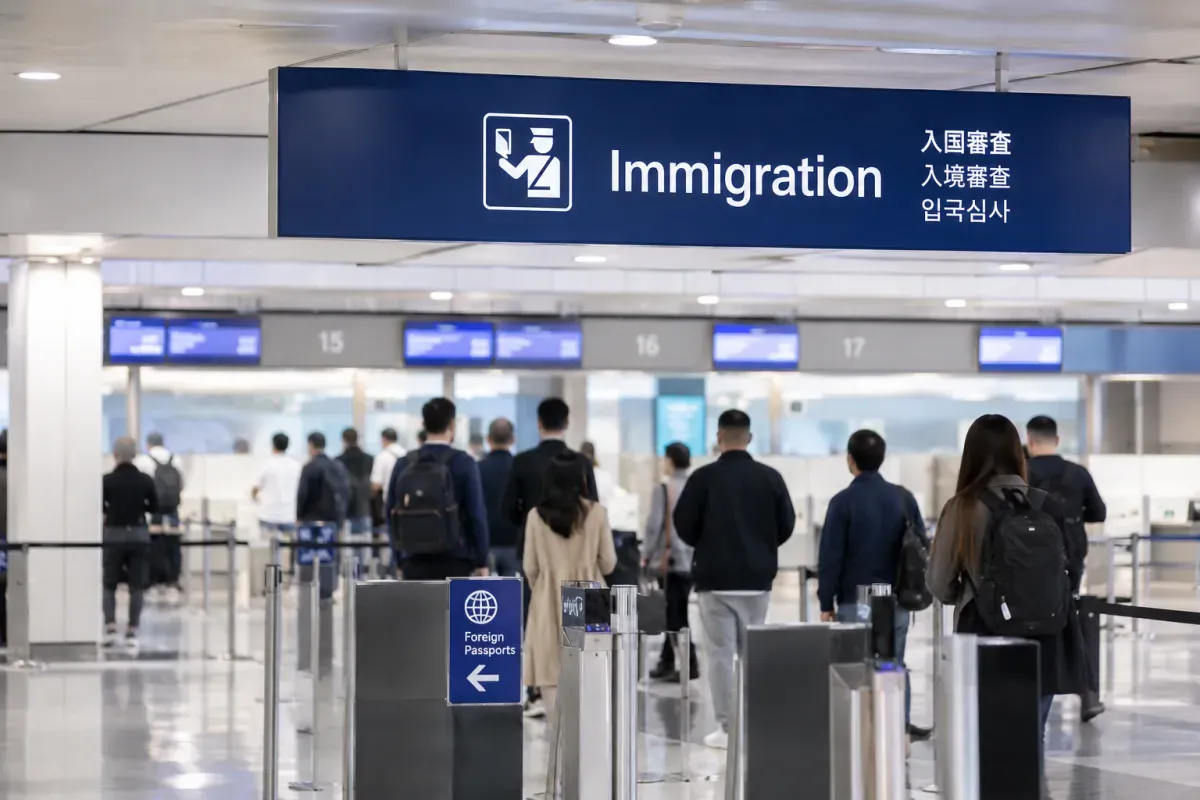
At the airport, follow signs to passport control and use the lane for your passport type (EU/EEA or All passports/non-EU). The EU is rolling out the Entry/Exit System (EES) with biometrics (fingerprints/photo) for non-EU visitors — allow extra time.
- Lanes
- EU/EEA vs non-EU
- EES
- Biometrics being introduced
- Time
- Allow extra at first entry
- Have your documents and stay proof ready at the desk
Tips for Smooth Entry
Practical advice for a hassle-free arrival
Schengen days are counted across all Schengen countries, not just Germany — track your total 90/180 carefully. Emergency numbers are 112 (ambulance/fire) and 110 (police). Carry some cash: many shops and restaurants still prefer or only accept it. Most shops close on Sundays.
- Schengen days
- Counted across all countries
- Emergency
- 112 and 110 (police)
- Cash
- Carry some; shops shut Sundays
- Tap water is safe to drink across Germany