
Entry Procedures
Visa and entry requirements depend on the country that issued your passport. The information here is general guidance. Always confirm the requirements for your own nationality with the official source.
This information is for general guidance only. Please verify with the embassy or official government sources before traveling.
Visa Requirements
Types of visas required and their conditions
Greece is part of the Schengen Area. Many nationalities can visit visa-free for short tourism stays of up to 90 days within any 180-day period, but this depends on your nationality and rules can change. The EU also plans to introduce ETIAS pre-travel authorisation for visa-exempt travellers. Always confirm the current requirements for your passport with an official source before you travel.
- Zone
- Schengen
- Many visitors
- Up to 90 days
- Coming
- ETIAS planned
- Rules depend on nationality and can change
- Confirm current requirements officially before travel
Passport Conditions
Required validity period and blank pages
For Schengen entry, non-EU passports generally need to be valid for at least three months beyond your planned departure and issued within the previous 10 years. EU and EEA nationals can travel with a valid passport or national ID card. Check that your passport is undamaged and has blank pages. Rules vary by nationality, so confirm the exact conditions officially before you travel.
- Validity
- 3 months beyond
- Issued
- Within 10 years
- EU/EEA
- Passport or ID
- Non-EU passports: 3 months validity, under 10 years old
- Check pages and confirm rules for your nationality
Required Documents & Pre-registration
Arrival cards, health declarations, and other preparations
Border officers may ask non-EU visitors for proof of onward or return travel, accommodation bookings, sufficient funds and travel insurance. Having these ready speeds up entry. Keep printed or digital copies of your hotel reservation, return ticket and insurance. Requirements are usually light for tourists, but be prepared to show your plans if asked.
- May show
- Return ticket
- Also
- Hotel, funds
- Handy
- Insurance proof
- Keep bookings and return ticket accessible
- Have proof of funds and insurance ready
Cash Import Limits
Declaration-free limits and procedures for excess amounts
If you enter or leave the EU carrying cash of 10,000 euros or more, or the equivalent in other currencies, you must declare it to customs. This includes banknotes, coins and easily convertible instruments such as cheques. Travel within the Schengen Area is not usually checked, but keep proof of the source of large sums. Declaring is free; failing to declare can lead to fines.
- Threshold
- EUR 10,000
- Action
- Declare to customs
- Applies
- In/out of EU
- Includes cash and cheque-like instruments
- Keep proof of source for large sums
Duty-Free Allowances & Restricted Items
Limits on tobacco, alcohol, food, and other goods
For non-EU arrivals, duty-free allowances apply to tobacco, alcohol and gifts up to set value limits; typical limits are 200 cigarettes and one litre of spirits per adult. Travellers coming from another EU country move goods freely for personal use. Keep receipts for valuable electronics. Exceeding allowances means declaring goods and paying duty, so check current limits before you fly.
- Tobacco
- 200 cigarettes
- Spirits
- 1 litre
- EU travel
- Free for personal use
- Allowances apply to arrivals from outside the EU
- Declare and pay duty if over the limits
Prohibited Items
Items that are strictly forbidden from import
Exporting antiquities and archaeological artefacts from Greece is strictly forbidden without an official permit, and this includes ancient coins, pottery fragments and even stones or pebbles taken from historic sites and beaches. Offenders can face serious fines and prosecution. Illegal drugs, weapons and protected wildlife products are also banned. Buy only from licensed dealers and keep certificates for genuine antiques.
- Banned
- Antiquities export
- Includes
- Stones, fragments
- Risk
- Fines, prosecution
- Do not remove artefacts, stones or pebbles from sites
- Buy antiques only from licensed dealers with papers
Medication Import Rules
Rules for bringing prescription and over-the-counter drugs
Carry personal medication in original packaging with a copy of your prescription, ideally in English. Some medicines that are routine at home, especially strong painkillers and certain psychotropics, may be controlled in Greece, so check before you travel and bring a doctor's letter. Pharmacies are widespread and well stocked, marked by a green cross, and pharmacists can advise on common ailments.
- Carry
- Original packaging
- Bring
- Prescription copy
- Pharmacies
- Green cross
- Check controlled medicines before travelling
- A doctor's letter helps at the border
Vaccinations & Health Requirements
Required and recommended vaccines for entry
No special vaccinations are required to enter Greece for most travellers. Health authorities suggest being up to date on routine vaccines such as MMR, tetanus and seasonal flu, and some recommend hepatitis A depending on your plans. There is no malaria risk for typical tourism. Check the latest advice from your doctor or a travel clinic well before departure.
- Required
- None special
- Routine
- MMR, tetanus
- Malaria
- No risk for tourism
- Stay up to date on routine vaccines
- Ask a travel clinic before departure
Immigration Process
Step-by-step guide from arrival to clearing immigration
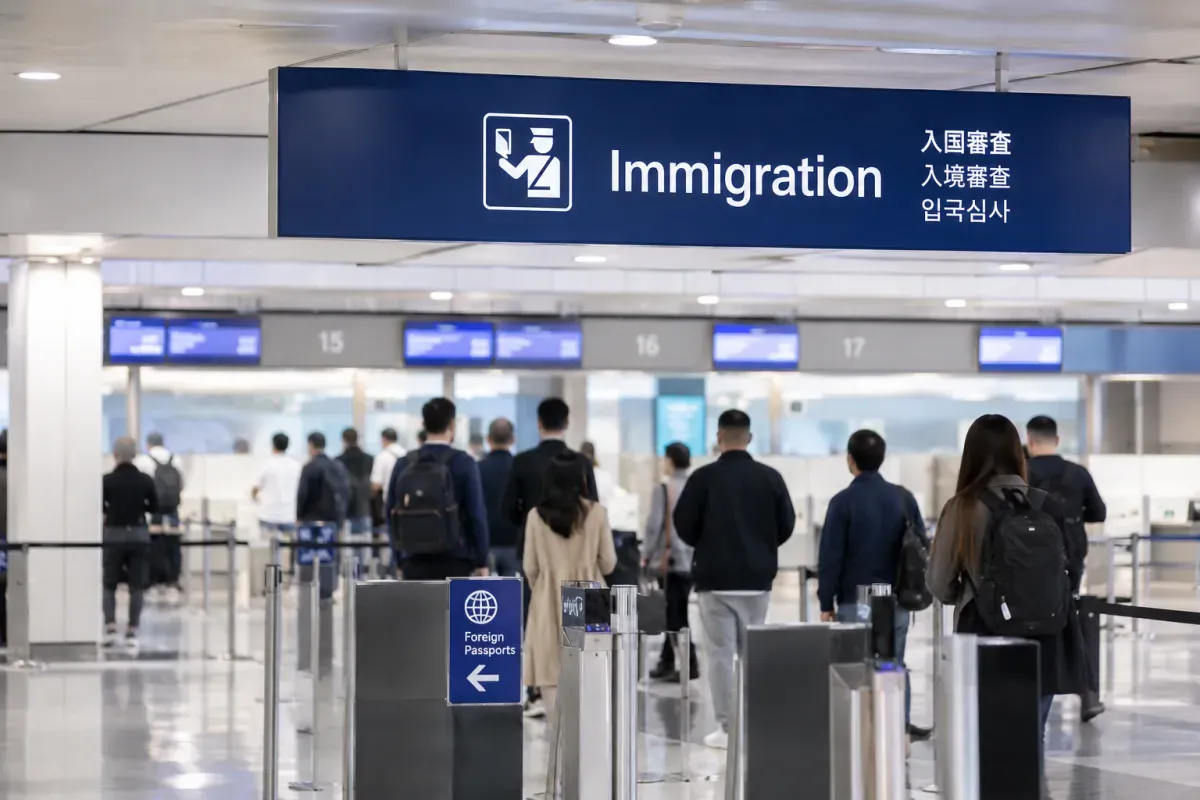
On arrival from outside the Schengen Area, follow signs to passport control, where officers check your passport and may ask brief questions about your stay. EU, EEA and Swiss nationals use dedicated lanes. Flights arriving from within Schengen usually have no passport check. A new EU Entry/Exit System is being rolled out, which may add fingerprint and photo steps for non-EU visitors, so allow extra time.
- Non-Schengen
- Passport control
- EU/EEA
- Dedicated lanes
- New
- EES biometrics
- Intra-Schengen flights usually skip passport checks
- Allow extra time for new biometric steps
Tips for Smooth Entry
Practical advice for a hassle-free arrival
Arrive at the airport with time to spare in the busy summer season, and if you are island-hopping, note that ferries leave from Piraeus and other ports rather than the airport. Keep digital and paper copies of bookings, carry a little cash for small islands and kiosks, and download offline maps. English is widely spoken in tourist areas, and a few Greek greetings are always appreciated.
- Summer
- Arrive early
- Islands
- Ferries from Piraeus
- Carry
- Some cash
- Ferries leave from ports, not the airport
- Download offline maps and keep booking copies