
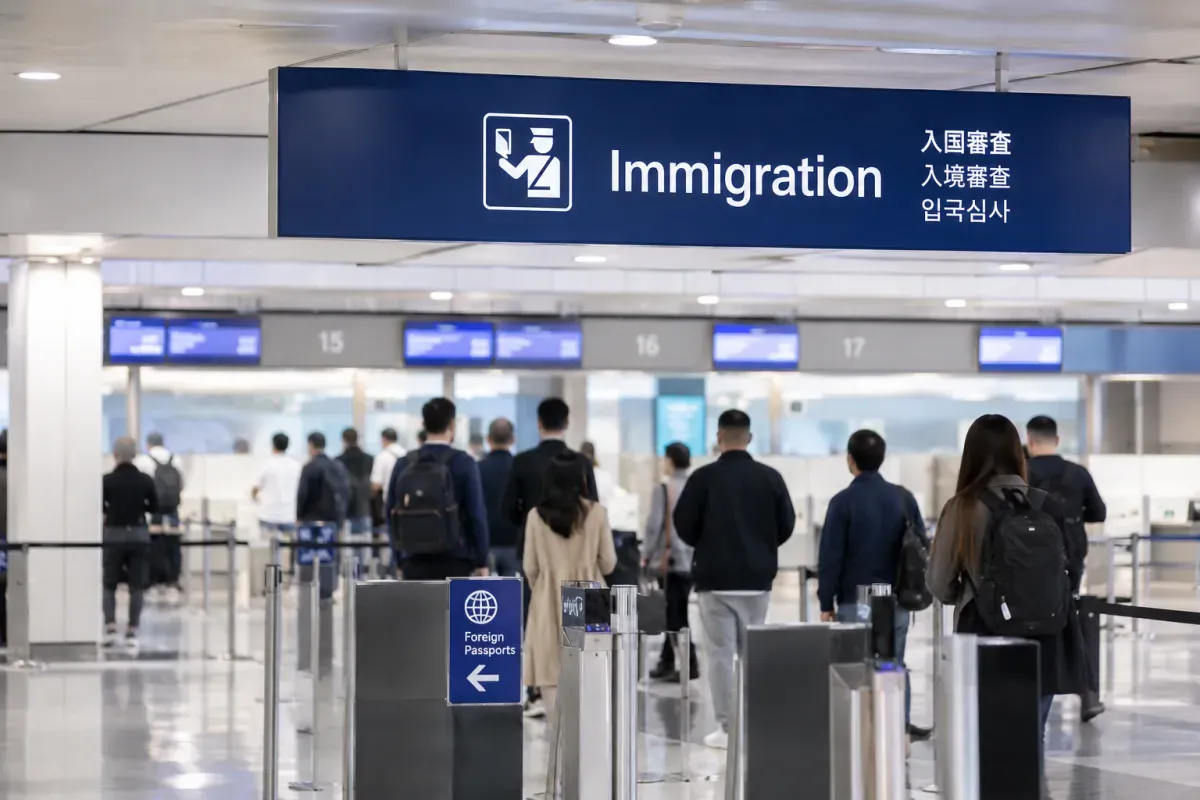
Entry Procedures
Visa and entry requirements depend on the country that issued your passport. The information here is general guidance. Always confirm the requirements for your own nationality with the official source.
This information is for general guidance only. Please verify with the embassy or official government sources before traveling.
Visa Requirements
Types of visas required and their conditions
Many nationalities, including Japan, can enter Israel visa-free for short tourist stays (commonly up to 90 days), while others need a visa in advance. Israel is rolling out an electronic travel authorisation (ETA-IL) for visa-exempt visitors, so requirements are changing. At entry, officials usually issue a paper entry permit (a blue card) rather than stamping your passport. Rules depend on your nationality, so check the official Israeli sources and your embassy before you travel.
- Short stay
- Often up to 90 days
- Authorisation
- ETA-IL being introduced
- Check
- Official sources
- Visa-free entry depends on your nationality
- A paper entry permit is usually issued instead of a passport stamp
Passport Conditions
Required validity period and blank pages
Your passport should generally be valid for at least 6 months beyond your date of entry into Israel. Make sure it has enough blank pages for any entry documentation. Carry the paper entry permit (blue card) with you during your stay and keep it safe, as you may be asked to show it. Check your specific requirements before you travel.
- Validity
- 6 months recommended
- Pages
- Keep blank pages
- Keep
- Entry permit safe
- Passport validity of at least 6 months is recommended
- Keep the paper entry permit safe throughout your stay
Required Documents & Pre-registration
Arrival cards, health declarations, and other preparations
At the border you may be asked to show supporting documents in addition to your passport. These can include a return or onward ticket, proof of accommodation (hotel booking or invitation), evidence of sufficient funds, and travel insurance. Immigration officers may ask about the purpose and details of your visit, so have these documents ready and be prepared to answer clearly.
- Ticket
- Return/onward
- Stay
- Accommodation proof
- Funds
- Sufficient means
- Carry proof of accommodation and onward travel
- Be ready to explain the purpose of your visit
Pre-arrival procedure — ETA-IL (Electronic Travel Authorization): since 2025, visa-exempt travelers must obtain an approved ETA-IL online before travel to Israel. Apply on the official Population and Immigration Authority portal (israel-entry.piba.gov.il / gov.il), where the official fee is about NIS 25. Answers are usually sent by email within about 72 hours, and an approved ETA-IL is valid for up to 2 years or until your passport expires. Beware paid look-alike sites.
Official ETA-IL portal (israel-entry.piba.gov.il)- Surname
- SMITH
- Given name
- MICHAEL
- Nationality
- Your nationality (e.g. a representative country)
- Passport number
- A1234567
- Arrival date
- 2026-04-10
- Entry city
- Tel Aviv
Steps
- 1 Check on the official portal whether your nationality needs an ETA-IL or a visa
- 2 Complete the application with your passport and travel details
- 3 Pay the official fee (about NIS 25) and wait for the email decision (usually within about 72 hours)
- 4 Save the approved ETA-IL and present it with your passport at check-in and immigration
Eligibility, fees, processing time and validity can change; for accurate details we recommend checking with the official government portal before you travel.
Last updated: 2026-08-30
Cash Import Limits
Declaration-free limits and procedures for excess amounts
If you enter or leave Israel carrying cash or bearer instruments above the set reporting threshold, you must declare it to customs. The threshold is higher for those crossing at land borders and lower at airports and seaports, so check the current amount before you travel. Failure to declare can lead to fines or seizure, so complete a cash declaration when required.
- Threshold
- Reporting limit applies
- When
- Entering/leaving Israel
- Action
- Declare to customs
- Thresholds differ between airports/seaports and land borders
- Non-declaration may result in fines or seizure
Duty-Free Allowances & Restricted Items
Limits on tobacco, alcohol, food, and other goods
Arriving travellers have duty-free allowances for personal goods such as alcohol, tobacco and gifts, within set value and quantity limits. Amounts above the allowance must be declared and may be taxed. There are also rules on bringing in food, plants and animal products. Check current allowances with the Israel Tax Authority before you travel.
- Allowance
- Alcohol/tobacco limits
- Over limit
- Declare / may be taxed
- Food
- Rules apply
- Duty-free limits apply to alcohol, tobacco and gifts
- Food, plant and animal products are subject to rules
Prohibited Items
Items that are strictly forbidden from import
Illegal drugs are strictly prohibited and penalties are severe. There are restrictions on weapons and ammunition, on certain food, plant and animal products, and on products from protected species under CITES (such as ivory or certain skins). Counterfeit goods and some materials are also controlled. Check Israel Tax Authority rules and obtain any required permits before you travel.
- Drugs
- Prohibited
- Weapons
- Restricted
- CITES
- Protected species
- Certain food, plant and animal products are restricted
- Protected species products need CITES permits
Medication Import Rules
Rules for bringing prescription and over-the-counter drugs
Bring enough of your prescription medicines for your trip, ideally in their original packaging with the prescription or a copy. Some controlled medicines may require a doctor’s letter explaining your need, and larger quantities may need advance approval. Check the rules with the Israeli Ministry of Health before you travel if you carry controlled substances.
- Prescription
- Carry a copy
- Controlled
- Doctor’s letter
- Large amounts
- May need approval
- Keep medicines in original packaging with documentation
- Advance approval may be needed for controlled substances
Vaccinations & Health Requirements
Required and recommended vaccines for entry
No special vaccinations are required to enter Israel for most travellers. It is recommended that your routine vaccinations are up to date, such as measles-mumps-rubella (MMR), diphtheria-tetanus-polio and others per your home country schedule. Check with your doctor or a travel clinic well before departure for personalised advice.
- Required
- None special
- Routine
- Keep up to date
- Advice
- See your doctor
- Ensure MMR and other routine vaccines are current
- Consult a travel clinic for personalised recommendations
Immigration Process
Step-by-step guide from arrival to clearing immigration
Most travellers arrive at Ben Gurion Airport (TLV) near Tel Aviv, with some using Ramon Airport (ETM) near Eilat. Security is thorough, and immigration officers may ask detailed questions about the purpose of your trip, your itinerary and where you will stay. Answer calmly and honestly. Automated e-gates are available for eligible passports, and you usually receive a paper entry permit instead of a stamp.
- Airports
- TLV / Ramon (ETM)
- Security
- Thorough questioning
- E-gates
- Eligible passports
- Be ready for questions about your visit and itinerary
- A paper entry permit is usually issued instead of a stamp
Tips for Smooth Entry
Practical advice for a hassle-free arrival
Plan around Shabbat: from Friday afternoon to Saturday evening many shops, restaurants and public transport close or run limited services, especially in Jerusalem. Tel Aviv stays livelier. English is widely spoken and getting around is easy. Dress modestly at religious sites, and check reliable official travel advice for the latest situation before and during your trip.
- Shabbat
- Fri eve - Sat eve closures
- Language
- English widely spoken
- Sites
- Dress modestly
- Many services pause from Friday afternoon to Saturday evening
- Check official travel advice for the latest situation