
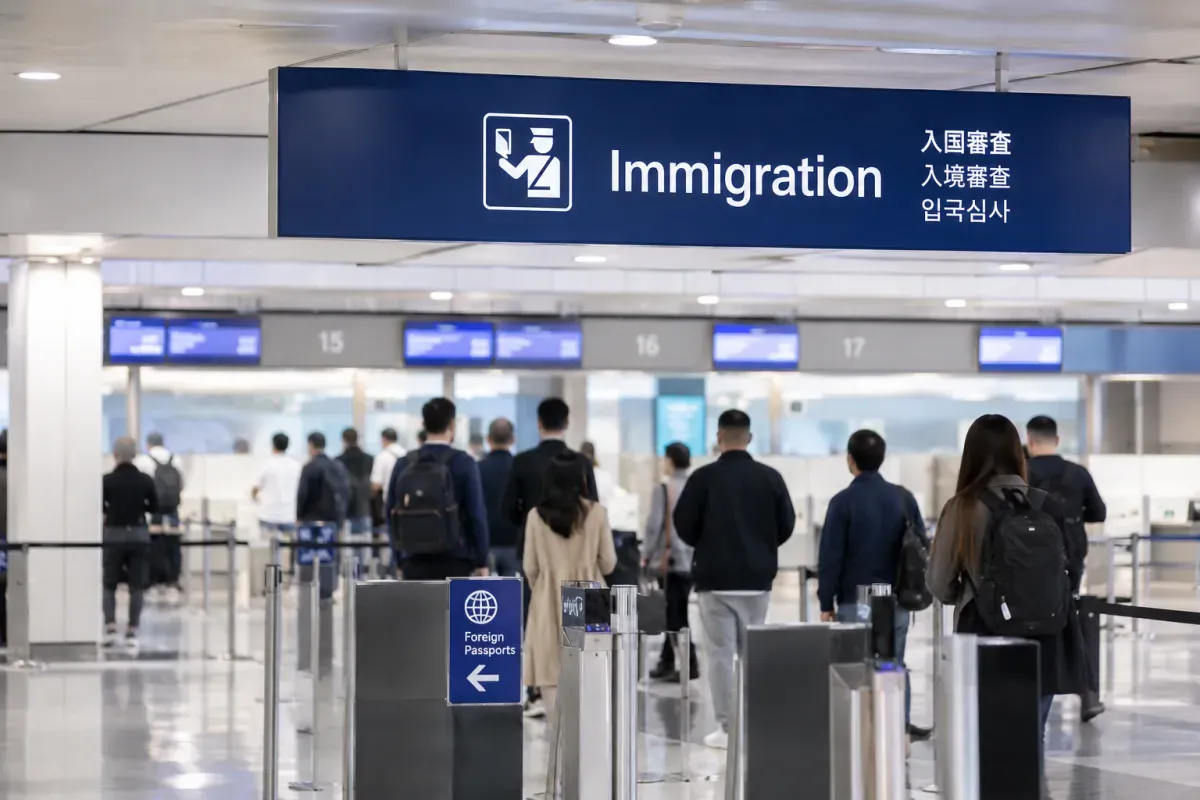
Entry Procedures
Visa and entry requirements depend on the country that issued your passport. The information here is general guidance. Always confirm the requirements for your own nationality with the official source.
This information is for general guidance only. Please verify with the embassy or official government sources before traveling.
Visa Requirements
Types of visas required and their conditions
Most visitors need a visa for Cambodia, but the exact rules depend entirely on your nationality. Common options are the official e-Visa applied for online before travel, and a visa on arrival at the main airports and some land borders. A few nationalities are exempt for short stays. Rules, fees and eligible entry points change, so confirm your own country's latest entry conditions on official sources before you travel, and use only the official e-Visa website.
- Usually
- Visa required
- Options
- e-Visa, on arrival
- Check
- Official sources
- Rules depend entirely on your nationality
- Use only the official e-Visa website
Passport Conditions
Required validity period and blank pages
Cambodia commonly asks for a passport valid for at least six months from your date of entry, with at least one blank page for the visa and stamps. If you use the visa on arrival, you may need a recent passport photo, so bring a couple. Requirements vary by nationality and can change, so confirm the exact passport rules for your case on official sources before you travel. Keep a photo or copy of your passport stored separately in case of loss.
- Validity
- 6 months usual
- Pages
- Blank page for visa
- Bring
- Passport photos
- Bring passport photos for visa on arrival
- Keep a copy of your passport separately
Required Documents & Pre-registration
Arrival cards, health declarations, and other preparations
On arrival, be ready to show your passport, your visa or e-Visa approval, and often proof of onward or return travel and accommodation, plus enough funds for your stay. For visa on arrival, carry the fee in US dollars cash and a passport photo. Keep your e-Visa printout and bookings both on your phone and on paper. Requirements vary by nationality and can change, so check the latest official guidance before you travel.
- Core
- Passport + visa
- Often
- Onward, accommodation
- On arrival
- USD cash + photo
- Carry USD cash and a photo for visa on arrival
- Keep e-Visa printout and bookings handy
Pre-arrival procedure — Cambodia e-Arrival (CeA): since Jul 2024 the paper arrival card is replaced by a digital form required for all air arrivals. Submit within 7 days before arrival via the official site arrival.gov.kh or the Cambodia e-Arrival app; you get a QR code. It covers immigration/customs/health. Separately, many nationalities need an e-Visa from the only official site evisa.gov.kh (paid). Beware paid look-alike sites.
Official Cambodia e-Arrival (arrival.gov.kh)- Family name
- SMITH
- First / given name
- MICHAEL
- Nationality
- Your nationality (e.g. UNITED STATES)
- Passport No.
- A1234567
- Date of birth
- 1990-05-20
- Flight No.
- K6 851
- Date of arrival
- 2026-04-10
- Address in Cambodia
- Hotel name & address (e.g. in Phnom Penh)
How to submit (e-Arrival)
- 1 Open arrival.gov.kh or the "Cambodia e-Arrival" app and create an account.
- 2 Enter passport and personal information.
- 3 Enter travel details and your address in Cambodia.
- 4 Complete the customs/health parts and review all entries.
- 5 Submit and save the QR code; show it at immigration on arrival.
If you need an e-Visa, apply only at evisa.gov.kh. Visa need, fees and conditions can change; confirm the current rules on the official sites before you travel.
Last updated: 2026-08-30
Cash Import Limits
Declaration-free limits and procedures for excess amounts
Cambodia follows international practice on cash: carrying currency or bearer instruments above a set threshold across the border must be declared to customs. As the US dollar is widely used here, travellers often bring dollars, so keep amounts reasonable and declare large sums honestly. Undeclared cash over the limit can be seized. Keep proof of the source of large amounts, and check the current declaration threshold with customs before you travel.
- Declare
- Above threshold
- Common
- USD widely used
- Risk
- Seizure if hidden
- Keep proof of the source of large cash
- Thresholds can change; verify officially
Duty-Free Allowances & Restricted Items
Limits on tobacco, alcohol, food, and other goods
Personal allowances apply to items like tobacco and alcohol brought into Cambodia; modest quantities for personal use are usually fine, while commercial amounts must be declared and may be taxed. Do not buy or export genuine antiquities, protected wildlife products or Angkor-era artefacts, which are restricted. Keep receipts for expensive electronics. Allowances change over time, so check the current customs limits before you travel, especially for duty-free purchases.
- Limits
- Tobacco, alcohol
- Restricted
- Antiquities, wildlife
- Commercial
- Declare it
- Do not export antiquities or protected wildlife
- Keep receipts for expensive items
Prohibited Items
Items that are strictly forbidden from import
Illegal drugs are strictly banned and carry very severe penalties, including long prison terms. Weapons, ammunition, counterfeit goods, and cultural artefacts or antiquities are prohibited or tightly restricted from export, as are protected wildlife products. Never carry anything for a stranger and refuse to take unfamiliar packages. If you bring prescription medicines, keep them in original packaging with documentation. If unsure whether an item is allowed, check with customs before travelling.
- Banned
- Illegal drugs
- Restricted
- Antiquities, weapons
- Rule
- Nothing for strangers
- Drug offences carry very severe penalties
- Exporting antiquities is prohibited
Medication Import Rules
Rules for bringing prescription and over-the-counter drugs
Bring enough of your regular prescription medicines for the whole trip, in their original packaging, with a copy of the prescription or a doctor's letter, as pharmacies outside cities may not stock what you need and counterfeit medicines exist. Some medicines routine at home can be controlled here, especially strong painkillers and sedatives. Pack a basic kit for stomach upsets, and consider malaria advice for remote areas. Check the rules for any controlled medication before you travel.
- Bring
- Enough + original box
- Proof
- Prescription letter
- Watch
- Counterfeits, controlled
- Pharmacies outside cities may lack your medicine
- Beware of counterfeit medicines
Vaccinations & Health Requirements
Required and recommended vaccines for entry
No vaccine is usually required to enter Cambodia unless you arrive from a yellow fever area, when a certificate may be needed. Health bodies commonly recommend keeping routine vaccinations up to date and considering hepatitis A, typhoid and, for some trips, hepatitis B, rabies and Japanese encephalitis. Discuss malaria for remote areas with a travel clinic. See a doctor or travel-health service well before departure, as this is general guidance, not medical advice.
- Required
- Usually none
- Consider
- Hep A, typhoid
- Yellow fever
- If from risk area
- Consider hepatitis A and typhoid vaccination
- See a travel clinic before you go
Immigration Process
Step-by-step guide from arrival to clearing immigration
At Phnom Penh or Siem Reap airport you complete arrival and health or customs forms, then queue for immigration. If you have an e-Visa, show the printout with your passport; for visa on arrival, fill the form, hand over the fee in US dollars cash and a photo, and collect your visa. Lines can be slow, so be patient. Keep the arrival stamp and any card safe, as you may need it to leave. Some officials may hint at tips; politely stick to official procedures.
- Airports
- PNH, Siem Reap
- e-Visa
- Show printout
- On arrival
- USD cash + photo
- Lines can be slow; be patient
- Stick to official procedures, avoid unofficial tips
Tips for Smooth Entry
Practical advice for a hassle-free arrival
Smooth your Cambodia arrival with a little prep. Apply for the e-Visa on the official site before you fly, or carry clean US dollar notes and a passport photo for visa on arrival. Bring small, undamaged US dollars, as torn notes are often refused. Have your hotel address written down, agree tuk-tuk fares in advance, and download a ride app and offline maps. Confirm your nationality's latest entry rules on official sources before you set off.
- Visa
- e-Visa or on arrival
- Cash
- Clean USD notes
- Apps
- Ride app, maps
- Torn US dollar notes are often refused
- Agree tuk-tuk fares before you ride