
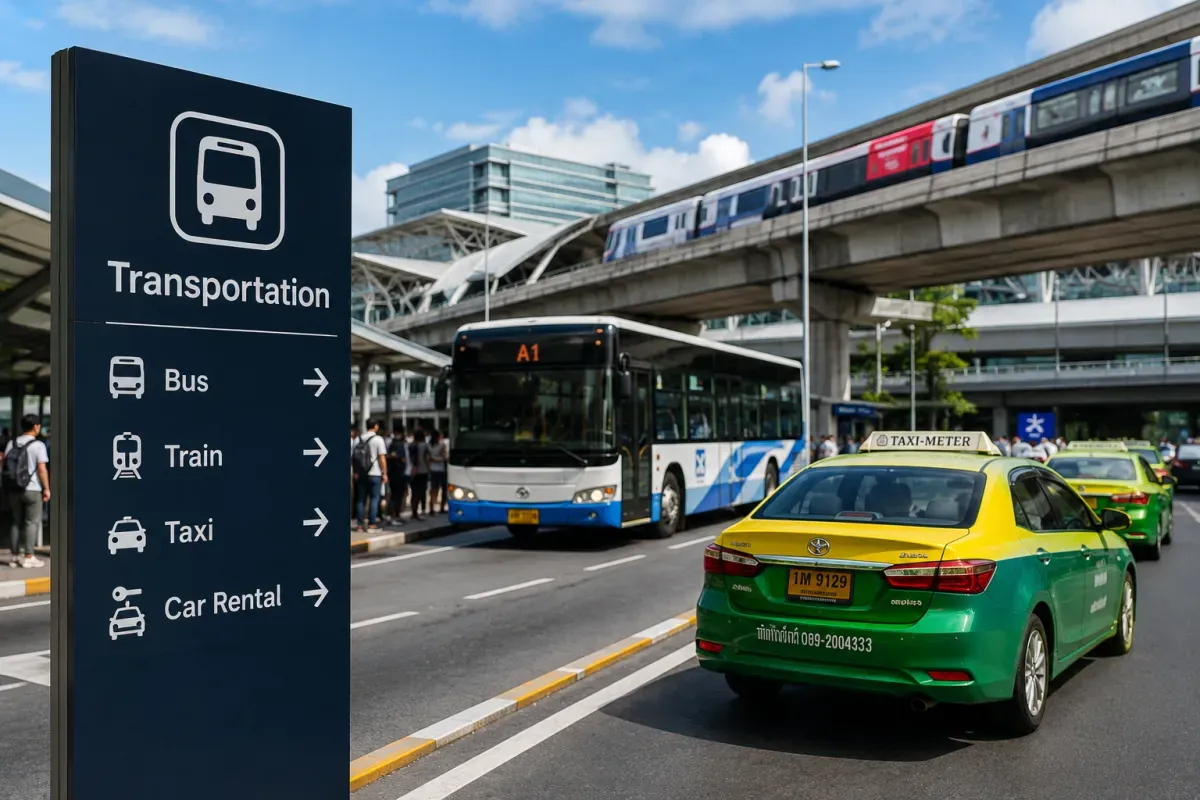
Transportation
Schedules and fares are subject to change.
Airport to City Access
Train, bus, taxi, and other options to the city center
Wattay International Airport in Vientiane and the airports at Luang Prabang and Pakse are close to their city centres, so transfers are short. Airport taxis usually work on a fixed-price coupon bought at a counter, which avoids haggling. Some hotels offer pickups if arranged in advance. Have small kip or US dollars ready, and agree the fare or buy the coupon before you set off.
- Main hub
- Wattay (Vientiane)
- Taxi
- Fixed-price coupon
- Tip
- Arrange hotel pickup
- Coupon taxis avoid haggling over the fare
- Airports are close to city centres
Public Transportation
Metro, bus, tram, and how to use them
Laos has no metro and limited city buses, so getting around within towns relies mostly on tuk-tuks, shared songthaews (converted pickups) and short taxi hops. Fares are usually negotiated, so agree the price before you get in. Distances in towns are walkable, which is often the nicest way to explore. For longer hops, ask your guesthouse to help arrange transport and typical prices.
- City transit
- Limited buses
- Main options
- Tuk-tuk, songthaew
- Fares
- Agree first
- Songthaews are shared converted pickups
- Agree the tuk-tuk fare before you ride
IC Cards & Travel Passes
Discount passes and rechargeable transit cards
There is no nationwide contactless transport smartcard in Laos like the tap-and-go systems in bigger cities elsewhere. Tuk-tuks, songthaews and taxis are paid in cash, usually kip, so there is no card to buy or top up. For the Lao-China Railway, tickets are bought separately rather than via a stored-value card. Keep small kip notes handy for all local transport and expect to pay on the spot.
- Transit card
- None nationwide
- Pay
- Cash (kip)
- Trains
- Buy tickets separately
- No tap-and-go smartcard for local transport
- Carry small kip notes and pay in cash
Car Rental & Driving
License requirements and traffic rules
Laos drives on the right, and self-drive car rental is uncommon, so most visitors hire a car with a driver instead. Roads can be narrow, winding and poorly lit, mountain routes are slow, and standards differ from home, so driving yourself carries real risk. If you rent a scooter, wear a helmet, check the bike, and confirm your travel insurance covers it. An International Driving Permit and caution are essential if you do drive.
- Drives on
- The right
- Common
- Car with driver
- Scooters
- Helmet + insurance
- Hiring a car with a driver is the usual choice
- Confirm insurance covers any scooter you rent
Intercity Travel
Long-distance buses, trains, and ferries
The Lao-China Railway has transformed intercity travel, with fast, comfortable trains linking Vientiane, Vang Vieng, Luang Prabang and Boten near the Chinese border in a fraction of the old bus time. Seats sell out, so book ahead. Buses and minivans still cover routes the railway does not, though mountain roads make them slow and winding. Choose the train where possible and allow extra time on rural bus routes.
- Best option
- Lao-China Railway
- Route
- Vientiane-Luang Prabang-Boten
- Also
- Buses, minivans
- Train seats sell out; book ahead
- Mountain bus routes are slow and winding
Domestic Flights
Budget airlines and booking tips
Lao Airlines operates the main domestic network, linking Vientiane with Luang Prabang, Pakse and other regional airports, which saves time versus long mountain road trips. Flights are short but schedules can be limited and subject to change, so book in advance and stay flexible. For popular routes such as Vientiane to Luang Prabang, the new railway is now a strong and often cheaper alternative to flying.
- Carrier
- Lao Airlines
- Links
- Vientiane, Luang Prabang, Pakse
- Alternative
- The railway
- Schedules can be limited; book ahead
- The railway rivals flights on key routes
Transportation Tips
Advice for safe and efficient travel
Plan for slower journeys than the map suggests, especially on mountain roads and in the rainy season, and build buffer time around connections. Book train seats and popular buses ahead, agree tuk-tuk fares before riding, and carry small kip. If you rent a scooter, wear a helmet and check your insurance. Keep offline maps and your accommodation address handy, and travel with reputable operators for boat trips and treks.
- Time
- Allow buffers
- Book
- Trains, popular buses
- Safety
- Helmet, insurance
- Agree tuk-tuk fares before you ride
- Use reputable operators for boats and treks