Entry Procedures
Visa and entry requirements depend on the country that issued your passport. The information here is general guidance. Always confirm the requirements for your own nationality with the official source.
This information is for general guidance only. Please verify with the embassy or official government sources before traveling.
Visa Requirements
Types of visas required and their conditions
Latvia is a member of the EU and the Schengen Area. Many nationalities can visit visa-free for short tourist stays of up to 90 days in any 180-day period, while others need a Schengen visa. This depends on your nationality, and the EU ETIAS travel authorisation is planned for visa-exempt non-EU travellers. Rules can change, so check the official Latvian and EU sources and your embassy before you travel.
- Area
- EU / Schengen
- Short stay
- Up to 90/180 days
- Check
- Official sources
- Visa-free entry depends on your nationality
- ETIAS authorisation is planned; check official EU/Latvian sources before travel
Passport Conditions
Required validity period and blank pages
For most non-EU nationals, your passport should be valid for at least 3 months beyond your intended date of departure from the Schengen Area and have been issued within the previous 10 years. EU/EEA and Swiss nationals can use a valid national ID card instead of a passport. Check your specific requirements before you travel.
- Validity
- 3 months beyond departure
- Issued
- Within 10 years
- EU/EEA
- National ID accepted
- Passport must be issued within the previous 10 years
- EU/EEA and Swiss citizens may travel with a national ID card
Required Documents & Pre-registration
Arrival cards, health declarations, and other preparations
At the border you may be asked to show supporting documents in addition to your passport. These can include a return or onward ticket, proof of accommodation (hotel booking or invitation), evidence of sufficient funds for your stay, and travel insurance. Have these ready to speed up entry.
- Ticket
- Return/onward
- Stay
- Accommodation proof
- Funds
- Sufficient means
- Carry proof of accommodation and onward travel
- Travel insurance and evidence of funds may be requested
Cash Import Limits
Declaration-free limits and procedures for excess amounts
If you enter or leave the EU carrying EUR 10,000 or more in cash (or the equivalent in other currencies or easily convertible assets), you must declare it to customs. This applies when travelling between Latvia and a non-EU country. Failure to declare can lead to fines or seizure, so complete a cash declaration when required.
- Threshold
- EUR 10,000+
- When
- Entering/leaving EU
- Action
- Declare to customs
- Applies to cash and equivalent bearer instruments
- Non-declaration may result in fines or seizure
Duty-Free Allowances & Restricted Items
Limits on tobacco, alcohol, food, and other goods
Arriving from outside the EU, you have duty-free allowances for goods such as alcohol and tobacco for personal use, within set limits. When travelling within the EU there are generally no limits for goods for personal use, though indicative amounts apply. Latvia also has restrictions on bringing certain food and plant products from outside the EU. Check current allowances with Latvian Customs before you travel.
- From non-EU
- Duty-free limits
- Within EU
- Personal use
- Food/plants
- Restricted from non-EU
- Duty-free allowances apply to alcohol and tobacco from outside the EU
- Within the EU, goods for personal use generally have no set limits
Prohibited Items
Items that are strictly forbidden from import
Illegal drugs are strictly prohibited and penalties are severe. There are restrictions on weapons and ammunition, on certain food and animal products brought from outside the EU (such as meat and dairy), and on products from protected species under CITES (such as ivory or certain skins). Latvia also has rules on exporting cultural and historical objects. Check Latvian Customs rules and obtain any required permits before you travel.
- Drugs
- Prohibited
- Weapons
- Restricted
- CITES
- Protected species
- Meat and dairy from outside the EU are restricted
- Exporting cultural or historical objects may need a permit
Medication Import Rules
Rules for bringing prescription and over-the-counter drugs
You can normally bring medicines for personal use, but carry them in original packaging with a copy of your prescription. Some drugs, especially those containing controlled or narcotic substances, are restricted and may require documentation such as a doctor’s letter or a Schengen certificate. Check with the State Agency of Medicines of Latvia if you rely on strong or controlled medication.
- Personal use
- Generally allowed
- Packaging
- Original + prescription
- Controlled
- Documentation needed
- Keep medicines in original packaging with a prescription copy
- Controlled substances may need a doctor’s letter or Schengen certificate
Vaccinations & Health Requirements
Required and recommended vaccines for entry
No special vaccinations are required to enter Latvia for most travellers, and there is no yellow fever requirement unless you arrive from a risk country. Make sure your routine vaccinations are up to date. Tick-borne encephalitis is present in forested areas, so if you plan to hike or spend time in nature, ask your doctor about a TBE vaccine. Check the latest health advice before you travel.
- Required
- None for most
- Routine
- Keep up to date
- TBE
- Consider if hiking
- Tick-borne encephalitis occurs in forested/rural areas
- Yellow fever proof only if arriving from a risk country
Immigration Process
Step-by-step guide from arrival to clearing immigration
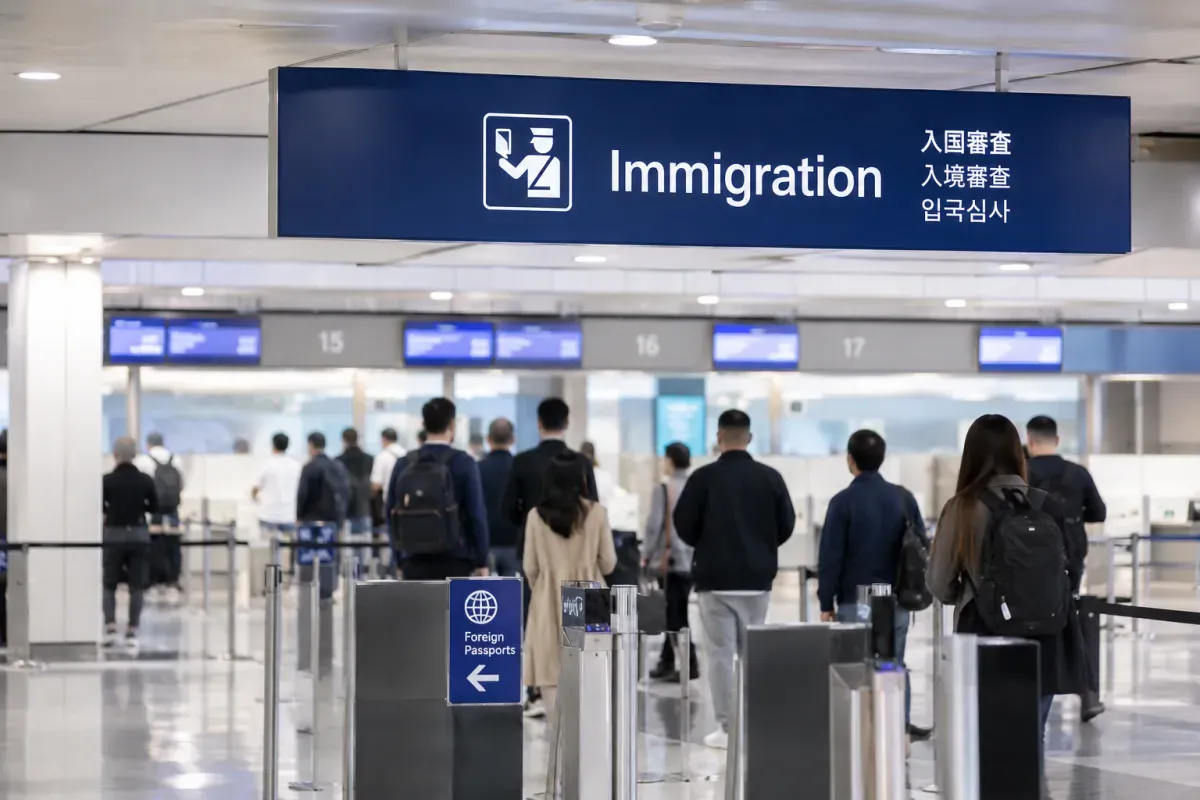
Most visitors arrive at Riga International Airport (RIX), the main gateway to Latvia and the Baltics. At passport control, EU/EEA/Swiss citizens use dedicated lanes, while others go through the all-passports lane where officers may ask about your trip. From non-Schengen flights your passport is stamped; between Schengen countries there are usually no border checks. Keep your supporting documents handy.
- Main hub
- Riga Airport (RIX)
- Lanes
- EU/EEA vs all passports
- Stamp
- On non-Schengen arrival
- Officers may ask about your purpose and length of stay
- No routine checks when travelling within the Schengen Area
Tips for Smooth Entry
Practical advice for a hassle-free arrival
Latvia is a compact, easy country to enter and explore. Riga Airport connects the whole region, and buses and trains link the capital with Tallinn, Vilnius and beyond. English is widely spoken by younger people and in tourism, alongside Latvian and Russian. Tap water is safe to drink, and the country is generally very safe. Pack for changeable Baltic weather even in summer.
- Getting around
- Buses/trains to Baltics
- Language
- English common in tourism
- Water
- Tap water safe
- Riga is a great base for exploring the Baltic region
- Weather can change quickly; bring layers even in summer