
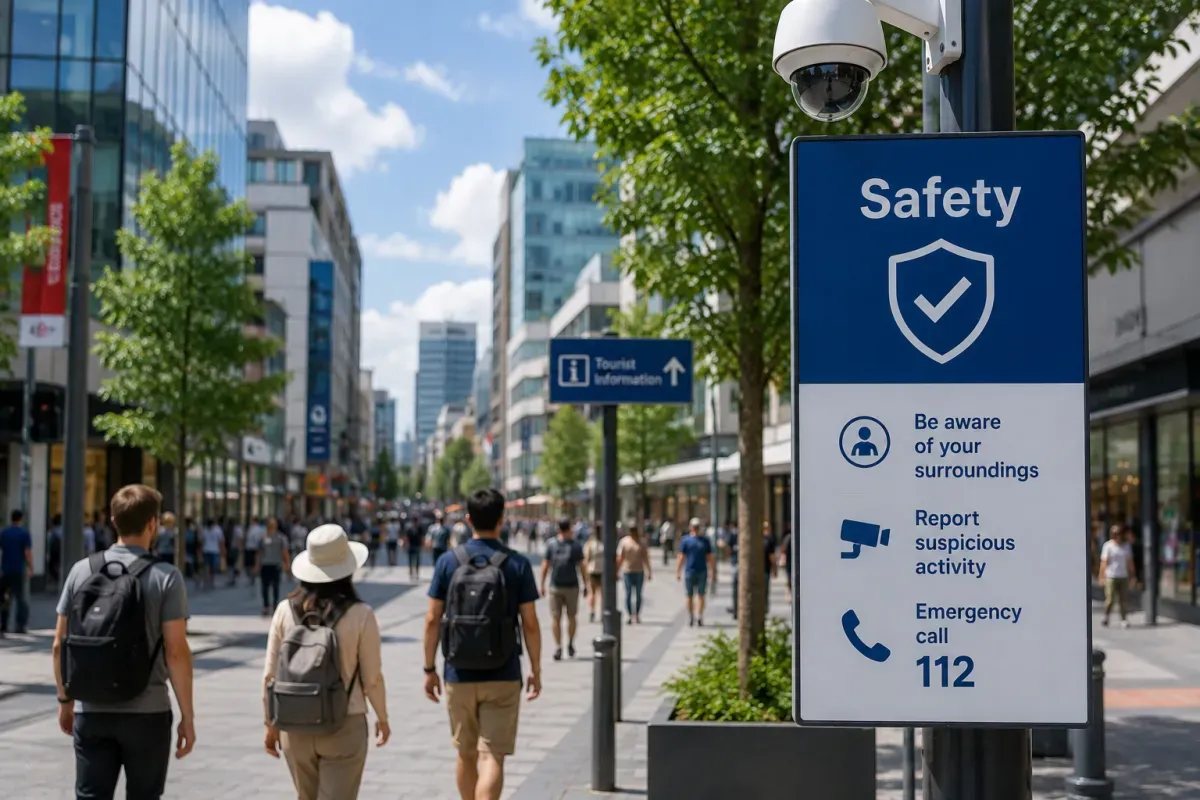
Travel Advisory
Please check your government's official travel advisory before departure. Situations can change rapidly.
Safety Level
Official risk level and travel advisories
Montenegro is a relatively safe Balkan country on the Adriatic coast. Watch for pickpockets and bag theft at beaches and busy resorts in summer.
- Overall risk
- Low; safe by European standards
- Main concern
- Petty theft at crowded coastal resorts in peak season
- Emergency number
- 112 (unified emergency)
- Most visits to Montenegro are trouble-free. The coastal towns of Kotor and Budva are the tourist heart of the country. Take normal precautions in crowded places and on beaches, especially during the busy summer months.
Danger Zones & Areas to Avoid
Regions with poor security or restricted access
There are no no-go areas for tourists. Take normal care in crowded resort centres at night and on mountain roads.
- No-go areas
- None for typical travellers
- At night
- Busy nightlife areas of Budva warrant extra care
- Roads
- Narrow, winding mountain roads require caution
- The whole country is generally open to visitors. In summer the coastal resorts get very crowded; stay alert to petty crime. When driving, be careful on steep, narrow mountain roads and the Kotor serpentine.
Natural Disaster Risks
Earthquakes, typhoons, floods, and other hazards
Montenegro lies in a seismic zone. Prepare for occasional earthquakes, summer wildfires and heatwaves, and winter snow in mountain areas.
- Earthquakes
- On the Balkan seismic belt; a major quake struck in 1979
- Summer
- Wildfire risk and heatwaves during dry spells
- Winter
- Heavy snowfall on mountain roads inland
- The coast is seismically active and experienced a serious earthquake in 1979. In dry summers, follow local fire warnings and stay hydrated during heatwaves. In winter, mountain areas can see heavy snow and closed passes.
Health & Disease Risks
Endemic diseases and hygiene concerns
Healthcare is good in cities but more limited in rural areas. Tap water is generally safe in urban areas; take care with sun and heat in summer.
- Healthcare
- Reasonable in cities; limited in remote areas
- Tap water
- Generally safe in urban areas
- Summer
- Sunburn and heat exhaustion; take care swimming in the Adriatic
- Hospitals in Podgorica and larger towns provide reasonable care, while rural facilities are more basic; serious cases may need transfer or repatriation. Protect against strong summer sun, stay hydrated, and swim only in supervised areas where possible.
Crime & Scam Trends
Common crimes and scams targeting tourists
Petty theft and bag snatching occur at beaches, markets and tourist spots. Overcharging by unofficial taxis is a common scam.
- Main risk
- Pickpocketing and bag theft in crowds
- Taxi scams
- Use licensed taxis; agree the fare or use the meter
- ATMs
- Be alert around ATMs and keep valuables out of sight
- Watch belongings at beaches, bus stations and busy resorts, especially in summer. Use official, licensed taxis and confirm the fare in advance, as unofficial drivers may overcharge. Be cautious withdrawing cash from ATMs in quiet or poorly lit spots.
Political Situation & Protests
Political instability and potential demonstrations
Montenegro is generally politically stable. It is a NATO member (since 2017) and an EU candidate country. Occasional demonstrations occur.
- Government
- Parliamentary republic; generally stable
- International
- NATO member (2017); EU candidate country
- Demonstrations
- Occasional; usually peaceful
- Montenegro is a NATO member and an official candidate for EU membership. The political situation is generally calm. Demonstrations take place from time to time and are usually peaceful; avoid large gatherings as a precaution and follow local media.
Local Laws & Prohibitions
Important local laws and penalties for travelers
Drug offences carry severe penalties. Carry ID, respect religious sites, and note that the euro is used despite Montenegro not being in the EU.
- Drugs
- Strictly prohibited; severe penalties
- Currency
- Euro (EUR) is used, though Montenegro is not in the EU
- ID
- Carry photo ID; police may ask to see it
- Possession of even small quantities of drugs can lead to heavy fines or imprisonment. Dress modestly at monasteries and religious sites. Montenegro uses the euro unilaterally although it is not an EU member. Register your accommodation as required and keep your passport safe.
Emergency Contacts
Police, ambulance, and fire department numbers
Dial 112 for the unified emergency line. Direct numbers are 122 (police), 123 (fire) and 124 (ambulance).
- Unified emergency
- 112
- Police / Fire
- 122 / 123
- Ambulance
- 124
- 112 is the unified emergency number and connects to all services. You can also call 122 for police, 123 for fire and 124 for an ambulance. English is not always spoken, so keep key phrases and your location details handy.
Embassy & Consulate Info
Location and contact details of your embassy
No embassy or consulate information is available for your selected nationality in this country.
Travel Insurance
Recommended coverage and tips for choosing a policy
Montenegro is not in the EU, so the EHIC/GHIC is not valid. All travellers should carry comprehensive travel insurance with medical cover.
- EHIC/GHIC
- Not valid (Montenegro is outside the EU/EEA)
- All travellers
- Comprehensive insurance with medical and repatriation cover
- Check
- Cover for water sports, driving and repatriation
- Take out comprehensive travel insurance before you go, since Montenegro is not covered by the EHIC/GHIC. Make sure the policy covers medical treatment, emergency evacuation and repatriation, and any activities such as diving, boat trips or driving.