
Power & Connectivity (SIM)
Connectivity may vary by region and season.
Voltage & Plug Types
Electrical standards and outlet shapes
Peru uses 220V / 60Hz with Type A and Type C sockets. Bring a Type A/C travel adapter; travellers from 100–120V countries need a converter for devices that are not dual-voltage. Check your chargers handle 220V before plugging in.
- Voltage
- 220V / 60Hz
- Sockets
- Type A and C
- Adapter
- Type A/C needed
- Most phone/laptop chargers are 100–240V and fine with an adapter
Buying a SIM Card
Where to buy, costs, and activation process
The main carriers are Claro, Movistar, Entel and Bitel, all offering prepaid tourist plans. Prepaid SIMs are sold at Jorge Chávez International Airport in Lima and at carrier stores across the country; you must show your passport to register the SIM. Coverage is good in Lima, Cusco and other cities, with Claro and Movistar generally the widest for travellers.
- Carriers
- Claro, Movistar, Entel, Bitel
- Where
- Lima airport, carrier stores
- Required
- Passport for registration
- Claro and Movistar have the widest reach for travellers
eSIM & Mobile Wi-Fi
eSIM availability and portable Wi-Fi rental
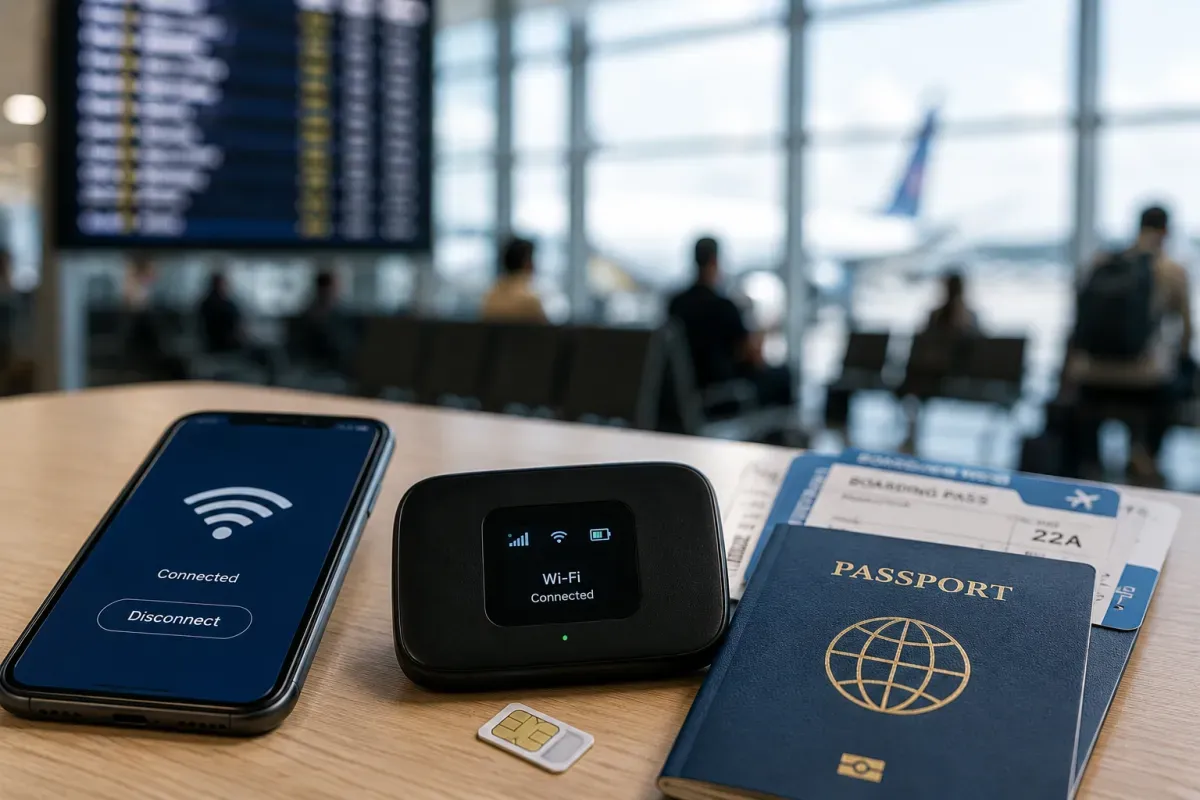
If your device supports eSIM, a travel eSIM is a convenient option: buy one online before arrival and install it in minutes, with no physical SIM or shop visit. Check your phone is eSIM-capable and carrier-unlocked, and confirm the plan covers Peru before you travel.
- Convenience
- Buy online before arrival
- Setup
- No physical SIM
- Check
- eSIM-capable, covers Peru
- Confirm your phone is eSIM-capable and carrier-unlocked
Wi-Fi Availability
Public Wi-Fi coverage and security
Wi-Fi is widespread at hotels, cafes and restaurants across Peru, and most tourist accommodation offers it free. Speeds vary by location and time of day, so a local SIM is a useful backup. In Lima and Cusco connections are generally more reliable than in remote areas.
- Where
- Hotels, cafes, restaurants
- Cost
- Usually free at accommodation
- Speed
- Varies by location
- A local SIM is a handy backup when Wi-Fi is slow
Internet Restrictions & VPN
Blocked services and VPN recommendations
Peru has an open internet with no significant restrictions, so messaging, social media, maps and streaming all work normally. The main limitation is coverage rather than censorship: mobile data is mostly 4G/LTE and good in cities, but in the Andean highlands, around Machu Picchu and in the Amazon it can be slow or drop out. Download offline maps and key info before heading into remote regions.
- Internet
- Open, no censorship
- Network
- Mostly 4G/LTE, good in cities
- Remote
- Machu Picchu/Amazon unstable
- Download offline maps before Andes or Amazon routes
Useful Local Apps
Must-have apps for transport, translation, and maps
For getting around, Uber, Cabify, Beat and inDrive are the main ride apps in Lima and some other cities, though availability varies by area. A maps app for navigation and a translation app for Spanish (and Quechua) cover the essentials. Yape is a popular local payment app, and setting up ride apps helps you avoid negotiating fares.
- Rides
- Uber, Cabify, Beat, inDrive
- Navigation
- Maps, translation
- Payment
- Yape
- Ride-app availability varies by city and region
International Calls
How to make international calls and alternatives
Peru's country code is +51. App-based calls such as WhatsApp and FaceTime are common. For emergencies, many areas use the unified 911 line; the police number is 105 and fire is 116. There is also a Tourist Police (Policía de Turismo) that assists visitors. Save numbers in full +51 format so they work from any network.
- Country code
- +51
- Emergency
- 911, police 105, fire 116
- Tourists
- Tourist Police available
- Save numbers in full +51 international format