
Entry Procedures
Visa and entry requirements depend on the country that issued your passport. The information here is general guidance. Always confirm the requirements for your own nationality with the official source.
This information is for general guidance only. Please verify with the embassy or official government sources before traveling.
Visa Requirements
Types of visas required and their conditions
Senegal allows visa-free entry for short tourist stays (often up to 90 days) for many nationalities, while others must obtain a visa before travel. The exact rules depend on your nationality, so check the latest requirements with a Senegalese embassy or consulate before you go. A passport valid for at least 6 months is a common guideline.
- Short stay
- Often up to 90 days
- Depends on
- Your nationality
- Check
- Official sources
- Visa-free entry depends on your nationality
- Confirm the latest rules with an embassy before travel
Passport Conditions
Required validity period and blank pages
Your passport should generally be valid for at least 6 months from your date of entry and have blank pages for stamps. Some carriers and border officers apply this rule strictly, so renew early if your passport is close to expiry. Requirements can vary by nationality, so confirm the details before you travel.
- Validity
- At least 6 months
- Pages
- Blank pages for stamps
- Check
- By nationality
- Renew early if your passport is near expiry
- Requirements can vary by nationality
Required Documents & Pre-registration
Arrival cards, health declarations, and other preparations
Besides your passport, be ready to show a valid yellow fever vaccination certificate, a return or onward ticket, proof of accommodation and evidence of sufficient funds for your stay. Having these documents ready, along with any visa if required, helps you clear immigration at Blaise Diagne Airport (DSS) more smoothly.
- Health
- Yellow fever certificate
- Ticket
- Return/onward
- Stay
- Accommodation + funds
- Carry proof of accommodation and onward travel
- A yellow fever certificate is commonly checked on arrival
Cash Import Limits
Declaration-free limits and procedures for excess amounts
Carrying large amounts of cash into or out of Senegal must be declared to customs above the set threshold. There are also rules on taking the local currency (CFA franc) across borders. To avoid fines or seizure, declare cash when required and keep records of any large sums you bring. Check the current threshold before you travel.
- Rule
- Declare above threshold
- Local currency
- Export limits apply
- Action
- Declare to customs
- Keep records of large sums you bring
- Non-declaration may result in fines or seizure
Duty-Free Allowances & Restricted Items
Limits on tobacco, alcohol, food, and other goods
Travellers arriving in Senegal have duty-free allowances for personal-use goods such as a limited quantity of tobacco, alcohol and personal effects. Amounts beyond these limits may be subject to duty. Bringing in professional equipment or high-value electronics can attract questions, so keep receipts. Check current allowances with Senegalese Customs before you travel.
- Personal use
- Duty-free limits
- Over limit
- Duty may apply
- Tip
- Keep receipts
- Limited tobacco, alcohol and personal effects are duty-free
- High-value electronics may attract questions
Prohibited Items
Items that are strictly forbidden from import
Illegal drugs are strictly prohibited in Senegal and penalties are severe. There are restrictions on firearms and ammunition, and on products from protected species under CITES (such as ivory or certain skins). Some food, plant and animal products are controlled. Check Senegalese Customs rules and obtain any required permits before you travel.
- Drugs
- Prohibited
- Weapons
- Restricted
- CITES
- Protected species
- Some food, plant and animal products are controlled
- Protected species products need CITES permits
Medication Import Rules
Rules for bringing prescription and over-the-counter drugs
Bring enough of your regular prescription medication for the whole trip, kept in original packaging with a copy of the prescription and, ideally, a doctor’s letter naming the medicine. Some substances may be controlled, so check the rules if you carry strong painkillers or psychiatric drugs. Pharmacies exist in Dakar and towns, but specific brands may be hard to find.
- Supply
- Enough for the trip
- Proof
- Prescription + letter
- Controlled
- Check the rules
- Keep medicines in original packaging
- Specific brands may be hard to find locally
Vaccinations & Health Requirements
Required and recommended vaccines for entry
A yellow fever vaccination certificate is required for entry to Senegal, and it may be checked on arrival, so carry the certificate with your passport. Malaria is present, so discuss antimalarial medication and other travel vaccines (such as typhoid and hepatitis) with a travel clinic well before departure. Check the latest health advice before you travel.
- Yellow fever
- Certificate required
- Malaria
- Present; take precautions
- Advice
- See a travel clinic
- Carry your yellow fever certificate with your passport
- Discuss antimalarials and other vaccines before departure
Immigration Process
Step-by-step guide from arrival to clearing immigration
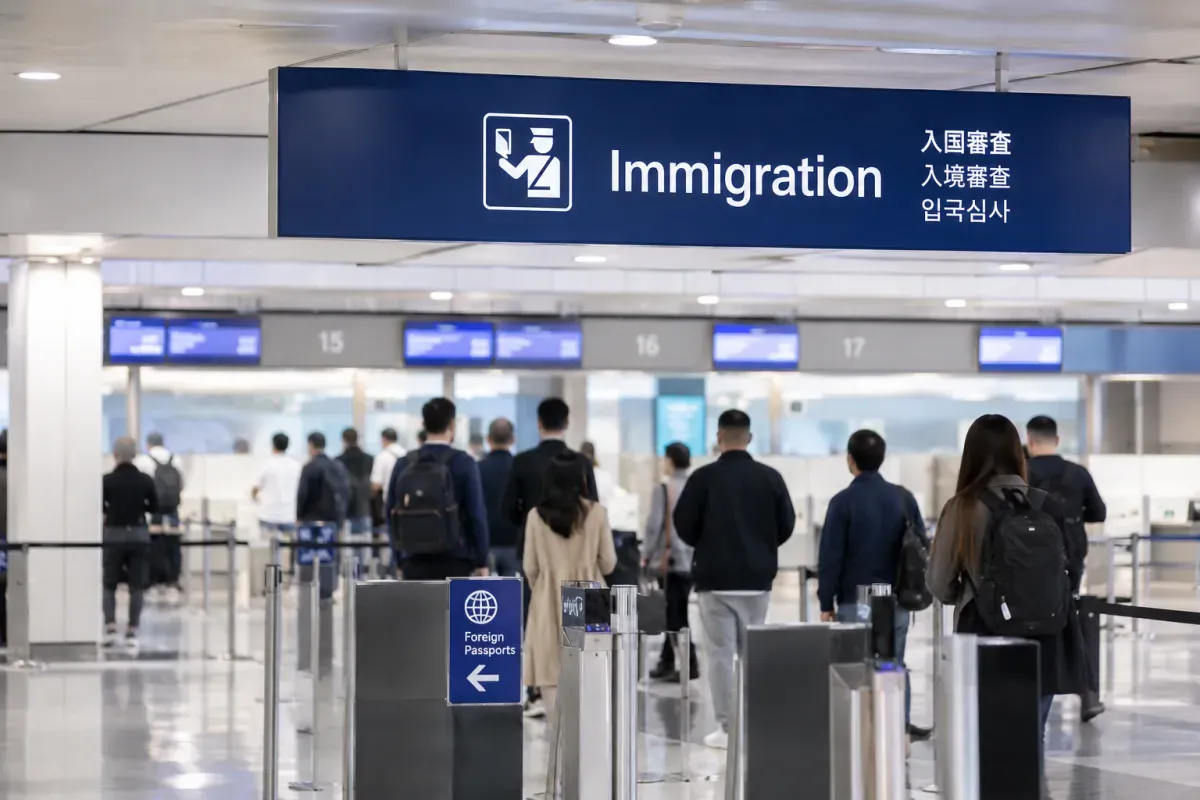
Most visitors arrive at Blaise Diagne International Airport (DSS) near Dakar. At immigration, have your passport, yellow fever certificate and any required visa ready, and be prepared to state your address and length of stay. After passport control you collect baggage and pass through customs. Official taxis and shuttle options serve the airport.
- Airport
- Blaise Diagne (DSS)
- Have ready
- Passport + certificate
- After
- Baggage + customs
- Be ready to state your address and length of stay
- Use official taxis or shuttles from the airport
Tips for Smooth Entry
Practical advice for a hassle-free arrival
French is the official language, so a few French phrases go a long way, and Wolof is widely spoken. Senegal is largely Muslim, so dress modestly at religious sites. Traffic drives on the right and power is 230V with plug types C, D, E and K, so bring a suitable adapter. Tap water is best avoided; drink bottled or treated water.
- Language
- French; Wolof widely spoken
- Power
- 230V, types C/D/E/K
- Water
- Prefer bottled/treated
- Traffic drives on the right
- Dress modestly at religious sites