
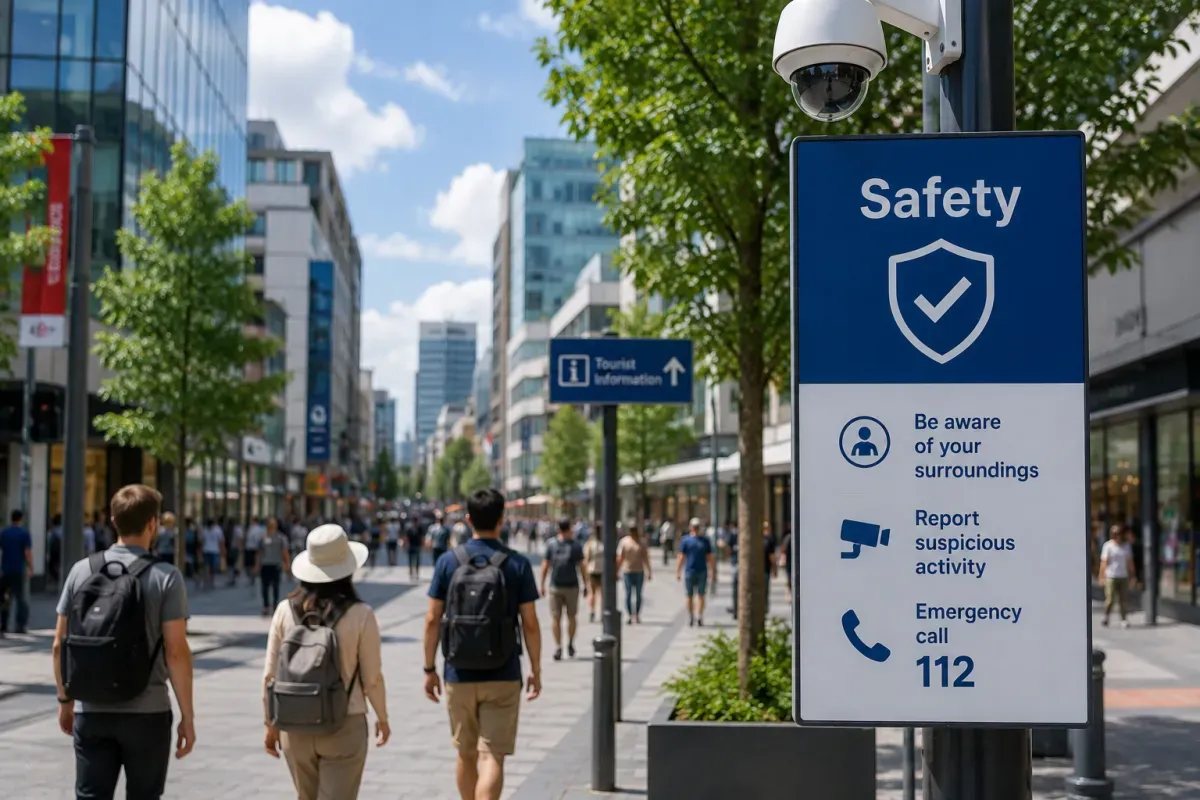
Travel Advisory
Please check your government's official travel advisory before departure. Situations can change rapidly.
Safety Level
Official risk level and travel advisories
Australia is a very safe, stable country for visitors. Everyday crime is low, and the main hazards are natural: strong sun, surf and heat, plus bushfires in summer. Use common sense in cities at night and follow local safety advice at beaches and in the outback.
- Overall
- Very safe
- Main risks
- Sun, surf, bushfires
- Emergency
- Call 000
- Natural hazards are a bigger concern than crime
Danger Zones & Areas to Avoid
Regions with poor security or restricted access
There are no no-go areas for tourists. Take normal care in nightlife districts of big cities late at night. The bigger risks are environmental: rip currents at beaches, remote outback roads with long distances between services, and heat. Plan outback and coastal trips carefully.
- Cities
- Usual care at night
- Beaches
- Watch for rip currents
- Outback
- Long, remote distances
- Swim between the flags at patrolled beaches
Natural Disaster Risks
Earthquakes, typhoons, floods, and other hazards
Australia faces bushfires (spring–summer), heatwaves, tropical cyclones in the north (roughly November–April), floods and severe storms. Risks vary by region and season. Check the Bureau of Meteorology (BOM) and local emergency services, and heed fire danger ratings and total fire bans.
- Bushfires
- Spring–summer
- Cyclones
- North, ~Nov–Apr
- Check
- BOM + local alerts
- Obey total fire bans and evacuation advice
Health & Disease Risks
Endemic diseases and hygiene concerns
Health care is excellent and tap water is safe. The main risks are sunburn and heatstroke from strong UV, dehydration, and marine hazards like jellyfish (stingers) in the tropical north in season. Use high-SPF sunscreen, drink plenty of water, and follow beach warning signs.
- Water
- Tap water safe
- Sun/UV
- Very strong — protect skin
- North coast
- Seasonal stingers
- Slip, slop, slap: cover up, sunscreen and a hat
Crime & Scam Trends
Common crimes and scams targeting tourists
Violent crime against tourists is rare. Watch for petty theft in busy tourist spots, and don't leave valuables in parked cars. Online and phone scams targeting travellers exist. Keep copies of documents and use hotel safes for passports and cash.
- Petty theft
- Busy tourist areas
- Cars
- Hide valuables
- Scams
- Online / phone
- Use hotel safes and keep document copies
Political Situation & Protests
Political instability and potential demonstrations
Australia is a stable parliamentary democracy with reliable institutions and public services. Political demonstrations are peaceful and rare disruptions for visitors. There is no meaningful political risk for tourists; just monitor local news during any large event or protest.
- System
- Stable democracy
- Protests
- Peaceful, rare
- Risk
- Minimal for tourists
- Monitor local news during large events
Local Laws & Prohibitions
Important local laws and penalties for travelers
Some laws differ by state and territory, including alcohol rules and public drinking limits. Illegal drugs carry serious penalties. Smoking is banned in many public areas, and drink-driving limits are strictly enforced. Respect Aboriginal sacred sites and follow signs at cultural and natural areas.
- By state
- Rules vary
- Drugs
- Serious penalties
- Respect
- Aboriginal sacred sites
- Drink-driving and public drinking rules are enforced
Emergency Contacts
Police, ambulance, and fire department numbers
The national emergency number is 000 for police, fire and ambulance. From a mobile you can also dial 112, and 106 is a text-based service for people who are deaf or hard of hearing. Stay on the line and give your location. For non-urgent police matters, call 131 444.
- Emergency
- 000 (police/fire/ambulance)
- Mobile
- 112 also works
- Non-urgent police
- 131 444
- 106 is a text emergency line for the deaf/hard of hearing
Embassy & Consulate Info
Location and contact details of your embassy
No embassy or consulate information is available for your selected nationality in this country.
Travel Insurance
Recommended coverage and tips for choosing a policy
Take comprehensive travel insurance. Some countries have reciprocal health-care agreements with Australia (Medicare) covering limited essential care, but these do not cover ambulances, repatriation or many services. Adventure activities, diving and remote travel may need extra cover, so read the policy carefully.
- Insurance
- Comprehensive strongly advised
- Reciprocal care
- Limited, not ambulances
- Add-ons
- Adventure/diving cover
- Ambulance costs are often not covered — check your policy