Power & Connectivity (SIM)
Connectivity may vary by region and season.
Voltage & Plug Types
Electrical standards and outlet shapes
Belgium uses 230 volts at 50 Hz with Type C and Type E plugs, the round two-pin standard used across most of continental Europe. Type E adds a grounding pin protruding from the socket. Standard European two-round-pin plugs fit fine. Travellers from the UK, US or Asia should bring a plug adapter; most phone and laptop chargers are dual-voltage.
- Voltage
- 230V / 50Hz
- Plugs
- Type C and E
- Bring
- EU adapter
- Type E has a grounding pin in the socket
- European two-round-pin plugs fit
Buying a SIM Card
Where to buy, costs, and activation process
Belgium's main operators are Proximus, Orange Belgium and BASE (part of Telenet). Prepaid SIM cards are easy to buy at operator shops, supermarkets and phone stores; bring an unlocked phone. As Belgium is in the EU, "roam like at home" rules mean EU visitors can use their home mobile plan across Belgium at no extra cost. Coverage nationwide is excellent.
- Operators
- Proximus, Orange, BASE
- Buy at
- Shops, supermarkets
- EU visitors
- Roam like at home
- Prepaid SIMs sold at shops and supermarkets
- EU home plans work at no extra cost
eSIM & Mobile Wi-Fi
eSIM availability and portable Wi-Fi rental
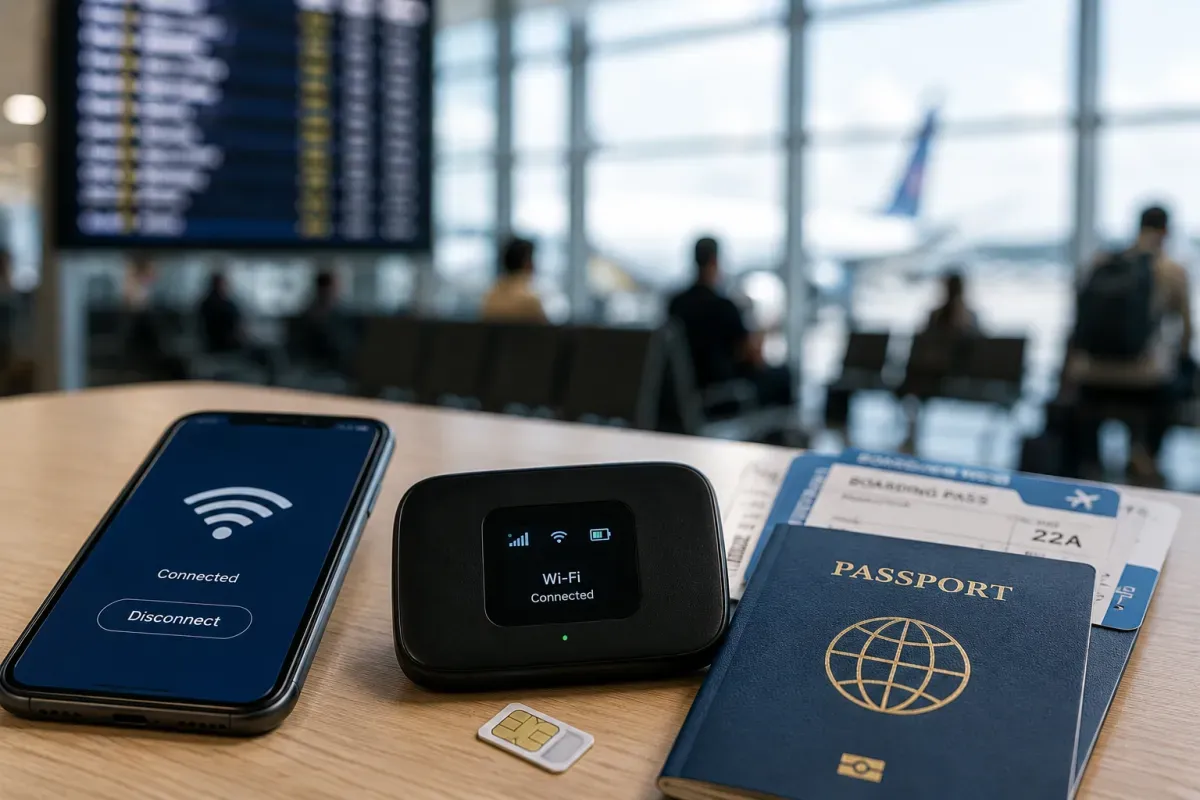
eSIM travel plans are a convenient option for compatible phones. Buy a Belgium or Europe-wide eSIM online before arrival and be connected the moment you land, with no physical card to swap. Both local operators and international eSIM providers offer data plans. EU visitors may simply use home roaming instead. Check that your phone supports eSIM and is unlocked.
- Good for
- eSIM phones
- Buy
- Online in advance
- EU visitors
- Home roaming
- Connect the moment you land
- EU visitors can rely on home roaming
Wi-Fi Availability
Public Wi-Fi coverage and security
Wi-Fi is widely available in hotels, cafes, restaurants and railway stations, and connections are generally good. Many public spaces and tourist areas offer free access. For sensitive tasks such as banking, use a VPN on public networks to protect your data, and avoid entering passwords on open connections without one.
- Where
- Hotels, cafes, stations
- Quality
- Generally good
- Tip
- Use a VPN
- Free Wi-Fi common in tourist areas
- Use a VPN for sensitive tasks
Internet Restrictions & VPN
Blocked services and VPN recommendations
Belgium has an open internet with no significant restrictions. Standard apps and services such as social media, messaging, maps, streaming and search all work normally. There is no need for special workarounds. Simply connect and browse as you would at home, keeping general security precautions in mind on public networks.
- Access
- Open internet
- Apps
- All work normally
- Workarounds
- Not needed
- Social media and messaging work freely
- No significant blocking of services
Useful Local Apps
Must-have apps for transport, translation, and maps
Handy apps include SNCB/NMBS for national rail tickets and timetables, and STIB/MIVB for Brussels metro, tram and bus. Ride-hailing such as Uber operates in Brussels. Add a maps app and a translation app for getting around, plus contactless payment apps like Apple Pay or Google Pay, which are widely accepted.
- Rail
- SNCB/NMBS
- Brussels
- STIB/MIVB
- Rides
- Uber in Brussels
- Add maps and translation apps
- Contactless payment widely accepted
International Calls
How to make international calls and alternatives
Belgium's country code is +32. App-based calls over WhatsApp, Messenger or similar are common and free over Wi-Fi or data. EU visitors can call and text normally thanks to "roam like at home" rules. Save numbers in full international +32 format so they work whether you are calling from within Belgium or abroad.
- Country code
- +32
- App calls
- Common
- Save as
- +32 format
- EU visitors call normally via roaming
- Store numbers in full +32 format