
Power & Connectivity (SIM)
Connectivity may vary by region and season.
Voltage & Plug Types
Electrical standards and outlet shapes
Chile uses 220V / 50Hz with Type C and Type L sockets. Bring a Type C/L adapter; travellers from 100–120V countries need a converter for devices that are not dual-voltage.
- Voltage
- 220V / 50Hz
- Sockets
- Type C and L
- Adapter
- Type C/L needed
- Most phone/laptop chargers are 100–240V and fine with an adapter
Buying a SIM Card
Where to buy, costs, and activation process
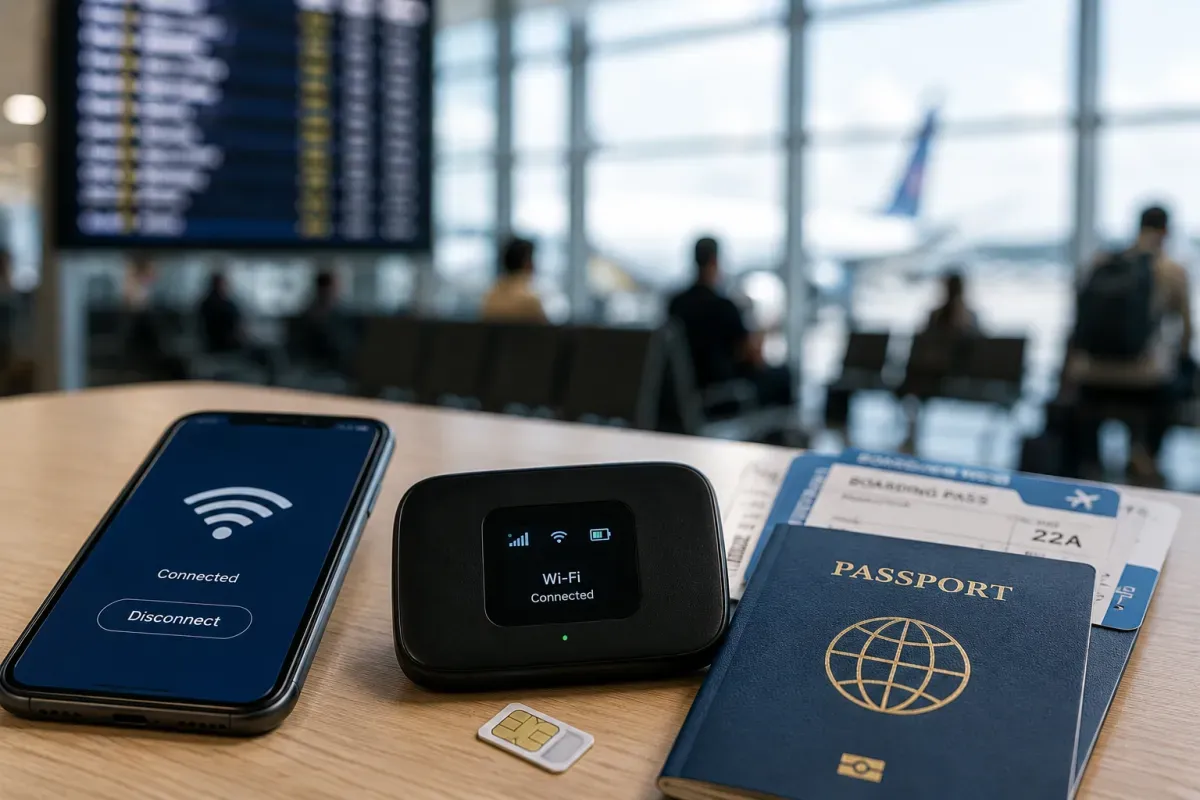
The main operators are Entel, Movistar, WOM and Claro, with good 4G/5G in cities. Prepaid SIMs are sold in shops, malls and at the airport; you may need to show your passport and register the SIM. Coverage is strong in urban areas but weak in remote parts of Patagonia and the Atacama.
- Operators
- Entel, Movistar, WOM, Claro
- Where
- Shops, malls, airport
- Registration
- Passport may be required
- Coverage is weak in remote Patagonia and the Atacama
eSIM & Mobile Wi-Fi
eSIM availability and portable Wi-Fi rental
eSIM travel plans are a convenient option: buy one online before arrival and install it in minutes, with no physical SIM or shop visit. Local operators such as Entel support eSIM, and global travel eSIMs like Airalo or Holafly work well in Chile.
- Convenience
- Buy online before arrival
- Setup
- No physical SIM
- Providers
- Entel, Airalo, Holafly
- Check your phone is eSIM-capable and carrier-unlocked
Wi-Fi Availability
Public Wi-Fi coverage and security
Wi-Fi is widely available in hotels, cafés and airports, and connectivity is good in urban areas. In remote regions such as deep Patagonia or the Atacama backcountry the signal can be weak. Use a VPN on public networks for sensitive tasks like banking.
- Availability
- Hotels, cafés, airports
- Quality
- Good in cities
- Security
- Use a VPN on public Wi-Fi
- Signal can be weak in remote Patagonia and the Atacama
Internet Restrictions & VPN
Blocked services and VPN recommendations
Chile has an open internet with no significant restrictions. All standard apps and services — messaging, social media, maps and streaming — work normally.
- Internet
- Open, no censorship
- Apps
- All standard apps work
- Services
- Work normally
- No VPN needed to access common global services
Useful Local Apps
Must-have apps for transport, translation, and maps
Handy apps include ride-hailing (Uber, Cabify, DiDi) in cities, Metro de Santiago and Red transit apps, maps, translation and payment apps. Contactless cards and mobile payments are widely accepted in Santiago.
- Ride-hailing
- Uber, Cabify, DiDi
- Transit
- Metro / Red apps
- Everyday
- Maps, translation
- Contactless and mobile payment are common in Santiago
International Calls
How to make international calls and alternatives
Chile's country code is +56. App-based calls (WhatsApp, FaceTime and similar) are common. Emergency numbers are 133 (police), 131 (ambulance) and 132 (fire). Save numbers in full +56 format so they work from any network.
- Country code
- +56
- Calls
- App-based common
- Emergencies
- 133 / 131 / 132
- Save numbers in full +56 international format