
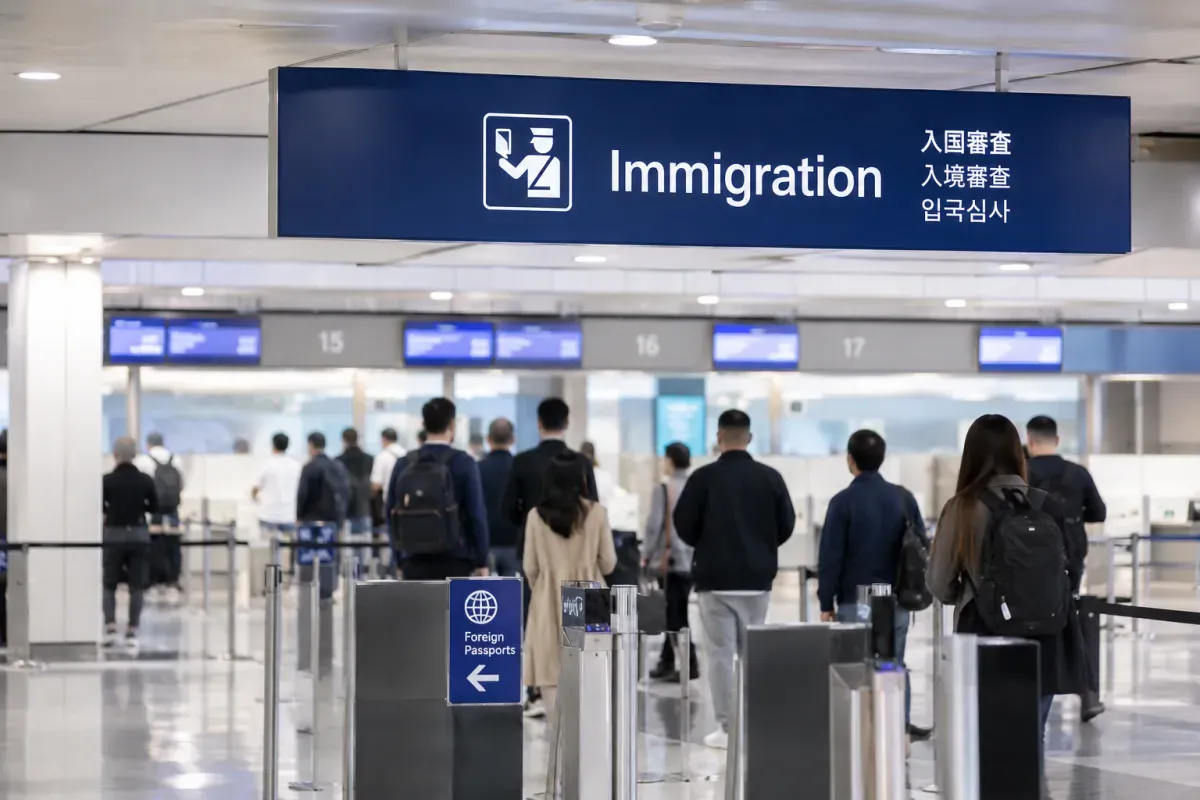
Entry Procedures
Visa and entry requirements depend on the country that issued your passport. The information here is general guidance. Always confirm the requirements for your own nationality with the official source.
This information is for general guidance only. Please verify with the embassy or official government sources before traveling.
Visa Requirements
Types of visas required and their conditions
Entry rules depend on your nationality. Many visa-waiver travellers must request an NZeTA (electronic travel authority) before flying and also pay the International Visitor Conservation and Tourism Levy (IVL). Others need a visitor visa. Rules change, so always confirm the latest requirements for your passport on the official Immigration New Zealand website before you travel.
- NZeTA
- Often required
- Levy
- IVL applies
- Check
- immigration.govt.nz
- Requirements vary by nationality
- Confirm the latest rules on the official site
Passport Conditions
Required validity period and blank pages
Your passport should generally be valid for at least three months beyond your planned departure from New Zealand, though many travellers keep six months to be safe. It must be undamaged with blank pages for stamps. Airlines check documents at check-in. Validity and blank-page rules can differ by nationality, so confirm your exact requirements with the official source before travel.
- Validity
- 3+ months typical
- Condition
- Undamaged
- Check
- Official source
- Keep six months to be safe
- Rules can vary by nationality
Required Documents & Pre-registration
Arrival cards, health declarations, and other preparations
On arrival you may be asked to show a valid passport, your NZeTA or visa, an onward or return ticket, and proof of funds or accommodation. A completed New Zealand Traveller Declaration (NZTD) is required and can be done online before you land. Keep booking confirmations handy. Requirements can change, so check the official immigration and customs sites before you fly.
- Show
- Passport, NZeTA
- Onward
- Return ticket
- Declare
- NZTD online
- Complete the NZTD before arrival
- Keep onward ticket and funds proof ready
Pre-arrival procedure — NZeTA (New Zealand Electronic Travel Authority): visa-waiver nationalities generally need it before flying/sailing for stays up to 3 months. Request fee approx NZ$17 (app) / NZ$23 (online) plus the mandatory International Visitor Levy (IVL) NZ$100, valid up to 2 years. Apply via the official NZeTA app or immigration.govt.nz (avoid paid look-alike sites).
Official NZeTA / visa-waiver info (immigration.govt.nz)- Family name
- SMITH
- First / given name
- MICHAEL
- Nationality
- Your nationality (e.g. UNITED STATES)
- Passport No.
- A1234567
- Date of birth
- 1990-05-20
- Request fee + IVL
- approx NZ$17 (app) + NZ$100 IVL
- Purpose of travel
- Tourism
How to apply
- 1 Open the official "NZeTA" app or immigration.govt.nz and start a new request.
- 2 Scan/enter your passport and personal details.
- 3 Answer the eligibility/character questions and confirm your travel details.
- 4 Review all answers and correct any errors.
- 5 Pay the request fee + IVL (NZ$100) in one transaction and submit; note the reference.
- 6 Wait for approval (often quick, allow up to 72h); once approved, the NZeTA is linked to your passport (save the confirmation).
Requirements, levies and conditions can change; confirm the current rules on the official site before you travel.
Last updated: 2026-08-30
Cash Import Limits
Declaration-free limits and procedures for excess amounts
You must declare cash of NZ$10,000 or more (or the foreign equivalent) when entering or leaving New Zealand. This includes notes, coins and certain financial instruments. Declaring is free and legal; failing to declare can lead to seizure and penalties. If in doubt, declare it. Confirm the current threshold and forms on the official Customs website before you travel.
- Threshold
- NZ$10,000+
- Action
- Declare it
- Check
- customs.govt.nz
- Applies on both entry and exit
- Declaring is free; not declaring risks penalties
Duty-Free Allowances & Restricted Items
Limits on tobacco, alcohol, food, and other goods
New Zealand has extremely strict biosecurity. You must declare all food, plant material, honey, wooden items, and any used outdoor or camping gear, tents, boots or bikes that may carry soil or seeds. Clean all equipment before arrival. Duty-free allowances apply to alcohol, tobacco and goods. When unsure, always declare: failing to declare risk items can bring on-the-spot fines.
- Declare
- Food, plants, gear
- Clean
- Boots, tents, bikes
- Info
- MPI biosecurity
- Clean outdoor gear and boots before arrival
- When unsure, always declare items
Prohibited Items
Items that are strictly forbidden from import
Many items are prohibited or restricted to protect New Zealand's environment. Fresh fruit and vegetables, meat, and many animal or plant products are banned or need permits. Illegal drugs, weapons and objectionable material are strictly forbidden. Soil, and gear caked in mud, may be seized or cleaned at the border. Bin risk food before customs and declare everything else. Check the MPI and Customs sites for the current list.
- Banned
- Fresh produce, meat
- Forbidden
- Drugs, weapons
- Bin
- Risk food first
- Bin fresh food before reaching customs
- Soil and muddy gear may be seized or cleaned
Medication Import Rules
Rules for bringing prescription and over-the-counter drugs
You can bring prescription and personal medicines for your own use, usually up to three months' supply, kept in original labelled packaging with a copy of the prescription or a doctor's letter. Some substances are controlled and need extra documentation. Declare all medicines on arrival. Rules vary by drug and quantity, so check the official Customs and Medsafe guidance for your specific medication.
- Supply
- Up to 3 months
- Carry
- Original packs, script
- Declare
- On arrival
- Keep meds in labelled packaging with a script
- Some controlled drugs need extra papers
Vaccinations & Health Requirements
Required and recommended vaccines for entry
No special vaccinations are required to enter New Zealand for most travellers, and there is no yellow fever risk in the country. Health authorities suggest being up to date on routine vaccines such as measles-mumps-rubella and tetanus. A yellow fever certificate may be requested only if you arrive from a country with risk. Check the CDC and NZ health sites for the latest advice before you travel.
- Required
- None (usually)
- Routine
- MMR, tetanus
- Yellow fever
- If from risk area
- Stay up to date on routine vaccines
- Yellow fever proof only if arriving from risk area
Immigration Process
Step-by-step guide from arrival to clearing immigration
At major airports, eligible travellers can use eGates with an ePassport, while others go to a staffed desk. You then collect bags and pass through biosecurity and customs, where officers may inspect luggage. Have your completed traveller declaration ready. The process is orderly and English-speaking. Allow extra time as biosecurity checks can be thorough.
- eGates
- For ePassports
- Then
- Biosecurity check
- Have
- Declaration ready
- eGates speed up eligible passport holders
- Allow time for thorough biosecurity checks
Tips for Smooth Entry
Practical advice for a hassle-free arrival
Complete your NZeTA and traveller declaration well before departure, and pay the IVL where it applies. Pack a clean pair of shoes and empty any food from your bags to speed biosecurity. Download offline maps for remote drives and check weather before hikes. Keep digital copies of key documents and your accommodation address handy for the arrival card.
- Prepare
- NZeTA early
- Pack
- Clean shoes
- Offline
- Maps for remote
- Empty food from bags before biosecurity
- Download offline maps for remote drives