
Power & Connectivity (SIM)
Connectivity may vary by region and season.
Voltage & Plug Types
Electrical standards and outlet shapes
Portugal runs on 230 volts at 50 hertz and uses European plug types C and F, the round two-pin sockets common across continental Europe. Travellers from the UK, US, and other regions need a plug adapter, and US devices may need a voltage converter unless they are dual-voltage. Most phone and laptop chargers handle 230 volts automatically.
- Voltage
- 230V / 50Hz
- Plugs
- Type C and F
- Bring
- Adapter
- Round two-pin European sockets are standard
- US single-voltage devices may need a converter
Buying a SIM Card
Where to buy, costs, and activation process
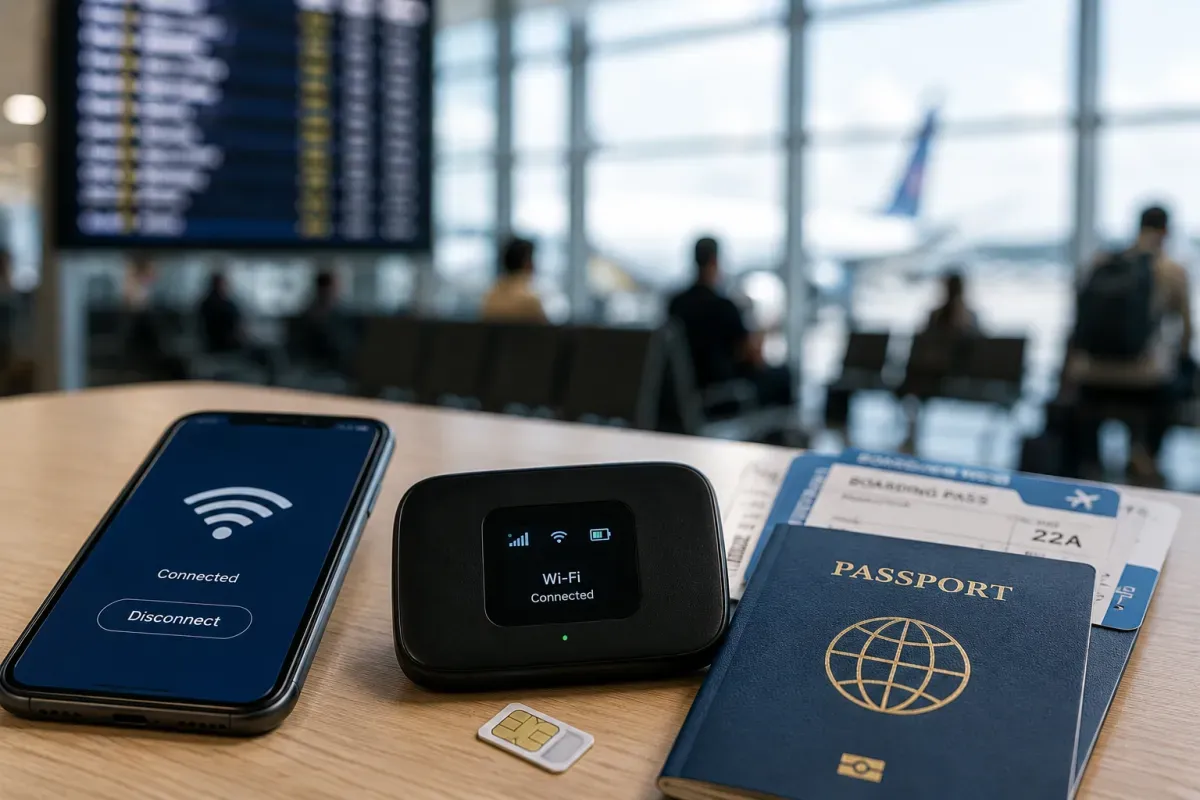
Local prepaid SIM cards are cheap and easy from the three main networks, MEO, NOS and Vodafone, sold at airports, shops and supermarkets. You will usually need your passport to register. Coverage is excellent in cities and along the coast. EU roaming rules mean an EU SIM works in Portugal at home rates.
- Networks
- MEO, NOS, Vodafone
- Buy at
- Airport, shops
- Bring
- Passport
- Registration usually needs your passport
- EU SIMs roam in Portugal at home rates
eSIM & Mobile Wi-Fi
eSIM availability and portable Wi-Fi rental
If your phone supports eSIM, it is the easiest option: buy a Portugal or Europe data plan online from providers like Airalo or Holafly, or from the local networks, and activate on arrival by scanning a QR code. No physical card or shop visit is needed. Check that your phone is eSIM-capable and carrier-unlocked first.
- Best for
- eSIM phones
- Providers
- Airalo, Holafly
- Activate
- Scan QR code
- Buy and activate online, no shop needed
- Confirm your phone is eSIM-capable and unlocked
Wi-Fi Availability
Public Wi-Fi coverage and security
Free Wi-Fi is widely available in hotels, cafes, restaurants and many public spaces across Portugal, and speeds are generally good. Some city centres and transport hubs offer public networks. As with any open network, avoid sensitive logins on public Wi-Fi or use a VPN. Mobile data is fast and cheap as a reliable backup.
- Where
- Hotels, cafes
- Speed
- Generally good
- Safety
- Use a VPN
- Public networks exist in many centres
- Avoid sensitive logins on open Wi-Fi
Internet Restrictions & VPN
Blocked services and VPN recommendations
Portugal has an open, uncensored internet as an EU country with strong digital rights. Global apps and services, social media, messaging and streaming all work normally. You may occasionally hit content that is geo-restricted to your home country, which a VPN can help with. There are no special restrictions travellers need to plan around.
- Access
- Open, uncensored
- Apps
- Work normally
- Geo-blocks
- VPN helps
- Social media and messaging work normally
- A VPN helps with home geo-restricted content
Useful Local Apps
Must-have apps for transport, translation, and maps
A few apps make Portugal easy: Google Maps and Citymapper for city navigation, Bolt and Uber for rides, and the CP app for train tickets and times. Translation apps help in smaller towns, and a transport-card app or the operator apps handle metro and bus fares. Download key maps offline before heading to rural areas.
- Maps
- Google Maps
- Rides
- Bolt, Uber
- Trains
- CP app
- Bolt and Uber both operate in cities
- Download offline maps for rural areas
International Calls
How to make international calls and alternatives
Portugal's country calling code is +351, and Portuguese numbers have nine digits. To call abroad, dial + or 00 then the country code. For everyday contact, apps like WhatsApp are the norm and let you call and message over Wi-Fi or data. Remember 112 is the free emergency number across Portugal.
- Country code
- +351
- Apps
- WhatsApp common
- Emergency
- 112
- Portuguese numbers have nine digits
- Dial + or 00 then country code to call abroad