
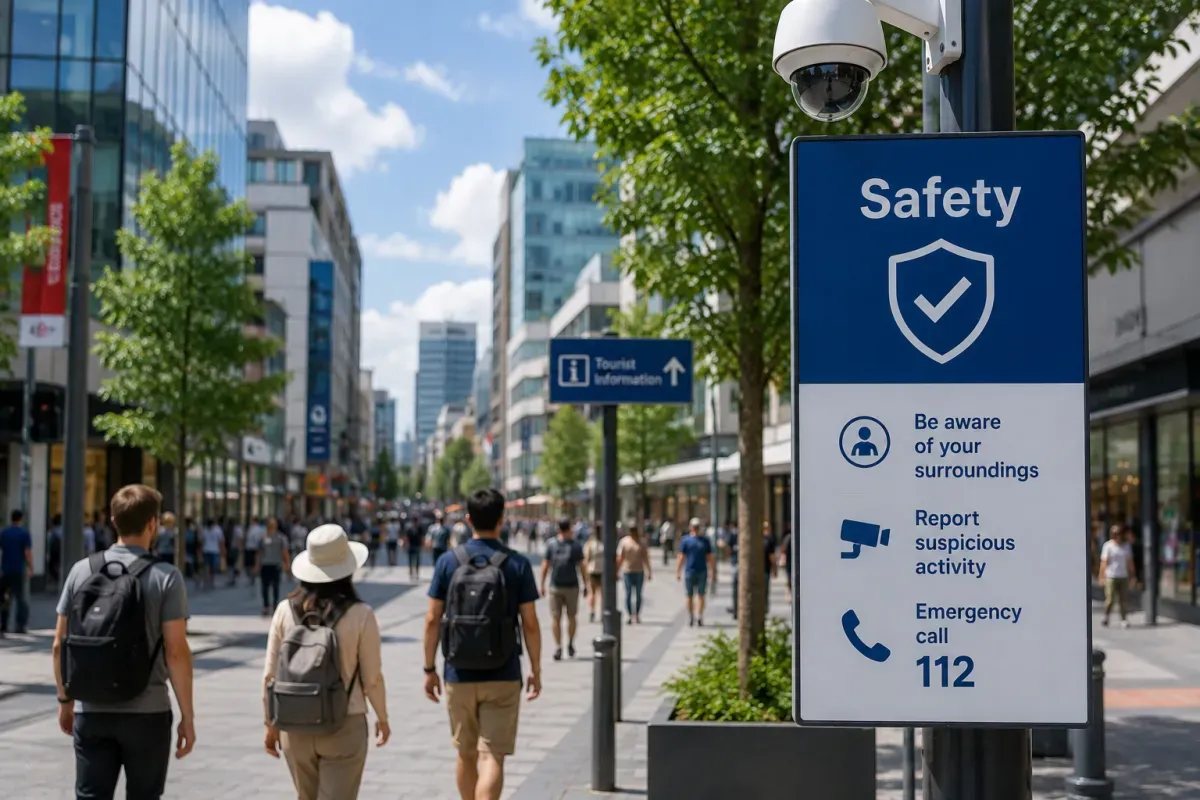
Travel Advisory
Please check your government's official travel advisory before departure. Situations can change rapidly.
Safety Level
Official risk level and travel advisories
The USA is generally safe for visitors, but safety varies a lot by city and even by neighborhood. Petty theft and car break-ins happen in tourist areas; violent crime is concentrated in specific districts. For any emergency dial 911.
- Overall
- Safe; varies by area
- Watch for
- Theft, car break-ins
- Emergency
- 911 (police/fire/medical)
- Check neighborhood-level advice for your specific destination
Danger Zones & Areas to Avoid
Regions with poor security or restricted access
Most tourist areas are fine, but every big city has districts to avoid, especially after dark. Downtown cores can empty out at night, and some transit lines feel unsafe late. Ask hotel staff which areas to skip and use ride apps at night.
- Avoid
- Certain districts after dark
- At night
- Use ride apps, not empty streets
- Ask
- Hotel staff for local advice
- Do not leave anything visible in parked cars anywhere
Natural Disaster Risks
Earthquakes, typhoons, floods, and other hazards
Hazards depend on region and season: Atlantic/Gulf hurricanes (Jun–Nov), tornadoes in the central states, wildfires in the West (summer/autumn), and earthquakes on the West Coast. Check NWS weather.gov and local alerts, and follow official evacuation orders.
- Hurricanes
- Gulf/East coast Jun–Nov
- Wildfires/quakes
- West Coast risk
- Alerts
- NWS weather.gov
- Enable Wireless Emergency Alerts on your phone
Health & Disease Risks
Endemic diseases and hygiene concerns
No special vaccines are needed and tap water is safe. The real risk is cost: US healthcare is extremely expensive and there is no free care for visitors. A single ER visit can cost thousands of dollars, so comprehensive travel insurance is essential.
- Water
- Tap water safe
- Main risk
- Very high medical costs
- Insurance
- Essential, with high cover
- Carry your insurance details and an emergency contact number
Crime & Scam Trends
Common crimes and scams targeting tourists
Common issues are car break-ins (never leave bags in view), pickpocketing in crowded tourist spots, and distraction scams. In big cities, aggressive panhandling and fake "charity" clipboards occur. Ignore street games and keep cards in an RFID-safe wallet.
- Cars
- Leave nothing visible
- Crowds
- Pickpockets, distractions
- Avoid
- Street games, fake charities
- Report crimes to police for insurance claims (dial 911 if urgent)
Political Situation & Protests
Political instability and potential demonstrations
The USA is a stable democracy. Occasional protests and demonstrations can occur, especially in big cities and around political events; most are peaceful but can cause road closures. Avoid protests as a visitor and follow local news and police instructions.
- Stability
- Stable democracy
- Protests
- Possible; usually peaceful
- Advice
- Avoid gatherings, follow news
- Political events can raise security around key sites
Local Laws & Prohibitions
Important local laws and penalties for travelers
Laws vary by state and even city. The drinking age is 21 and ID is checked strictly. Cannabis is legal in some states but illegal federally — do not carry it between states or to airports. Open alcohol containers in public are often banned. Jaywalking rules and gun laws differ widely by state.
- Drinking age
- 21, ID checked
- Cannabis
- State-legal but federally illegal
- Varies
- Laws differ by state/city
- Carry photo ID; state laws override common assumptions
Emergency Contacts
Police, ambulance, and fire department numbers
Dial 911 for any emergency — police, fire or ambulance — free from any phone. For mental health crises, call or text 988. Note that calling an ambulance can be very expensive without insurance, so keep your insurer's assistance line handy.
- Emergency
- 911 (all services)
- Crisis line
- 988 (mental health)
- Ambulance
- Costly — check insurance
- Save your embassy and insurer numbers before you travel
Embassy & Consulate Info
Location and contact details of your embassy
No embassy or consulate information is available for your selected nationality in this country.
Travel Insurance
Recommended coverage and tips for choosing a policy
Comprehensive travel insurance is essential for the USA — medical costs are among the highest in the world and there is no free care for visitors. Choose a high medical limit (ideally covering hospitalisation and evacuation) and confirm it covers any activities you plan.
- Status
- Essential, non-negotiable
- Cover
- High medical + evacuation
- Check
- Activities and pre-existing terms
- Keep your policy number and 24h assistance line on your phone