
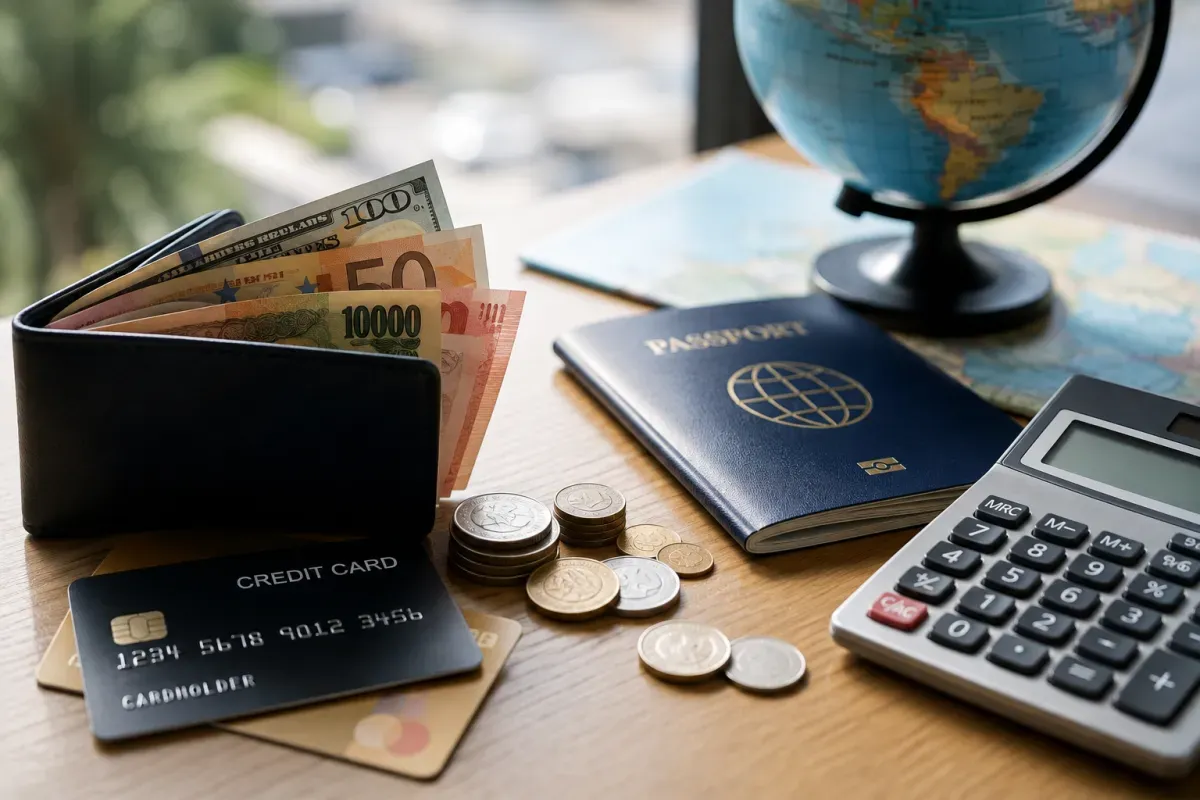
Currency & Payment
Exchange rates fluctuate daily. Check current rates locally.
Local Currency Overview
Currency type, banknotes, and coin denominations
The currency is the Vietnamese dong (₫, VND). Notes have many zeros (up to 500,000₫), so check them carefully — the 500,000 and 20,000 notes look similar. Cash is still king for street food, markets and small shops. Carry small notes for daily spending.
- Currency
- Vietnamese dong (₫, VND)
- Notes
- Up to 500,000₫ (many zeros)
- Cash
- Still king for small buys
- Watch the similar-looking 500,000 and 20,000 dong notes
Currency Exchange Tips
Best places and methods to exchange money
You can exchange major currencies (USD, EUR) at banks, gold/jewellery shops (a common local option) and hotels. Withdrawing dong from a bank ATM is convenient. Count your notes carefully due to the many zeros, and avoid changing money with unofficial street traders.
- Exchange
- Banks, gold shops, hotels
- ATM
- Convenient for dong
- Care
- Count notes; avoid street
- Larger USD notes often get a slightly better rate
Credit Card Acceptance
Card brand availability and usage tips
Cards (Visa/Mastercard) are accepted at hotels, malls, and mid-to-upper restaurants in cities, and contactless is growing. However, street food, markets, small shops and many rural spots are cash-only, and some places add a card surcharge. Always carry enough cash.
- Accepted
- Hotels, malls, big restaurants
- Cash-only
- Street food, markets, rural
- Surcharge
- Some add a card fee
- Keep enough cash for daily street-level spending
ATM Usage
How to withdraw cash and associated fees
ATMs are widespread in cities and towns. Foreign cards work at most bank ATMs, but withdrawal limits per transaction can be low and fees apply (often 50,000₫ or more), so withdraw larger amounts less often. If the ATM offers your home currency (DCC), decline and choose dong.
- Availability
- Widespread in cities
- Fees/limits
- Low limits, per-use fees
- DCC
- Decline; choose dong
- Some banks (e.g. TPBank) have higher limits than others
Mobile & Digital Payments
Digital payment services available locally
QR-based apps like MoMo, ZaloPay and VNPay are hugely popular with locals, but most require a Vietnamese bank account, so they are hard for short-term visitors. Apple Pay and Google Pay work where contactless cards are accepted. The easiest cashless option for tourists is a contactless card or paying via Grab.
- Local apps
- MoMo/ZaloPay need VN bank
- Tourists
- Contactless card / Grab
- Backup
- Keep cash always
- Set up Grab with your card to pay rides without cash
Tipping Culture
Expected tipping amounts and etiquette
Tipping is not traditionally expected but is increasingly appreciated in tourist areas. Rounding up or leaving small change is normal. Upscale restaurants may add a service charge (around 5–10%). Tipping guides, drivers and spa staff a small amount is a kind gesture, not an obligation.
- Norm
- Not expected; appreciated
- Restaurants
- Service charge at upscale
- Guides/drivers
- Small tip is kind
- Round up taxi fares and leave loose change if happy
Price Guide
Average costs for meals, transport, and accommodation
Vietnam is very affordable for travellers. A bowl of pho or a street meal can be around 30,000–60,000₫, a local coffee 25,000–50,000₫, and a beer 15,000–40,000₫. Tourist-area and hotel restaurants cost more. Prices are highest in Ho Chi Minh City and Hanoi.
- Street meal
- ~30,000–60,000₫
- Coffee
- 25,000–50,000₫
- Beer
- 15,000–40,000₫
- Prices vary; treat these as rough guidance
Vietnam has a VAT refund scheme for foreign visitors on goods bought at participating shops and taken out of the country. There is a minimum spend per shop per day, and you validate the goods and paperwork at the airport before departure. Ask the shop for a VAT refund invoice at purchase.
- Eligible
- Foreign visitors, tagged shops
- Minimum
- Set spend per shop/day
- Validate
- At airport before departure
- Keep goods unused and allow extra airport time for the refund desk