
Entry Procedures
Visa and entry requirements depend on the country that issued your passport. The information here is general guidance. Always confirm the requirements for your own nationality with the official source.
This information is for general guidance only. Please verify with the embassy or official government sources before traveling.
Visa Requirements
Types of visas required and their conditions
Requirements depend on your nationality. Vietnam offers an official e-Visa (up to 90 days) via the government portal, and some nationalities get short visa-free entry. Rules change, so apply for the e-Visa only on the official site and confirm the current conditions for your nationality before you travel.
- e-Visa
- Official portal, up to 90 days
- Visa-free
- Some nationalities, short stays
- Check
- Official site before travel
- Use only evisa.gov.vn to avoid fake visa websites
Passport Conditions
Required validity period and blank pages
Your passport should usually be valid for at least six months beyond your date of entry and have blank pages for stamps. Make sure the details on your e-Visa exactly match your passport, as mismatches can lead to boarding or entry refusal. Confirm the current rule for your nationality.
- Validity
- 6 months beyond entry
- Blank pages
- Needed for stamps
- e-Visa
- Details must match exactly
- A name/number mismatch on the e-Visa can mean refusal
Required Documents & Pre-registration
Arrival cards, health declarations, and other preparations
Carry your passport, a printed copy of your approved e-Visa (or visa), a return/onward ticket and proof of accommodation. Immigration may ask about your plans. Keep a printout of the e-Visa even if you have it on your phone, as airlines and officers may want to see it.
- Core
- Passport + e-Visa printout
- Proof
- Onward ticket, hotel
- Tip
- Print the e-Visa too
- Airlines can deny boarding without a valid printed e-Visa
Pre-arrival procedure — Vietnam e-Visa: an electronic visa open to most nationalities for tourism/business/transit, up to 90 days. Fee about US$25 (single) / US$50 (multiple). Apply on the only official portal evisa.gov.vn; the approved visa arrives as a PDF by email (processing ~3-7 working days). Beware paid look-alike sites.
Official Vietnam e-Visa portal (evisa.gov.vn)- Family name
- SMITH
- First / given name
- MICHAEL
- Nationality
- Your nationality (e.g. UNITED STATES)
- Passport No.
- A1234567
- Date of birth
- 1990-05-20
- Photo
- Recent front-facing photo (per site rules)
- Passport bio page
- Scan/upload the personal-details page
- Date of arrival & entry port
- 2026-04-10, e.g. Noi Bai (Hanoi)
How to apply
- 1 Open the official portal evisa.gov.vn and start a new application.
- 2 Upload your photo and passport bio page.
- 3 Fill the form: passport & personal details, entry/exit dates and port.
- 4 Review all entries and correct any errors.
- 5 Pay the fee by card/transfer and submit; note the registration code.
- 6 Wait for the PDF approval by email, then print it to show at check-in and immigration.
Visa need, fees, validity and entry ports can change; confirm the current rules on the official portal before you travel.
Last updated: 2026-08-30
Cash Import Limits
Declaration-free limits and procedures for excess amounts
You must declare to customs if you carry more than US$5,000 (or equivalent) or more than 15,000,000 Vietnamese dong in cash on entry or exit. There is no limit on the amount you may bring, only a declaration requirement above the threshold. Keep proof of large sums.
- Threshold
- Over US$5,000 or VND 15m
- Declare
- On entry and exit
- No limit
- Declaration only
- Undeclared cash over the limit can be seized and fined
Duty-Free Allowances & Restricted Items
Limits on tobacco, alcohol, food, and other goods
Adult travellers get a duty-free allowance including a limited amount of alcohol (e.g. spirits over 22% up to about 1.5 litres), 200 cigarettes and a personal goods allowance. Declare anything over the limits or of high value. Rules can change, so check the current customs allowances before you travel.
- Alcohol
- Limited litres (adults)
- Tobacco
- Around 200 cigarettes
- Declare
- Over limits / high value
- Check the latest allowances as customs rules can change
Prohibited Items
Items that are strictly forbidden from import
Prohibited: illegal drugs (very severe penalties), weapons and explosives, and materials considered politically or culturally sensitive or "anti-government". Antiques and some cultural items need export permits. Fresh food and some plant/animal products are restricted. Declare anything you are unsure about.
- Banned
- Drugs, weapons, sensitive material
- Permits
- Antiques/cultural items
- Restricted
- Fresh food, plants
- Political/religious material can be confiscated at customs
Medication Import Rules
Rules for bringing prescription and over-the-counter drugs
Bring prescription medicines in their original packaging with a copy of the prescription or a doctor's letter, and carry only a reasonable personal supply. Strong painkillers and some controlled substances are restricted, so check before travel. Pharmacies are common but stock and quality vary.
- Packaging
- Original, with prescription
- Amount
- Personal supply only
- Controlled
- Check strong meds first
- Carry medicines in hand luggage with the doctor's note
Vaccinations & Health Requirements
Required and recommended vaccines for entry
No vaccines are required for most travellers, but health bodies commonly recommend hepatitis A and typhoid, and sometimes others depending on your plans. A yellow fever certificate is required if arriving from a risk country. Check CDC/health advice well before you travel.
- Recommended
- Hepatitis A, typhoid
- Yellow fever
- Cert if from risk area
- Check
- CDC/health advice early
- See a travel clinic 4–6 weeks before departure
Immigration Process
Step-by-step guide from arrival to clearing immigration
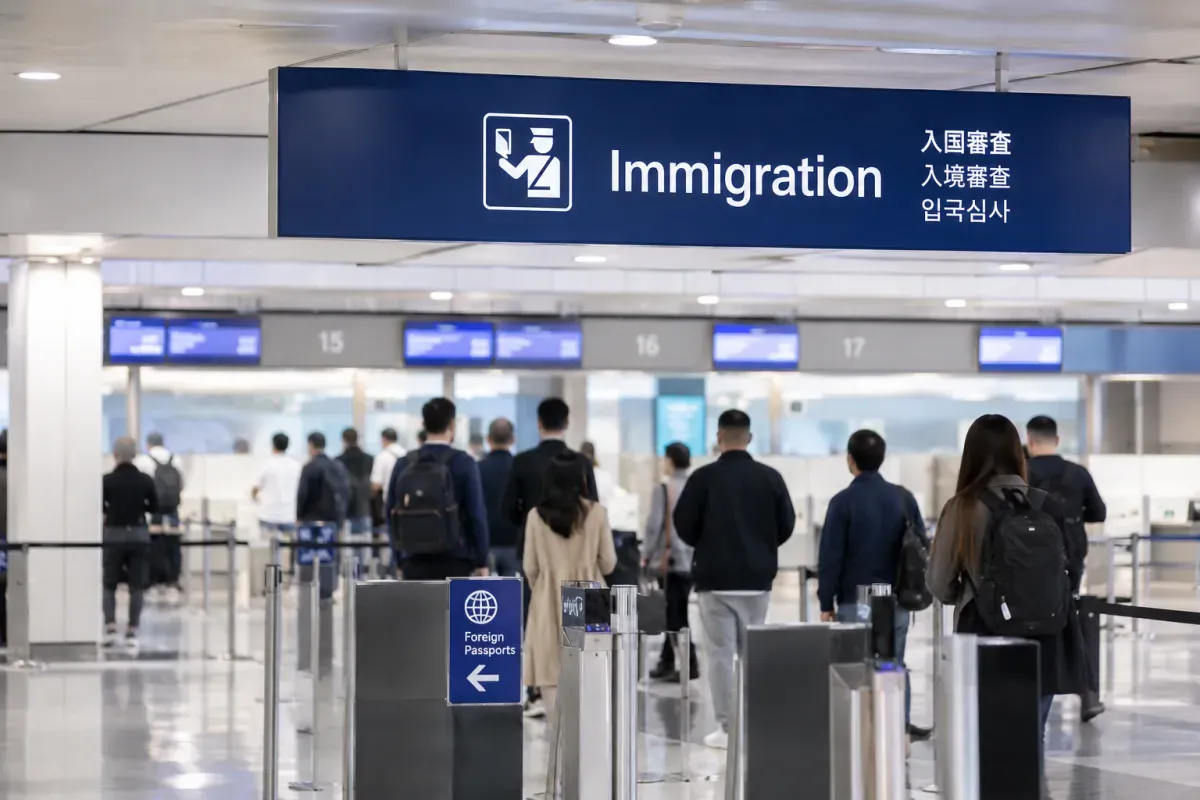
At the airport, follow signs to immigration and join the queue for foreign passports (or the e-Visa lane where marked). Hand over your passport and printed e-Visa; officers stamp your entry. Keep your entry stamp/record, as you need it when you leave. Allow extra time at busy times.
- Lane
- Foreign passports / e-Visa
- Present
- Passport + printed e-Visa
- Keep
- Your entry stamp/record
- Do not overstay — fines and exit delays can apply
Tips for Smooth Entry
Practical advice for a hassle-free arrival
Apply for your e-Visa a week or more ahead on the official portal only. Carry small cash for street food, markets and taxis, and use Grab to avoid overcharging. Traffic is intense — cross roads slowly and steadily. Do not drink tap water, and keep your entry stamp for departure.
- e-Visa
- Apply early, official site
- Cash + Grab
- For small buys and rides
- Water
- Bottled only
- When crossing, walk at a steady pace so bikes can flow around you