
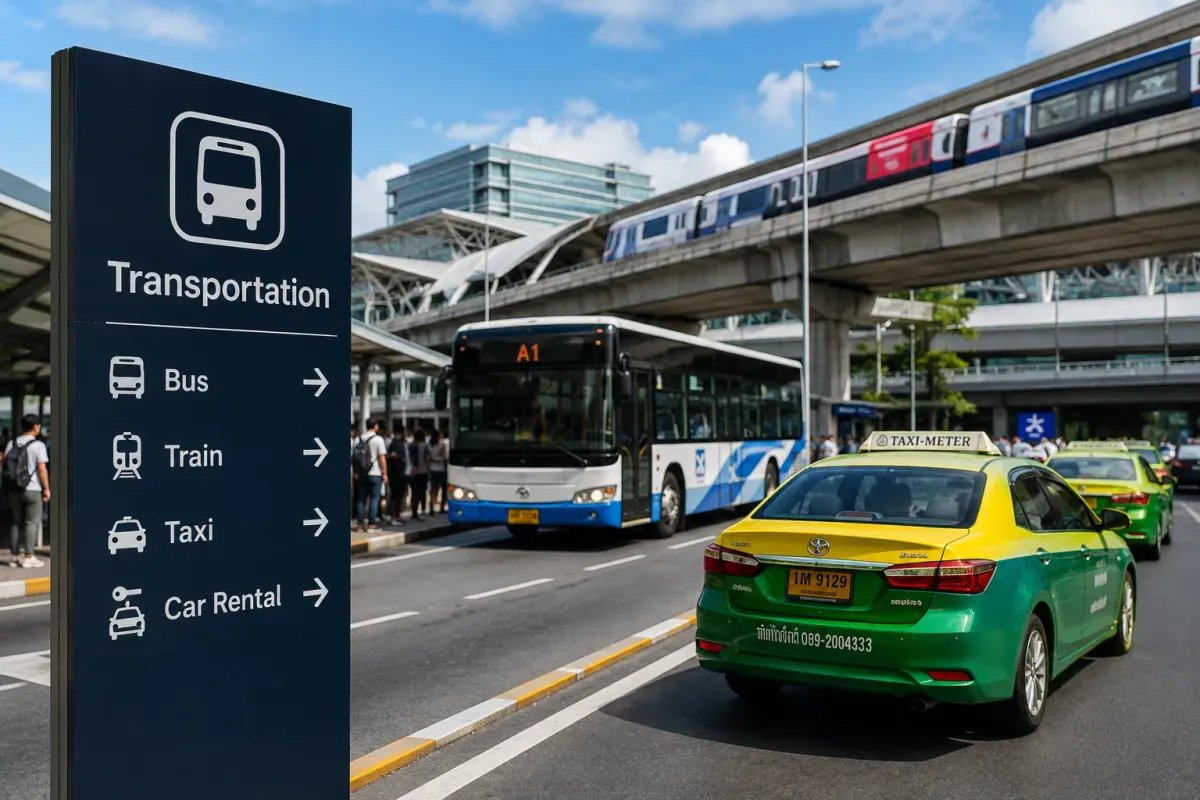
Transportation
Schedules and fares are subject to change.
Airport to City Access
Train, bus, taxi, and other options to the city center
Most visitors arrive at Kenneth Kaunda International Airport (LUN) in Lusaka, about 25 km from the city centre, a 15–20 minute drive by taxi or hotel transfer in light traffic. There is no public bus service dedicated to the airport, so use the official airport taxis or a pre-booked hotel/lodge transfer. In Livingstone, Harry Mwanga Nkumbula Airport is close to town and Victoria Falls hotels.
- Lusaka airport
- LUN, ~25 km from centre
- Time
- 15–20 min by taxi
- Best
- Official taxi / hotel transfer
- Use official airport taxis or a pre-booked transfer; no airport bus
- Livingstone airport is close to town and the Falls hotels
Public Transportation
Metro, bus, tram, and how to use them
Zambia has no metro or urban rail. In Lusaka and other towns, public transport means shared minibuses that run fixed routes from stations and stops, charging only a few kwacha, plus shared and private taxis. Minibuses are cheap but crowded, can be confusing for first-timers and are not ideal with luggage. Many visitors prefer taxis or ride-hailing for comfort and simplicity.
- Metro
- None
- Main mode
- Shared minibuses
- Fare
- A few kwacha
- There is no subway; minibuses run fixed routes for a few kwacha
- Minibuses are crowded; taxis or ride-hailing are easier with luggage
IC Cards & Travel Passes
Discount passes and rechargeable transit cards
Zambia does not use rechargeable transport smart cards like the ones found in big metro cities. Minibuses and taxis are paid in cash (kwacha), handed to the conductor or driver, so there is no travel card to buy. Keep small notes and coins handy for fares, and use mobile money or a ride-hailing app if you prefer not to carry much cash.
- Smart cards
- Not used
- Pay
- Cash to conductor/driver
- Tip
- Keep small notes
- There is no transit smart card; fares are paid in cash
- Carry small kwacha notes, or use mobile money / ride-hailing
Taxis & Ride-Sharing
How to use taxis and ride-hailing apps
Taxis in Zambia are usually not metered, so agree the fare before you get in; your hotel can tell you a fair price. Ride-hailing is growing in Lusaka, with Yango and the local app Ulendo offering app-based, fixed-price rides that are convenient and transparent for visitors. Use official or app-booked taxis rather than unmarked cars, especially at night and from the airport.
- Taxis
- Agree fare first (no meter)
- Ride-hailing
- Yango, Ulendo (Lusaka)
- Safety
- Use official/app taxis
- Agree taxi fares in advance; ask your hotel for a fair rate
- Yango and the GO (ex. Ulendo) app give fixed app prices in Lusaka
Uber, Grab are not available in this country. Use these local apps instead:
 Uber
 Grab

Bolt
Ride-hailingGlobal brand operating in Lusaka with competitive pricing. The fare is shown upfront; pay by card, Apple Pay, Google Pay or cash.

Yango
Ride-hailingWidely available in Lusaka. Everyday private drivers; the fare is fixed and shown in the app before you book, and you can pay by card or cash. Good first choice for airport and city rides.

inDrive
Ride-hailingName-your-price model: you propose your own fare and pick a driver who accepts. Useful when you want to negotiate the price.

GO (ex. Ulendo)
Taxi appLocal taxi-hailing app for Lusaka/Kitwe/Ndola, from licensed taxi drivers (the long-running Ulendo taxi service, now rebranded GO). App-booked fixed-price taxis, handy when few rideshare cars are nearby.
Car Rental & Driving
License requirements and traffic rules
Zambians drive on the left, and most hire cars are manual. Bring an International Driving Permit alongside your home licence. For safaris and rural roads a 4x4 is strongly recommended, as many routes are unpaved and can be rough or flooded in the wet season. Avoid driving at night due to animals, pedestrians and unlit vehicles, keep fuel topped up as stations are sparse, and watch for police checkpoints.
- Drive on
- Left
- Licence
- IDP + home licence
- Vehicle
- 4x4 for safaris
- A 4x4 is recommended; avoid driving at night
- Carry an IDP, keep fuel topped up, expect police checkpoints
Intercity Travel
Long-distance buses, trains, and ferries
Long-distance buses are the main way to travel between towns, running from Lusaka's Intercity Bus Terminus to Livingstone, the Copperbelt (Kitwe, Ndola), Chipata and beyond, plus neighbouring countries. Larger coach operators are more comfortable and safer than minibuses; book a day ahead in peak times. Passenger trains exist (Zambia Railways and TAZARA to Tanzania) but are slow and infrequent, so most travellers use buses or domestic flights.
- Main mode
- Long-distance buses
- Hub
- Lusaka Intercity Terminus
- Trains
- Slow and infrequent
- Use larger coach operators; book ahead at peak times
- Trains (Zambia Railways, TAZARA) are slow; buses are the norm
Domestic flights save a lot of time over long bus trips, especially between Lusaka and Livingstone (for Victoria Falls) or safari gateways like Mfuwe for South Luangwa. Proflight Zambia is the main scheduled domestic carrier, and lodges often arrange light-aircraft charters to remote airstrips. Book ahead in peak season, travel light as small planes have strict baggage limits, and allow buffer time for connections.
- Main carrier
- Proflight Zambia
- Key routes
- Lusaka–Livingstone, Mfuwe
- Note
- Strict baggage on small planes
- Proflight serves main domestic routes; lodges arrange charters
- Travel light; small aircraft have strict baggage limits
Transportation Tips
Advice for safe and efficient travel
Plan around distances and seasons: journeys take longer than the map suggests, and rains can slow rural roads. Download offline maps, carry small kwacha for fares and tolls, and keep a power bank charged. Avoid night travel between towns, use reputable bus companies or ride-hailing, and confirm transfers for safaris in advance. Fuel up whenever you can, as stations are scarce on long rural stretches.
- Plan
- Allow extra time
- Avoid
- Night road travel
- Carry
- Small kwacha, power bank
- Download offline maps and keep small kwacha for fares
- Avoid night travel; fuel up as stations are scarce on rural roads