Power & Connectivity (SIM)
Connectivity may vary by region and season.
Voltage & Plug Types
Electrical standards and outlet shapes
Bolivia uses 230V / 50Hz, though some areas run at 220V, with Type A and Type C sockets. Bring a Type A/C adapter; travellers whose devices are not dual-voltage may need a converter. Note the high altitude of La Paz when charging sensitive equipment.
- Voltage
- 230V (220V in areas) / 50Hz
- Sockets
- Type A and C
- Adapter
- Type A/C needed
- Most phone/laptop chargers are 100–240V and fine with an adapter
Buying a SIM Card
Where to buy, costs, and activation process
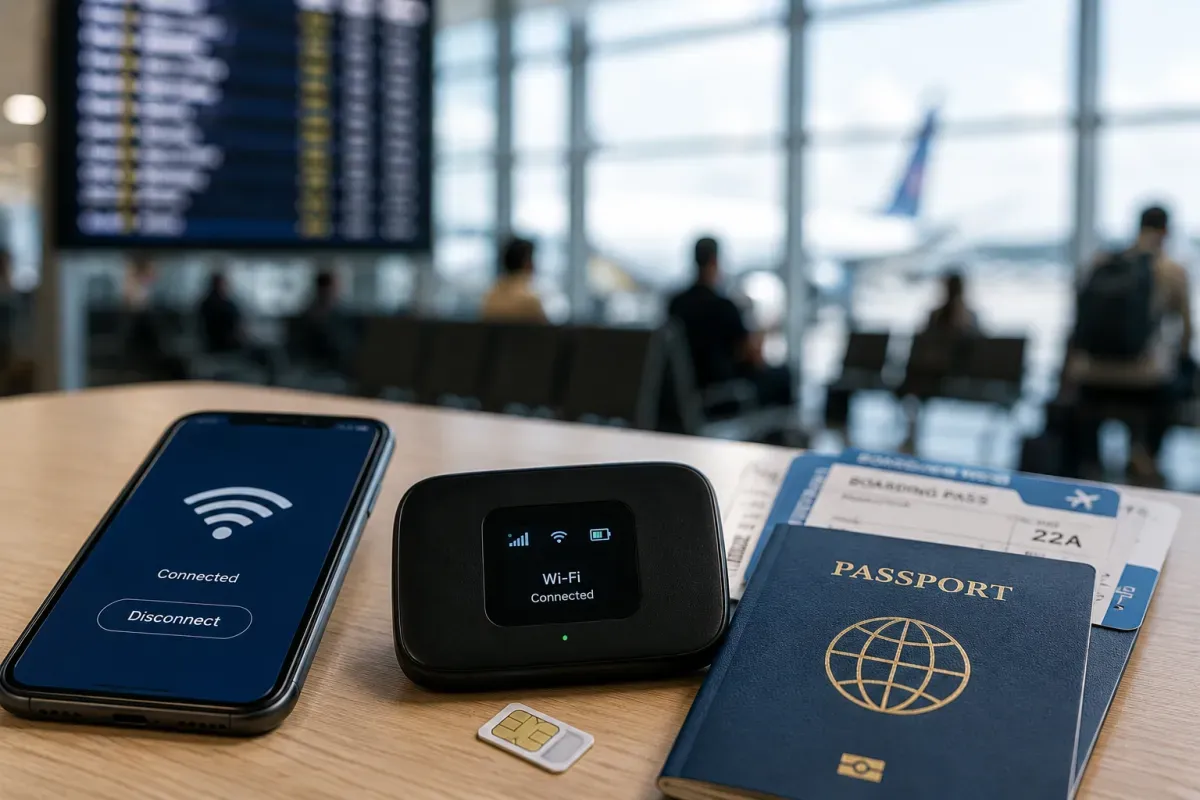
The main operators are Entel (state-owned, largest), Tigo and Viva. Prepaid SIMs are sold at airports and operator shops, and registration with your passport is required. 4G/LTE is good in cities but can be unstable in the highlands, rural areas and the Amazon.
- Operators
- Entel, Tigo, Viva
- Where
- Airports, operator shops
- Registration
- Passport required
- 4G/LTE good in cities, weaker in remote areas
eSIM & Mobile Wi-Fi
eSIM availability and portable Wi-Fi rental
eSIM support in Bolivia is limited, and local operators offer few or no eSIM plans. Some international travel eSIM services cover Bolivia, letting you buy online before arrival, but a physical prepaid SIM from Entel, Tigo or Viva is often the more reliable choice.
- Availability
- Limited local eSIM
- Option
- International travel eSIMs
- Reliable
- Physical prepaid SIM
- Check your phone is eSIM-capable and carrier-unlocked
Wi-Fi Availability
Public Wi-Fi coverage and security
Wi-Fi is common in hotels, cafés and restaurants in cities such as La Paz and Santa Cruz, though speeds vary and connections can be slower at high altitude or in remote areas. Use a VPN on public networks for sensitive tasks like banking.
- Availability
- Hotels, cafés, restaurants
- Quality
- Varies, slower in remote areas
- Security
- Use a VPN on public Wi-Fi
- A SIM/eSIM helps for on-the-go essentials
Internet Restrictions & VPN
Blocked services and VPN recommendations
Bolivia generally has an open internet, and common apps and services — messaging, social media, maps and streaming — work normally. The main practical limits are coverage and speed in remote and high-altitude areas rather than censorship.
- Internet
- Generally open
- Apps
- Standard apps work
- Main limit
- Coverage, not censorship
- Remote areas may have limited connectivity
Useful Local Apps
Must-have apps for transport, translation, and maps
Handy apps include ride-hailing such as Uber and inDrive in the main cities, maps and translation, and Boliviana de Aviación (BoA) for domestic flights. WhatsApp is widely used for everyday communication. Carry some cash, as card and mobile payment acceptance is uneven outside cities.
- Ride-hailing
- Uber, inDrive
- Everyday
- Maps, translation, WhatsApp
- Flights
- BoA app
- Card/mobile payment acceptance is uneven outside cities
International Calls
How to make international calls and alternatives
Bolivia's country code is +591. App-based calls (WhatsApp, FaceTime and similar) are common and often the cheapest way to stay in touch. Save numbers in full +591 international format so they work from any network, and note that international roaming can be expensive.
- Country code
- +591
- Calls
- App-based common
- Roaming
- Can be expensive
- Save numbers in full +591 international format