Power & Connectivity (SIM)
Connectivity may vary by region and season.
Voltage & Plug Types
Electrical standards and outlet shapes
Brazil uses Type N sockets (the Brazilian standard), and Type C plugs also fit. Voltage is not uniform: some regions use around 127V and others 220V, so check the local voltage before plugging in appliances. Most phone and laptop chargers handle both, but bring a Type N adapter and verify voltage for hairdryers and similar devices.
- Plug type
- N / C
- Voltage
- 127V or 220V
- Check
- By region
- Voltage varies by region (127V/220V)
- Bring a Type N adapter
Buying a SIM Card
Where to buy, costs, and activation process
The main mobile operators are Vivo, Claro and TIM, with good coverage in cities and along the coast. Prepaid SIMs are sold at operator stores and some shops. Registration can require a local tax ID (CPF), which visitors may not have, so buying a SIM can be fiddly; many travellers find an eSIM or roaming simpler.
- Operators
- Vivo/Claro/TIM
- May need
- CPF
- Easier
- eSIM
- Buy prepaid SIMs at operator stores
- CPF may be needed to register
eSIM & Mobile Wi-Fi
eSIM availability and portable Wi-Fi rental
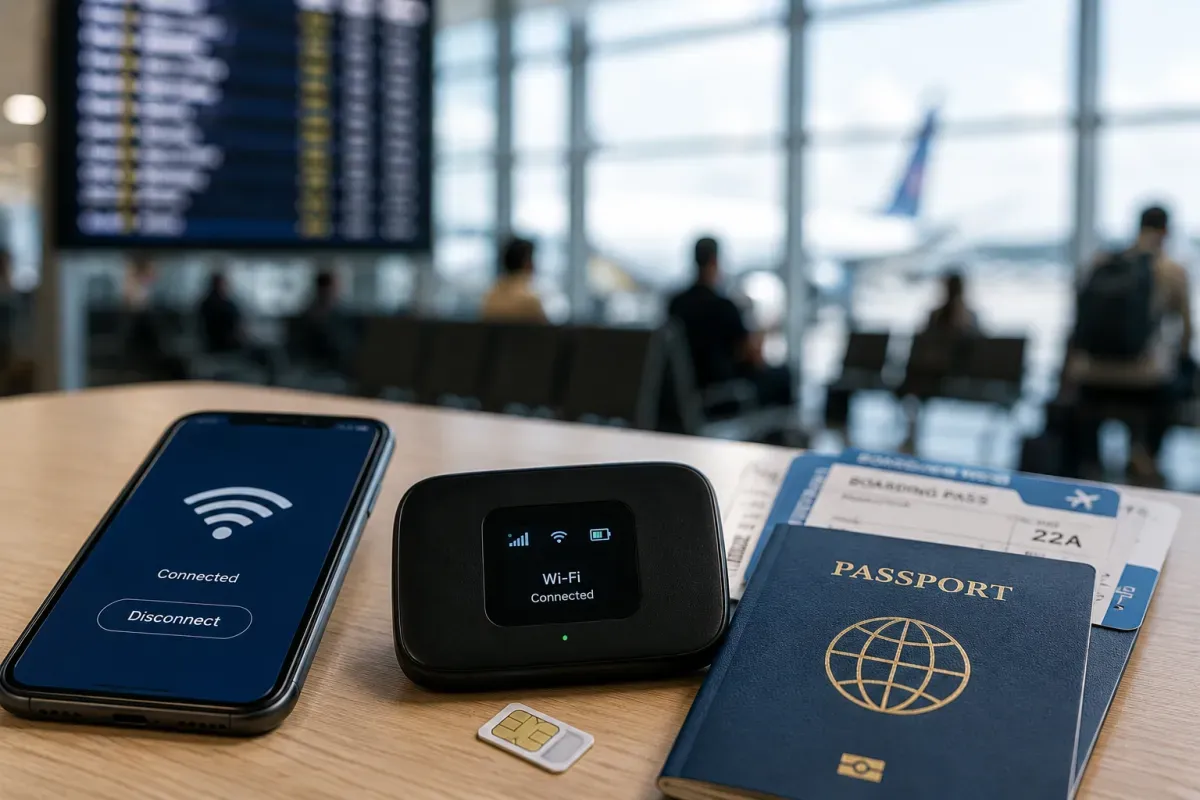
If your phone supports eSIM, a travel eSIM is often the easiest way to get online in Brazil: buy a data plan online before you fly, then activate it on arrival without visiting a store or needing a CPF. Compare data allowances and coverage, and keep your home SIM for calls and texts if you like.
- Best for
- Easy setup
- No
- CPF needed
- Buy
- Before flying
- Activate on arrival, no store visit
- Compare data and coverage first
Wi-Fi Availability
Public Wi-Fi coverage and security
Wi-Fi is common in hotels, hostels, cafés, shopping malls and airports, though speeds vary and can be slow at busy beach spots or remote areas. Public Wi-Fi is handy but treat it as unsecured: avoid banking on open networks or use a VPN. For reliable data on the move, a local SIM or eSIM is best.
- Where
- Hotels/cafés
- Public Wi-Fi
- Use caution
- On the move
- SIM/eSIM
- Speeds vary; slower in remote areas
- Avoid banking on open Wi-Fi
Internet Restrictions & VPN
Blocked services and VPN recommendations
Brazil has an open internet, and popular apps, social media and messaging services generally work normally. Occasional legal disputes have briefly affected specific platforms in the past, so having more than one messaging or maps app installed is a sensible backup. There is no need for special tools to access everyday sites.
- Access
- Open
- Apps
- Work normally
- Tip
- Backup apps
- Common apps and social media work
- Keep a backup messaging app
Useful Local Apps
Must-have apps for transport, translation, and maps
Handy apps for Brazil include ride-hailing (Uber and the local 99), maps with offline downloads, WhatsApp for messaging (widely used by locals and businesses), and a translation app for Portuguese. Airline apps (LATAM, GOL, Azul) help with domestic flights, and offline maps are useful in areas with patchy signal.
- Rides
- Uber / 99
- Messaging
- Maps
- Offline
- WhatsApp is widely used in Brazil
- Download offline maps for weak signal
International Calls
How to make international calls and alternatives
Brazil's country code is +55, and phone numbers include a two-digit area code (DDD) before the local number. To call Brazil from abroad, dial +55, the area code, then the number. Many travellers rely on app-based calls (WhatsApp, etc.) over data to avoid roaming charges. Save key numbers with the full +55 format.
- Country code
- +55
- Area code
- DDD (2 digits)
- Calls
- App-based
- Dial +55 + area code + number
- Use app calls to avoid roaming fees