
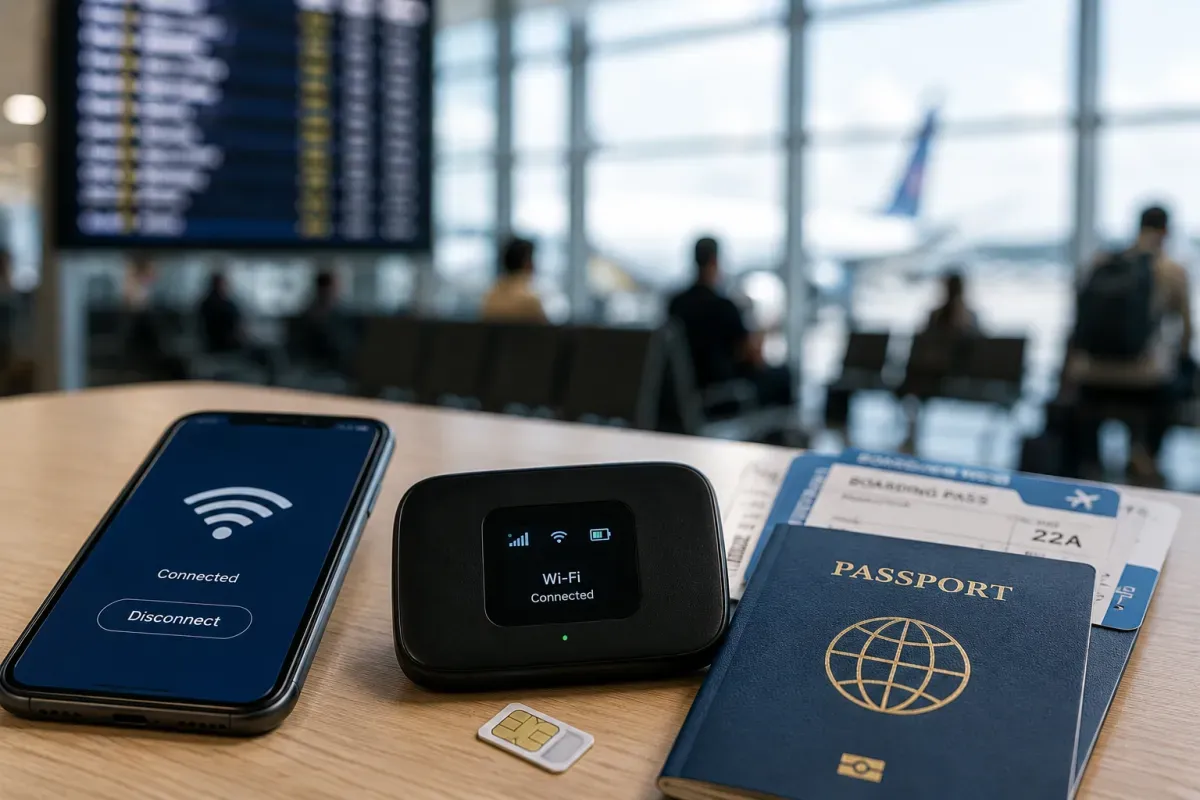
Power & Connectivity (SIM)
Connectivity may vary by region and season.
Voltage & Plug Types
Electrical standards and outlet shapes
Canada uses 120 volts at 60 hertz with the North American Type A and Type B flat-pin plugs — the same as the US. If your devices are single-voltage 220-240V (common in Europe, the UK and Australia), you will need a voltage converter, not just a plug adapter. Most phone and laptop chargers are dual-voltage, so a simple adapter is usually enough.
- Voltage
- 120V / 60Hz
- Plug type
- Type A / B
- Same as
- United States
- Type A/B flat pins, identical to the US
- Single-voltage 220-240V devices need a converter
Buying a SIM Card
Where to buy, costs, and activation process
The main networks are Rogers, Bell and Telus, plus their cheaper sub-brands like Fido, Koodo and Virgin/Lucky. Prepaid tourist SIMs are sold at airports, carrier shops and electronics stores; bring your passport as ID may be requested. Canadian plans are relatively pricey, and coverage is excellent in cities but thins out in remote and northern areas.
- Networks
- Rogers, Bell, Telus
- Where
- Airport / carrier shops
- Note
- Plans relatively pricey
- Cheaper sub-brands: Fido, Koodo, Virgin/Lucky
- Great city coverage, patchy in remote and northern areas
eSIM & Mobile Wi-Fi
eSIM availability and portable Wi-Fi rental
If your phone supports eSIM, a travel eSIM is the easiest way to get online in Canada — buy a Canada or North America plan online before you fly and activate it on arrival, with no shop visit or physical SIM swap. Providers like Airalo, Holafly and Nomad are popular, and the Canadian carriers themselves also offer eSIMs. Check your handset supports eSIM first.
- Best for
- eSIM phones
- Buy
- Online before flying
- Providers
- Airalo, Holafly, Nomad
- Activate on arrival with no physical SIM swap
- Confirm your phone supports eSIM before buying
Wi-Fi Availability
Public Wi-Fi coverage and security
Free Wi-Fi is widespread in cafes, hotels, malls, libraries and many public transit systems and airports. Coffee chains like Tim Hortons and Starbucks are reliable go-to spots. As with any public network, avoid banking or entering sensitive details on open Wi-Fi, or use a VPN. In remote and northern regions, connections can be slow or scarce.
- Free Wi-Fi
- Widespread
- Go-to
- Cafes, malls, libraries
- Safety
- VPN on open networks
- Tim Hortons and Starbucks are reliable Wi-Fi spots
- Use a VPN or avoid sensitive tasks on open networks
Internet Restrictions & VPN
Blocked services and VPN recommendations
Canada has an open internet with no general censorship — social media, messaging apps, news sites, streaming and VPNs all work normally. The usual global apps you rely on at home will function as expected. Streaming libraries may differ by region, but that is a licensing quirk, not a restriction. Just use normal caution on public Wi-Fi.
- Access
- Open, uncensored
- Apps
- All work normally
- VPN
- Allowed
- No general blocking of sites or apps
- Streaming catalogues may vary by region (licensing)
Useful Local Apps
Must-have apps for transport, translation, and maps
A few apps make a Canada trip smoother: Google Maps or Transit for getting around, Uber and Lyft for rides, and a weather app is genuinely useful given the swings. For transit, big cities have their own apps and cards — for example the Presto system around Toronto and the Transit app for real-time schedules. WeatherCAN from the government gives official forecasts and alerts.
- Maps
- Google Maps / Transit
- Rides
- Uber, Lyft
- Weather
- WeatherCAN
- Transit and Google Maps cover public transport well
- WeatherCAN gives official forecasts and alerts
International Calls
How to make international calls and alternatives
Canada's country code is +1, shared with the US, and numbers are ten digits (area code plus seven). You usually dial all ten digits even locally. For any emergency — police, fire or ambulance — call 911, which works nationwide and is free from any phone. For non-emergency city services many areas use 311. Apps like WhatsApp are the cheapest way to call home over Wi-Fi.
- Country code
- +1
- Emergency
- 911
- City services
- 311
- Numbers are 10 digits; dial all of them
- 911 works nationwide and is free from any phone