Entry Procedures
Visa and entry requirements depend on the country that issued your passport. The information here is general guidance. Always confirm the requirements for your own nationality with the official source.
This information is for general guidance only. Please verify with the embassy or official government sources before traveling.
Visa Requirements
Types of visas required and their conditions
Requirements depend on your nationality. Visa-exempt travellers flying to Canada usually need an electronic travel authorization (eTA) applied for online in advance; those arriving by car, bus, train or boat generally do not need an eTA. Nationals of visa-required countries need a visitor visa. Rules change, so check your own current status on the official canada.ca site before you travel.
- By air
- eTA (visa-exempt)
- Visa-required
- Visitor visa
- Confirm
- canada.ca
- eTA is for air arrivals; land/sea arrivals usually do not need one
Passport Conditions
Required validity period and blank pages
Your passport should be valid for the duration of your stay. Importantly, your eTA is linked electronically to the specific passport you applied with — travel on that same passport, or your eTA will not be valid. Border officers may ask about your visit, funds and onward plans. Keep your return/onward ticket and accommodation details handy.
- Validity
- For your stay
- eTA
- Tied to that passport
- Have ready
- Ticket, hotel
- Travel on the exact passport your eTA is linked to
Required Documents & Pre-registration
Arrival cards, health declarations, and other preparations
Carry your passport, your eTA or visa (as applicable), a return/onward ticket and proof of accommodation and funds. You must make a customs declaration on arrival — many airports use kiosks or an app (declare food, plants, large cash and goods). Answer border questions honestly. Apply for the eTA only via the official canada.ca site to avoid look-alike paid sites.
- Carry
- Passport, eTA/visa
- Declaration
- At arrival (kiosk/app)
- eTA
- Official site only
- Apply for eTA only via official canada.ca, avoid look-alikes
Pre-arrival procedure — Canada eTA (Electronic Travel Authorization): required for visa-exempt nationalities flying to Canada; it only costs CAN$7 and is linked to your passport. Not needed for entry by land or sea, and US lawful permanent residents are exempt. Apply on the only official site canada.ca/eTA. Beware paid look-alike sites.
Official Canada eTA (canada.ca/eTA)- Family name
- SMITH
- First / given name
- MICHAEL
- Nationality
- Your nationality (e.g. UNITED STATES)
- Passport No.
- A1234567
- Date of birth
- 1990-05-20
- Email address
- your email (for the result)
- Payment card
- Credit/debit card for CAN$7
How to apply
- 1 Open the official site canada.ca/eTA and start a new application (best before booking your flight).
- 2 Enter passport and personal details.
- 3 Answer the eligibility questions and enter your email.
- 4 Review all answers and correct any errors.
- 5 Pay the CAN$7 fee by card and submit.
- 6 Most approvals are quick; the eTA is linked to your passport (save the confirmation).
Whether you need an eTA, the fee and conditions can change; confirm the current rules on the official government site before you travel.
Last updated: 2026-08-30
Cash Import Limits
Declaration-free limits and procedures for excess amounts
You must declare to the Canada Border Services Agency (CBSA) if you are carrying CAD 10,000 or more (or the equivalent in any currency), whether entering or leaving. This includes cash and negotiable instruments. There is no limit on how much you can bring, but failing to declare over the threshold can lead to seizure. Confirm the current amount before you travel.
- Declare
- CAD 10,000+
- Includes
- Cash + instruments
- Fail to declare
- Risk seizure
- Failing to declare over CAD 10,000 can lead to seizure
Duty-Free Allowances & Restricted Items
Limits on tobacco, alcohol, food, and other goods
Visitors have personal exemptions for a limited amount of alcohol and tobacco (you must meet the legal age of the province you enter). You must declare all food, plants, animals and related products — Canada has strict rules to protect agriculture, and undeclared items can be seized or fined. When in doubt, declare it. Check the CBSA site for current allowances.
- Allowance
- Limited alcohol/tobacco
- Declare
- All food/plants/animals
- If unsure
- Declare it
- Canada has strict rules on food, plants and animal products
Prohibited Items
Items that are strictly forbidden from import
Illegal drugs are banned. Even though cannabis is legal inside Canada, taking it across the border in or out is a serious criminal offence — never bring it or take it home. Firearms and weapons are tightly controlled and must be declared. Some foods, plants, meats and wildlife products are restricted or prohibited. Counterfeit goods are not allowed. Declare anything you are unsure about.
- Cannabis
- No cross-border
- Weapons
- Declare, controlled
- Restricted
- Some food/plants
- Taking cannabis across the border is a serious offence
Medication Import Rules
Rules for bringing prescription and over-the-counter drugs
Bring prescription medicines in their original labelled packaging with a copy of the prescription or a doctor's note, and only quantities for personal use (a single course of treatment). Declare medicines at the border if asked. Some substances are controlled; cannabis-based products cannot be brought across the border even if legal at home. Check current rules if you carry controlled medication.
- Original box
- Plus prescription
- Amount
- Personal use
- No
- Cannabis products
- Cannabis-based products cannot be brought across the border
Vaccinations & Health Requirements
Required and recommended vaccines for entry
No vaccines are required to enter Canada under normal circumstances. Travel-health services generally suggest being up to date on routine vaccinations (like measles and flu). There are no major tropical disease risks. If you plan summer hiking, tick awareness is sensible in some regions. See a travel clinic before departure if you have any health questions.
- Required
- None normally
- Routine
- Keep up to date
- Summer
- Tick awareness
- Be up to date on routine vaccinations before you go
Immigration Process
Step-by-step guide from arrival to clearing immigration
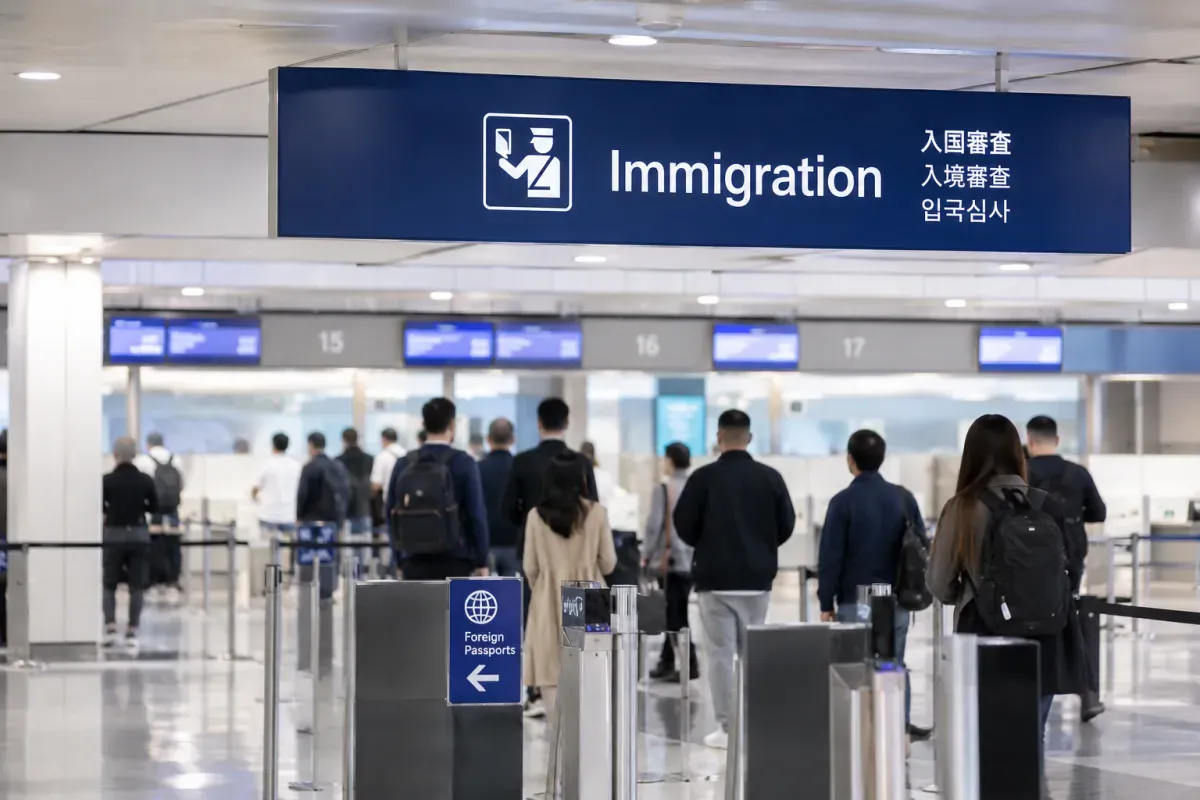
On arrival by air, many airports use primary inspection kiosks or the ArriveCAN/Advance CBSA Declaration app to speed things up; you then see a border officer. Have your passport, eTA/visa and declaration ready, and answer questions about your visit clearly. Visitors are usually allowed up to six months; the officer sets your actual permitted stay. Keep proof of onward travel and funds.
- Airports
- Kiosks / app
- Stay
- Usually up to 6 months
- Have ready
- Passport, eTA
- The officer sets your actual permitted length of stay
Tips for Smooth Entry
Practical advice for a hassle-free arrival
Apply for your eTA (if needed) early and only on the official canada.ca — it is inexpensive and usually approved in minutes. Travel on the passport it is linked to. If arriving by land from the US, note the eTA is not required. Canada is vast, so allow time between regions and check winter road/weather conditions. Keep copies of your passport and eTA/visa.
- eTA
- Official site, early
- Land from US
- No eTA needed
- Distances
- Canada is vast
- Canada is vast — allow time between regions and check weather