
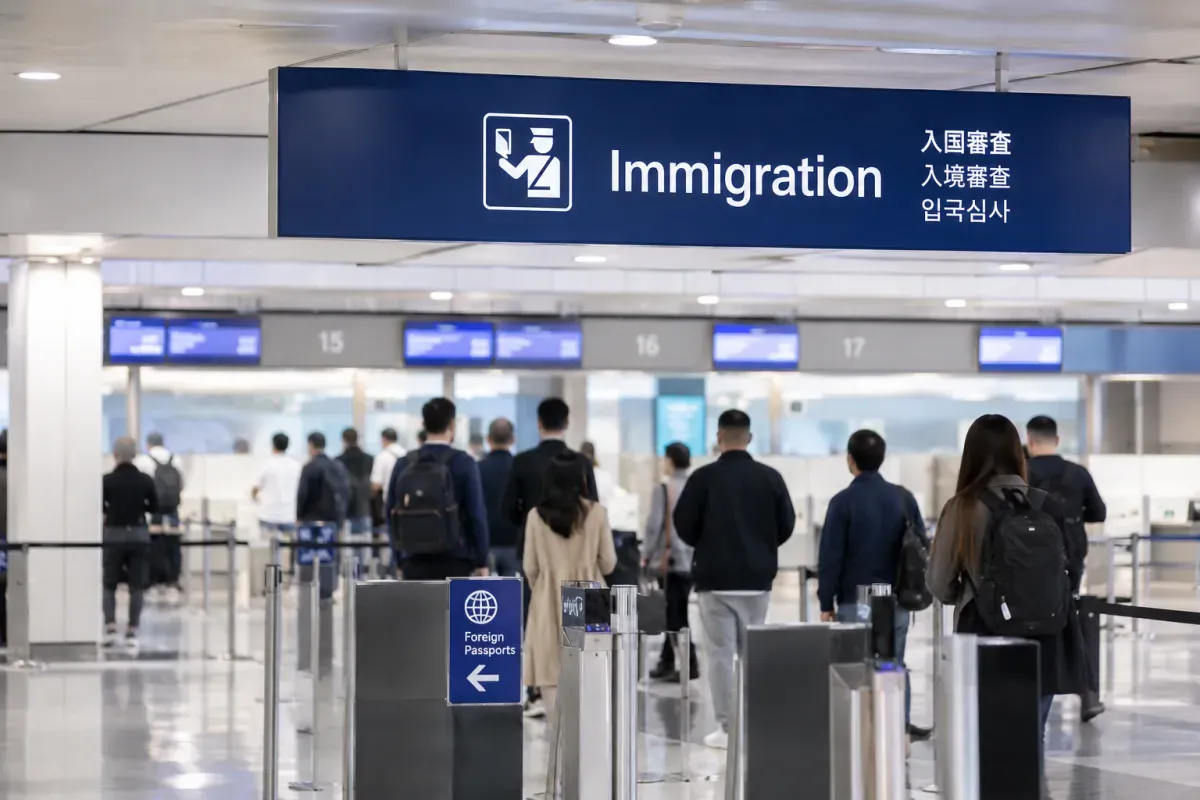
Entry Procedures
Visa and entry requirements depend on the country that issued your passport. The information here is general guidance. Always confirm the requirements for your own nationality with the official source.
This information is for general guidance only. Please verify with the embassy or official government sources before traveling.
Visa Requirements
Types of visas required and their conditions
Almost all visitors need a visa. Many nationalities can apply for an official e-Visa (tourist categories of varying length) via the government portal before travel. Rules and eligible countries change, so apply only on the official site and confirm the current conditions for your nationality.
- Visa
- Required for almost all
- e-Visa
- Official portal, apply ahead
- Check
- Official site before travel
- Use only indianvisaonline.gov.in to avoid fake visa websites
Passport Conditions
Required validity period and blank pages
Your passport should usually be valid for at least six months from your date of arrival and have at least two blank pages. Details on your e-Visa must exactly match your passport, as mismatches can lead to denied boarding or entry. Confirm the current rule for your nationality.
- Validity
- 6 months from arrival
- Blank pages
- At least two
- e-Visa
- Details must match exactly
- A name/number mismatch on the e-Visa can mean refusal
Required Documents & Pre-registration
Arrival cards, health declarations, and other preparations
Carry your passport, the printed e-Visa approval (ETA), a return or onward ticket, and proof of accommodation and funds. Officers may ask about your itinerary. If you registered for an e-Visa, arrive at a designated e-Visa airport. Keep booking confirmations handy to speed up entry.
- Core
- Passport + e-Visa printout
- Proof
- Onward ticket, hotel, funds
- Arrival
- Use a designated e-Visa airport
- Print the e-Visa/ETA — a digital copy alone may not be accepted
Pre-arrival procedure — e-Visa (electronic ETA): most tourists need a visa; the e-Visa is issued via the only official portal indianvisaonline.gov.in (or the official "Indian Visa Su-Swagatam" app). Categories/fees vary by type and nationality and change over time, so confirm current requirements officially before booking. Apply at least ~4 days before arrival.
Official India e-Visa portal (indianvisaonline.gov.in)- Family name
- SMITH
- First / given name
- MICHAEL
- Nationality
- Your nationality (e.g. UNITED STATES)
- Passport No.
- A1234567
- Date of birth
- 1990-05-20
- Photo
- Recent front-facing photo on a white background
- Passport bio page
- Scan/upload the personal-details page
- Date of arrival
- 2026-04-10
- Address in India
- Hotel name & address
How to apply
- 1 Open indianvisaonline.gov.in, choose the e-Visa category and start a new application.
- 2 Enter passport and personal details.
- 3 Upload a white-background photo and the passport bio page; enter travel details.
- 4 Review all entries and correct any errors.
- 5 Pay the fee by card and submit; note the application ID. Approval usually arrives by email — carry a printout.
- 6 Separately, complete the mandatory eArrival Card within 72 hours before arrival (arrival information, not a visa).
The eArrival Card is at indianvisaonline.gov.in/earrival. Visa need, categories, fees and conditions can change; confirm the current rules on the official site before you travel and beware third-party sites charging extra.
Last updated: 2026-08-30
Cash Import Limits
Declaration-free limits and procedures for excess amounts
Declare foreign currency in cash above about US$5,000, or the total of cash plus instruments above about US$10,000, on the customs declaration. Indian rupees are restricted for non-residents. Rules can change, so check the current Customs (CBIC) limits before you travel.
- Cash
- Declare over ~US$5,000
- Total
- Declare over ~US$10,000
- Rupees
- Import limited for non-residents
- Keep exchange receipts; confirm limits on the CBIC site
Duty-Free Allowances & Restricted Items
Limits on tobacco, alcohol, food, and other goods
Adult travellers get a modest duty-free allowance for personal goods, plus limited alcohol (about 2 litres) and tobacco (about 100 cigarettes). Use the green channel only if within limits; otherwise use the red channel and declare. High-value electronics or gold may need declaring. Confirm allowances with Customs before you fly.
- Alcohol
- About 2 litres
- Tobacco
- About 100 cigarettes
- Channel
- Green if within limits
- Declare gold and high-value electronics to avoid penalties
Prohibited Items
Items that are strictly forbidden from import
Illegal drugs carry very severe penalties. Satellite phones and some radio equipment are restricted or need a permit. Exporting antiques and certain wildlife or ivory products is banned or requires clearance. Never carry items for strangers. Check current Customs (CBIC) prohibitions before you travel.
- Drugs
- Severe penalties
- Sat phones
- Restricted / permit
- Antiques
- Export banned/needs clearance
- Do not carry packages for others through customs
Medication Import Rules
Rules for bringing prescription and over-the-counter drugs
Bring prescription medicines in their original packaging with a copy of the prescription and a doctor's letter. Some psychotropic or strong painkillers are controlled and may need documentation. Carry enough for your trip in your hand luggage. Check the rules for your specific medicine before you fly.
- Packaging
- Original + prescription
- Controlled
- Extra documents may be needed
- Carry
- Enough in hand luggage
- A doctor's letter helps at customs for controlled drugs
Vaccinations & Health Requirements
Required and recommended vaccines for entry
No routine vaccine is required for most travellers, but a yellow fever certificate is required if arriving from a country with risk of transmission. Health authorities commonly advise hepatitis A/B, typhoid and being up to date on routine shots. See a travel clinic well before departure for personal advice.
- Yellow fever
- Certificate if from risk area
- Common advice
- Hep A/B, typhoid
- Plan
- Visit clinic early
- Malaria risk varies by area and season — ask about prophylaxis
Immigration Process
Step-by-step guide from arrival to clearing immigration
At arrival, present your passport and printed e-Visa (ETA) at immigration; officers take fingerprints and a photo. Keep your entry stamp safe and note your onward plans. If you lose your passport, you may need a police report (FIR) and a replacement from your embassy before you can leave.
- Present
- Passport + e-Visa printout
- Biometrics
- Fingerprints and photo
- Lost passport
- FIR + embassy replacement
- Keep a copy of your passport and visa separate from originals
Tips for Smooth Entry
Practical advice for a hassle-free arrival
Apply for the e-Visa only on the official portal and arrive at a designated airport. Carry printed copies of your visa and hotel bookings. Dress modestly at temples and remove shoes where required. Agree fares before taxi/auto-rickshaw rides, and use bottled or filtered water throughout your trip.
- e-Visa
- Official portal only
- Temples
- Modest dress, remove shoes
- Water
- Bottled/filtered only
- Register with your embassy's traveller service if available